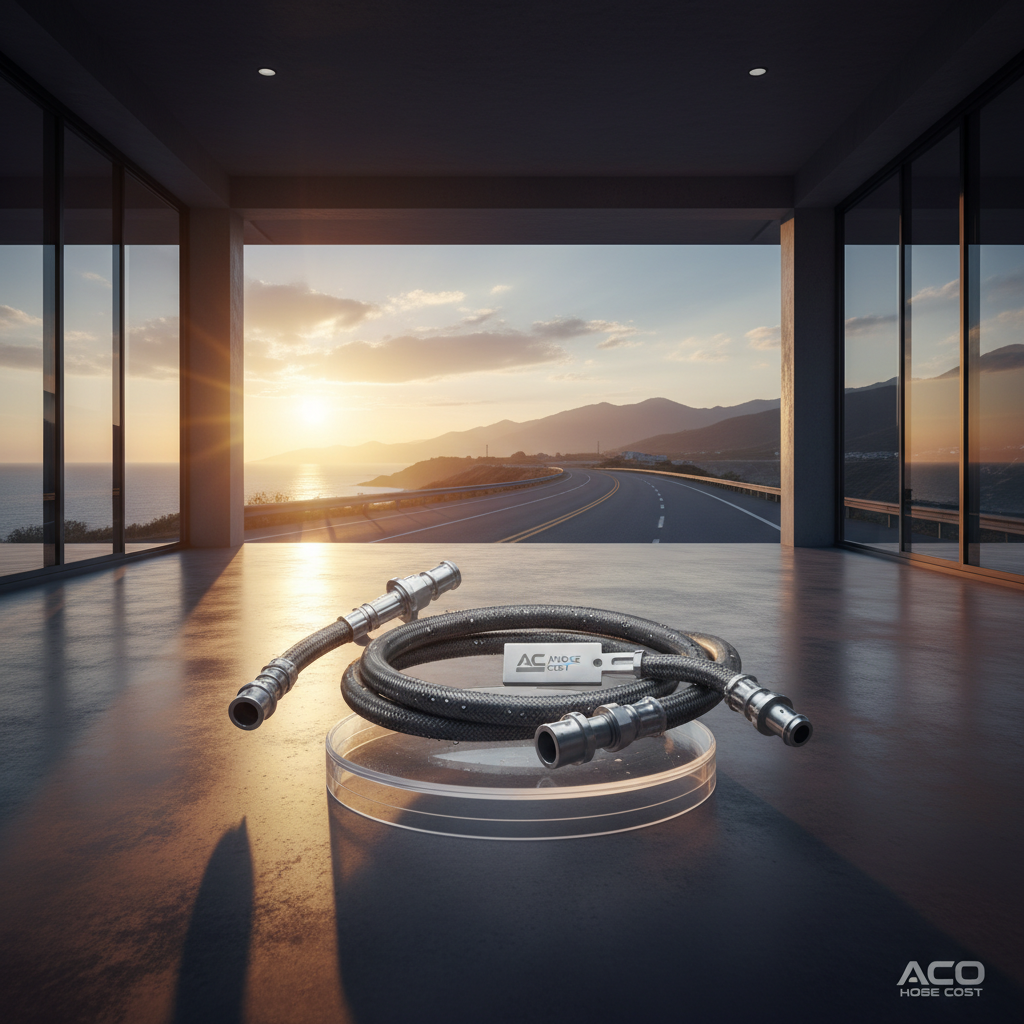
Maintaining a vehicle's climate control system is essential for driver comfort and safety, particularly in extreme weather conditions. At the heart of this maintenance process is the auto ac recharge hose, a specialized conduit designed to transfer refrigerant from a charging station or canister into the vehicle's AC system without leakage. Understanding the technical nuances of these hoses ensures that the recharge process is efficient, safe, and environmentally responsible.
Globally, the demand for high-quality automotive rubber products has surged as vehicle longevity increases and climate volatility makes air conditioning a necessity rather than a luxury. The integrity of an auto ac recharge hose is paramount; a sub-standard hose can lead to refrigerant loss, which not only degrades cooling performance but also contributes to atmospheric greenhouse gas emissions.
For professionals and DIY enthusiasts alike, choosing the right equipment means balancing material durability with precise fitting. This guide explores the industrial standards, material compositions, and operational best practices associated with the auto ac recharge hose, providing a comprehensive overview of how this small but critical component sustains the automotive cooling ecosystem.
Global Industry Context of Auto AC Recharge Hoses
The automotive aftermarket has seen a significant shift toward precision-engineered rubber components. According to ISO standards for automotive hoses, the ability to withstand high-pressure spikes and chemical degradation is non-negotiable. The auto ac recharge hose operates in a high-stakes environment where failure can lead to the release of R-134a or R-1234yf refrigerants, both of which are strictly regulated globally to prevent ozone depletion and global warming.
As emerging markets in Southeast Asia and Africa expand their vehicle fleets, the need for reliable recharge tools has grown. The challenge lies in producing hoses that are compatible with diverse vehicle makes and models while maintaining a leak-proof seal. This global demand pushes manufacturers to innovate in thermoplastic elastomers and reinforced rubber to ensure the auto ac recharge hose remains a dependable tool in every technician's kit.
Defining the Auto AC Recharge Hose Mechanism
In simple terms, an auto ac recharge hose is a reinforced flexible tube that connects a refrigerant source to the low-pressure port of a vehicle's air conditioning system. Unlike standard fuel or brake hoses, these are specifically designed to handle the unique phase changes of refrigerants, which can shift from liquid to gas rapidly, causing temperature fluctuations and pressure swings.
From an industrial perspective, the hose is more than just a pipe; it is a precision instrument. It must feature quick-disconnect couplings that prevent the "burping" of refrigerant into the atmosphere. This connection is vital for maintaining the vacuum integrity of the AC system, ensuring that no moisture or air enters the lines during the recharge process, which would otherwise lead to internal corrosion.
The connection to humanitarian and urban needs is evident in the transport sector. For ambulance services and public transit, a failing AC system is not just an inconvenience but a health hazard for passengers. By utilizing a high-grade auto ac recharge hose, fleet managers can perform rapid maintenance, keeping essential services running in scorching climates.
Core Components and Material Engineering
The structural integrity of an auto ac recharge hose begins with its inner liner. Typically composed of synthetic rubber or specialized polymers, this layer must be impermeable to refrigerant gases. If the liner is porous, the gas will permeate through the hose wall, leading to inaccurate charge levels and waste.
Reinforcement is the second critical factor. A high-pressure auto ac recharge hose usually features a braided textile or steel wire layer embedded within the rubber. This reinforcement prevents the hose from expanding or bursting under the high pressures encountered during the recharge cycle, ensuring operator safety and tool longevity.
Finally, the outer cover provides the first line of defense against the harsh engine bay environment. Resistance to oil, ozone, and extreme heat is essential. A premium auto ac recharge hose utilizes a weather-resistant synthetic rubber blend that prevents cracking and degradation over years of intermittent use.
Performance Metrics and Efficiency Factors
When evaluating the quality of an auto ac recharge hose, technicians look at three primary metrics: burst pressure, permeability, and coupling seal integrity. A hose that can withstand 500 PSI without deformation is far superior to a budget option that may swell, potentially causing a disconnection during the charging process.
Efficiency is also measured by the speed of refrigerant flow and the minimization of "dead volume"—the amount of refrigerant that remains trapped in the hose after the process is complete. Advanced designs optimize the inner diameter of the auto ac recharge hose to maximize flow while reducing waste.
Comparison of Auto AC Recharge Hose Performance Types
Global Applications and Use Cases
The application of the auto ac recharge hose spans across various automotive service sectors. In professional workshops, these hoses are integrated into large-scale recovery and recharge machines, where they must endure thousands of connection cycles. In these settings, the focus is on rapid-fire reliability and the ability to switch between different refrigerant types without cross-contamination.
In remote industrial zones or mining sites, where professional garages are scarce, portable kits featuring a durable auto ac recharge hose become lifelines. Here, the hose must withstand extreme dust, vibration, and temperature swings while remaining flexible enough for use in tight engine bays. Whether it's a fleet of delivery trucks in the US or off-road vehicles in the Australian Outback, the hose ensures that the AC remains functional for safety and productivity.
Long-Term Value and Sustainability
Investing in a high-quality auto ac recharge hose offers tangible economic benefits. Lower-grade hoses often fail at the crimp point or leak at the O-ring, leading to the loss of expensive refrigerants. By reducing leakage, a professional-grade hose minimizes the cost of materials and reduces the frequency of replacements, offering a lower total cost of ownership over the tool's lifecycle.
From a sustainability perspective, the impact is significant. Refrigerants are potent greenhouse gases; every gram leaked through a faulty auto ac recharge hose contributes to environmental degradation. High-precision hoses align with global "Green Garage" initiatives, ensuring that the automotive industry moves toward a zero-leakage future.
Beyond the technical, there is an element of trust and safety. A hose that doesn't burst under pressure protects the technician from "frostbite" burns caused by rapidly expanding liquid refrigerant. This reliability fosters a sense of professional dignity and safety in the workplace, ensuring that the focus remains on quality service rather than risk management.
Future Innovations in Refrigerant Transfer
The future of the auto ac recharge hose is being shaped by the transition to new refrigerants like R-1234yf and the rise of electric vehicles (EVs). EVs often use sophisticated heat pump systems that operate at different pressures than traditional ICE vehicles, requiring hoses with even higher thermal stability and chemical compatibility.
Digital transformation is also entering the field. We are seeing the development of "smart" auto ac recharge hose systems equipped with integrated sensors that can monitor flow rate and detect micro-leaks in real-time via Bluetooth. This allows technicians to verify the precision of the charge through a smartphone app, removing the guesswork from the process.
Moreover, the industry is moving toward bio-based polymers to replace traditional petroleum-based rubber. These eco-friendly materials aim to maintain the same durability and pressure ratings as current hoses while reducing the carbon footprint of the manufacturing process.
Comparative Analysis of Auto AC Recharge Hose Specifications
| Hose Material |
Pressure Rating |
Leakage Rate |
Service Life |
| Standard EPDM Rubber |
250-300 PSI |
Moderate |
2-3 Years |
| Nylon Braided Composite |
400-500 PSI |
Low |
5-7 Years |
| Steel-Wire Reinforced |
600+ PSI |
Very Low |
8-10 Years |
| Fluoropolymer (PTFE) |
500 PSI |
Negligible |
12+ Years |
| TPV Thermoplastic |
350 PSI |
Low |
4-6 Years |
| Industrial Grade Hybrid |
550 PSI |
Very Low |
10+ Years |
FAQS
While many hoses are marketed as universal, the fittings can vary. Most modern vehicles use standard quick-connect couplers, but older models or specific luxury brands may require adapters. Always check the port size and refrigerant type (R-134a vs R-1234yf) before connecting your auto ac recharge hose to avoid damaging the service valves.
The most common way to detect a leak in an auto ac recharge hose is by using a soapy water solution. Apply the solution to the couplings and along the hose body while the system is under pressure; any bubbles indicate a leak. Additionally, a sudden drop in the gauge pressure during charging often suggests a failure in the hose or its seals.
It depends on the material. Standard rubber hoses can develop micro-cracks (dry rot) over time, which may not be visible but can cause refrigerant loss. If your auto ac recharge hose feels stiff or shows signs of surface cracking, it should be replaced immediately to ensure a vacuum-tight seal and operator safety.
Professional hoses generally feature higher burst pressure ratings, superior braided reinforcement, and high-precision machined couplings. DIY hoses are often designed for single-use or light-duty application. For long-term durability and precision charging, a professional-grade auto ac recharge hose is highly recommended.
Yes, the inner diameter and the smoothness of the internal liner affect the flow rate. High-quality polymers reduce friction and turbulence, allowing the refrigerant to move more efficiently from the canister to the vehicle, which shortens the recharge time and ensures a more accurate charge.
Store your hose in a cool, dry place away from direct sunlight and ozone-generating equipment (like electric motors). Avoid kinking or tightly coiling the hose, as this can damage the internal reinforcement layers. Keeping the couplings capped will prevent dust and debris from contaminating the seals.
Conclusion
The auto ac recharge hose may seem like a simple accessory, but it is a critical link in the automotive maintenance chain. From the complex material engineering of its inner liner and reinforcement to its role in preventing harmful atmospheric emissions, the quality of this hose directly impacts vehicle performance, technician safety, and environmental health. By prioritizing high-pressure ratings and chemical compatibility, users can ensure a seamless and sustainable recharge process.
Looking forward, as the industry pivots toward electric mobility and eco-friendly refrigerants, the evolution of the auto ac recharge hose will continue toward smarter, greener, and more durable designs. Whether you are a fleet manager or a home mechanic, investing in precision-engineered hoses is a commitment to quality and sustainability. For the highest standard of automotive rubber solutions, visit our website: www.kemohose.com.