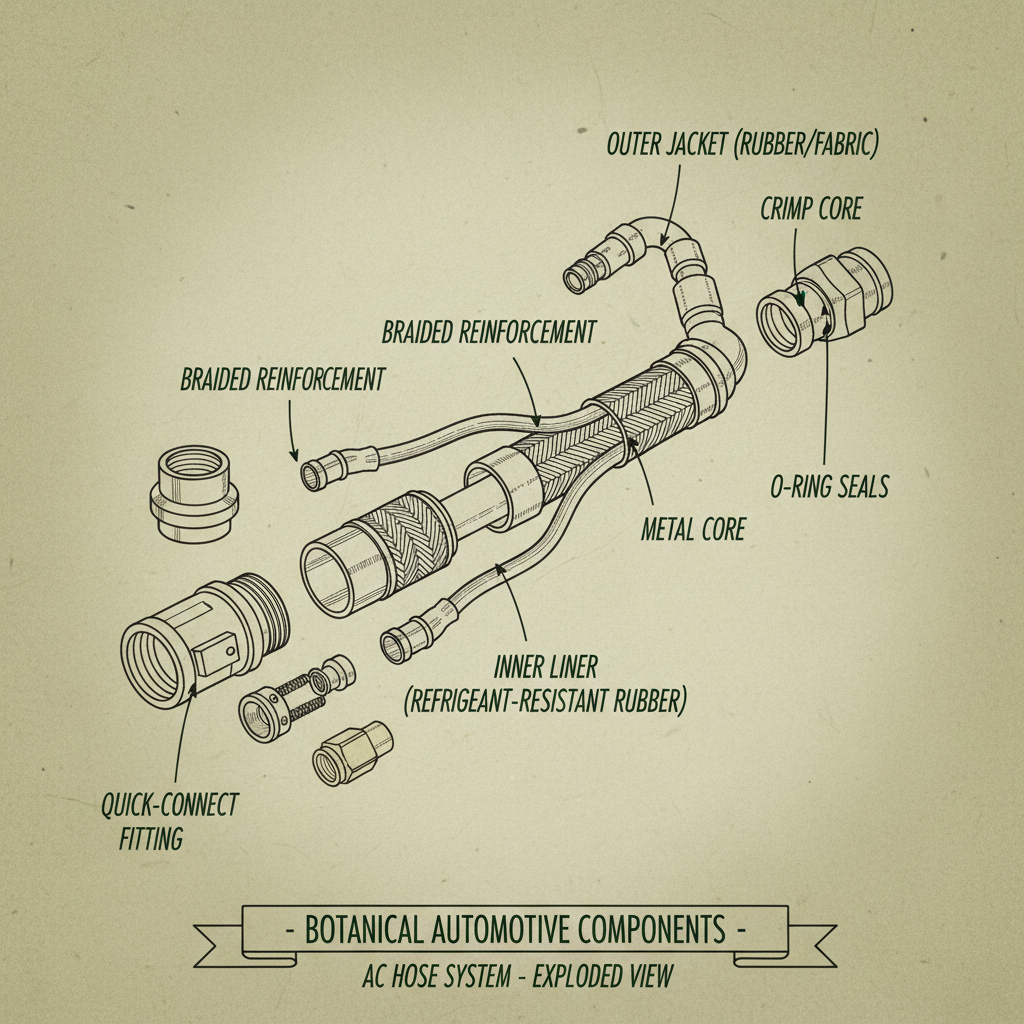
Look, I've spent the last fifteen years getting dirt under my fingernails, tracking engineers across job sites, and frankly, wrestling with hoses. And let me tell you, a good auto ac charging hose isn't just a tool; it's a lifeline. It's the difference between getting the job done right, on time, and not having to explain a system failure to a very unhappy client. The demand for efficient and reliable AC systems in vehicles is skyrocketing, and that means more technicians are relying on these hoses every single day. A bad hose impacts productivity, leads to refrigerant leaks (which are a huge environmental and financial headache), and just generally makes everyone’s life harder. That’s why understanding what makes a truly robust auto ac charging hose is crucial.
The automotive industry is constantly evolving, and with it, the demands placed on service equipment. We’re seeing newer refrigerants that require hoses compatible with their chemical properties, and higher system pressures needing hoses that can withstand the stress. It’s not your grandpa’s AC system anymore. Globally, the automotive repair and maintenance market is booming, particularly in developing nations where vehicle ownership is increasing rapidly. According to reports, the global automotive AC market is projected to reach significant heights in the coming years, putting even more strain on the availability of quality components like the auto ac charging hose. Ignoring this shift isn’t an option.
Simply put, an auto ac charging hose is a flexible conduit used to transfer refrigerant between the AC service machine and the vehicle’s AC system during charging, evacuation, and leak detection processes. It’s a seemingly simple component, but the materials, construction, and design directly impact the efficiency, safety, and environmental responsibility of the entire AC service. It’s a critical link in a chain that keeps people cool and comfortable, and it directly influences a shop's reputation and bottom line.


Let’s be clear: a cheap auto ac charging hose will cost you more in the long run. I’ve seen too many shops skimp on this component only to deal with refrigerant leaks, inaccurate charges, and downtime. Durability is paramount. You need a hose that can withstand repeated use, bending, and exposure to harsh chemicals and environmental conditions.
Beyond durability, flexibility matters. Technicians are often working in tight spaces, and a stiff, unwieldy hose just makes the job harder and increases the risk of damage. And don’t underestimate the importance of quick-connect fittings. Every minute saved during a service call adds up, especially in a busy shop.
High-pressure hoses are constructed with stronger reinforcement layers, often using steel wire braiding, to safely handle the increased pressures found in newer vehicle AC systems utilizing refrigerants like HFO-1234yf. Standard hoses are generally suitable for older systems using R-134a but can fail catastrophically under higher pressures, posing a safety risk and leading to refrigerant leaks. Always verify the hose’s pressure rating matches your system requirements.
There isn’t a fixed schedule, but inspect your hoses regularly for cracks, abrasions, swelling, or any signs of damage. Even if they appear fine, it’s good practice to replace them every 2-3 years, or more frequently with heavy use. Consider it preventative maintenance. Ignoring this can lead to unexpected downtime and costly repairs. A preventative replacement is far cheaper than a full system flush due to contamination.
No, absolutely not! Different refrigerants require different hose materials. Using a hose not designed for a specific refrigerant can cause it to degrade, swell, or even rupture, leading to leaks and potential system damage. Always use a hose specifically rated for the refrigerant you’re working with. Dedicated hoses are a small investment that can save you a lot of trouble.
Look for fittings that are leak-proof, durable, and easy to connect and disconnect. Brass fittings are common, but stainless steel offers better corrosion resistance. Ensure the fittings are compatible with your AC service machine and vehicle’s service ports. A good quick-connect system minimizes refrigerant loss during connections and disconnections, saving you time and money.
Store your hose in a clean, dry place away from direct sunlight, heat, and chemicals. Coil it loosely to avoid kinking or damaging the reinforcement layers. Avoid storing it with other tools that could cause abrasions. Proper storage extends the hose’s lifespan and ensures it’s ready for use when you need it.
Common signs include visible cracks or abrasions, swelling or softening of the hose material, difficulty maintaining vacuum, refrigerant leaks around the fittings, or a noticeable decrease in performance. If you observe any of these signs, replace the hose immediately to avoid further damage and potential safety hazards.
A reliable auto ac charging hose isn't just a component – it’s a vital link in the automotive AC servicing process, impacting everything from efficiency and safety to environmental responsibility and customer satisfaction. Choosing the right hose, based on refrigerant compatibility, pressure requirements, and durability, is a crucial decision for any professional technician or shop owner.
Looking ahead, staying informed about the latest refrigerant trends and hose technologies is essential. Investing in high-quality hoses and implementing proper maintenance practices will not only save you money in the long run but also ensure you’re providing the best possible service to your customers. For top-quality auto ac charging hose and expert advice, visit our website: www.kemohose.com

 Afrikaans
 Albanian
 Amharic
 Arabic
 Armenian
 Azerbaijani
 Basque
 Belarusian
 Bengali
 Bosnian
 Bulgarian
 Catalan
 Cebuano
 Corsican
 Croatian
 Czech
Czech
 Danish
 Dutch
Dutch
 Esperanto
 Estonian
 Finnish
 French
 Frisian
 Galician
 Georgian
 German
 Greek
Greek
 Gujarati
 Haitian Creole
 Hausa
Hausa
 Hawaiian
 Hebrew
 Hindi
Hindi
 Miao
Miao
 Hungarian
 Icelandic
 Igbo
Igbo
 Indonesian
 Irish
Irish
 Italian
 Japanese
 Javanese
 Kannada
 Kazakh
 Khmer
Khmer
 Rwandese
 Korean
 Kurdish
 Kyrgyz
 Lao
Lao
 Latin
Latin
 Latvian
 Lithuanian
 Luxembourgish
 Macedonian
 Malgashi
 Malay
Malay
 Malayalam
 Maltese
 Maori
Maori
 Marathi
 Mongolian
 Myanmar
 Nepali
 Norwegian
 Norwegian
 Occitan
 Pashto
 Persian
 Polish
 Portuguese
 Punjabi
 Romanian
 Russian
 Samoan
 Scottish Gaelic
 Serbian
 Sesotho
 Shona
Shona
 Sindhi
 Sinhala
 Slovak
 Slovenian
 Somali
 Spanish
 Sundanese
 Swahili
 Swedish
 Tagalog
 Tajik
Tajik
 Tamil
Tamil
 Tatar
Tatar
 Telugu
 Thai
Thai
 Turkish
 Turkmen
 Ukrainian
 Urdu
Urdu
 Uighur
 Uzbek
Uzbek
 Vietnamese
 Welsh
Welsh
 Bantu
Bantu
 Yiddish
 Yoruba
 Zulu
Zulu
 English