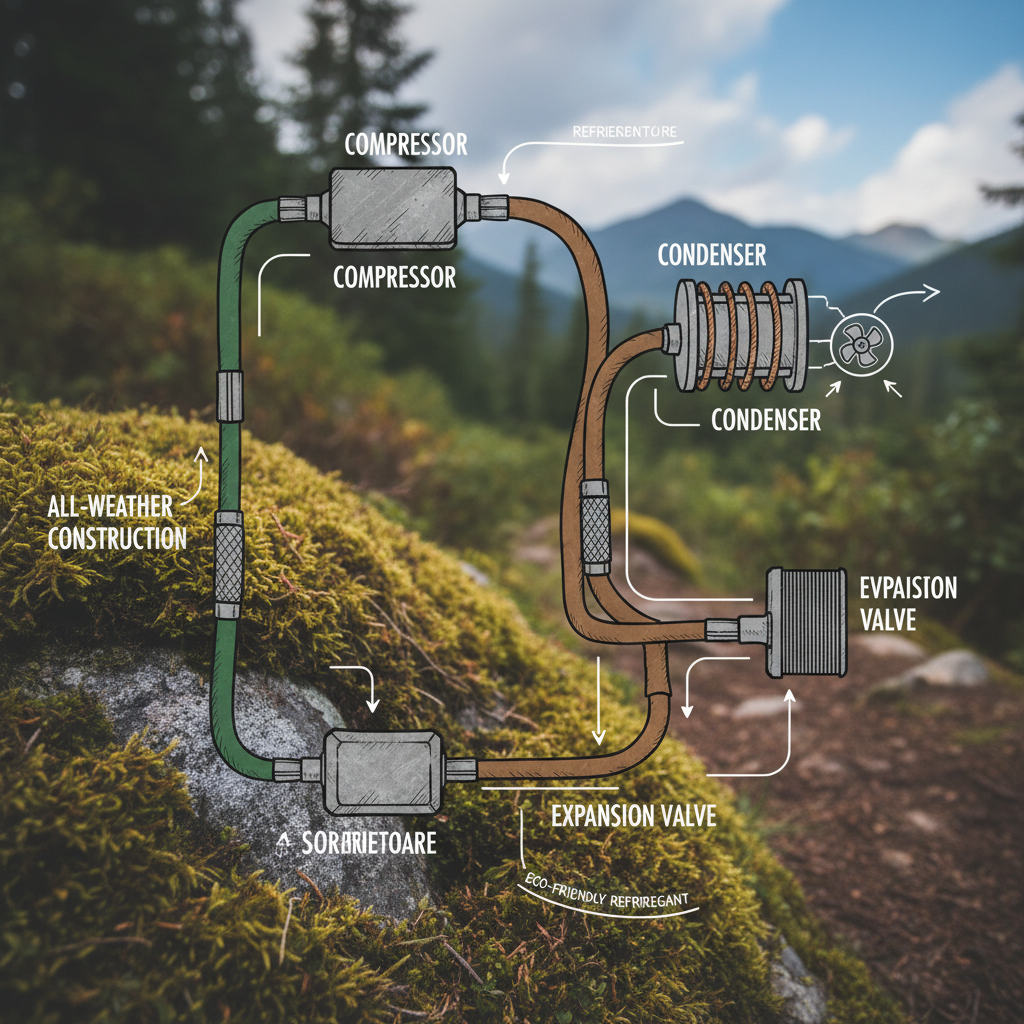
In the demanding world of automotive climate control, the efficiency of heat exchange depends heavily on the integrity of the transport lines. High-quality auto ac tubing serves as the critical circulatory system of a vehicle's HVAC unit, ensuring that refrigerants flow seamlessly between the compressor, condenser, and evaporator. Without precision-engineered tubing, the cooling performance drops, leading to increased fuel consumption and driver discomfort.
The global automotive industry is currently transitioning toward more sustainable refrigerants and lightweight materials to meet stringent ISO standards and emission targets. This shift has placed a spotlight on the material science behind auto ac tubing, where the balance between flexibility, burst pressure resistance, and permeation rates determines the lifespan of the entire air conditioning system.
Understanding the technical nuances of these components is not just for engineers; it is essential for fleet managers and aftermarket specialists who aim to reduce downtime. By optimizing the selection of tubing materials and installation techniques, manufacturers can significantly enhance the thermal efficiency of vehicles operating in extreme climates, from the scorching deserts of the Middle East to the freezing plains of Northern Europe.
Global Relevance of Auto AC Tubing
The demand for high-performance auto ac tubing has scaled proportionally with the rise of global urbanization and the increasing volatility of weather patterns. As temperatures rise in emerging markets, the automotive HVAC system is no longer a luxury but a safety requirement to prevent driver fatigue and heatstroke.
Industrial data suggests that refrigerant leakage—often caused by degraded tubing—is one of the primary reasons for AC system failure. Adhering to international quality benchmarks ensures that these lines can withstand high-frequency vibrations and extreme thermal cycling without compromising the sealed environment of the refrigerant loop.
Technical Definition and Industrial Role
At its most basic level, auto ac tubing refers to the specialized conduits—composed of aluminum, reinforced rubber, or multi-layer polymers—that transport refrigerant in both liquid and gaseous states. These lines must be meticulously engineered to handle the transition from high-pressure discharge to low-pressure suction, maintaining a tight seal under immense stress.
In the context of modern manufacturing, this tubing is the bridge between the mechanical components of the compressor and the thermal exchange of the condenser. It must be chemically compatible with various refrigerants, such as R-134a or the newer R-1234yf, to prevent internal corrosion and ensure the longevity of the lubricant oil flowing through the system.
Beyond simple transport, the geometry and routing of the tubing are critical for avoiding interference with other engine components. Modern automotive design utilizes precision bending and crimping technologies to ensure that the tubing maximizes space efficiency while minimizing the risk of kinking, which would otherwise restrict refrigerant flow and kill cooling efficiency.
Core Components for Performance
The effectiveness of auto ac tubing is primarily driven by its material composition. Most high-end systems utilize a hybrid approach, combining the rigidity of aluminum for long runs and the flexibility of reinforced rubber hoses for sections subject to engine movement.
Permeation resistance is another critical factor. Because refrigerants are small molecules, low-quality auto ac tubing can actually "leak" refrigerant through the walls of the hose over several years. Utilizing multi-layer barrier technology prevents this gas migration, maintaining system pressure and reducing environmental impact.
Finally, the fitting and seal interface plays a decisive role. The connection points where tubing meets the compressor or evaporator must be airtight. Advanced crimping techniques and the use of high-grade O-rings ensure that the system remains hermetically sealed even under the violent vibrations of a high-RPM engine.
Durability and Pressure Metrics
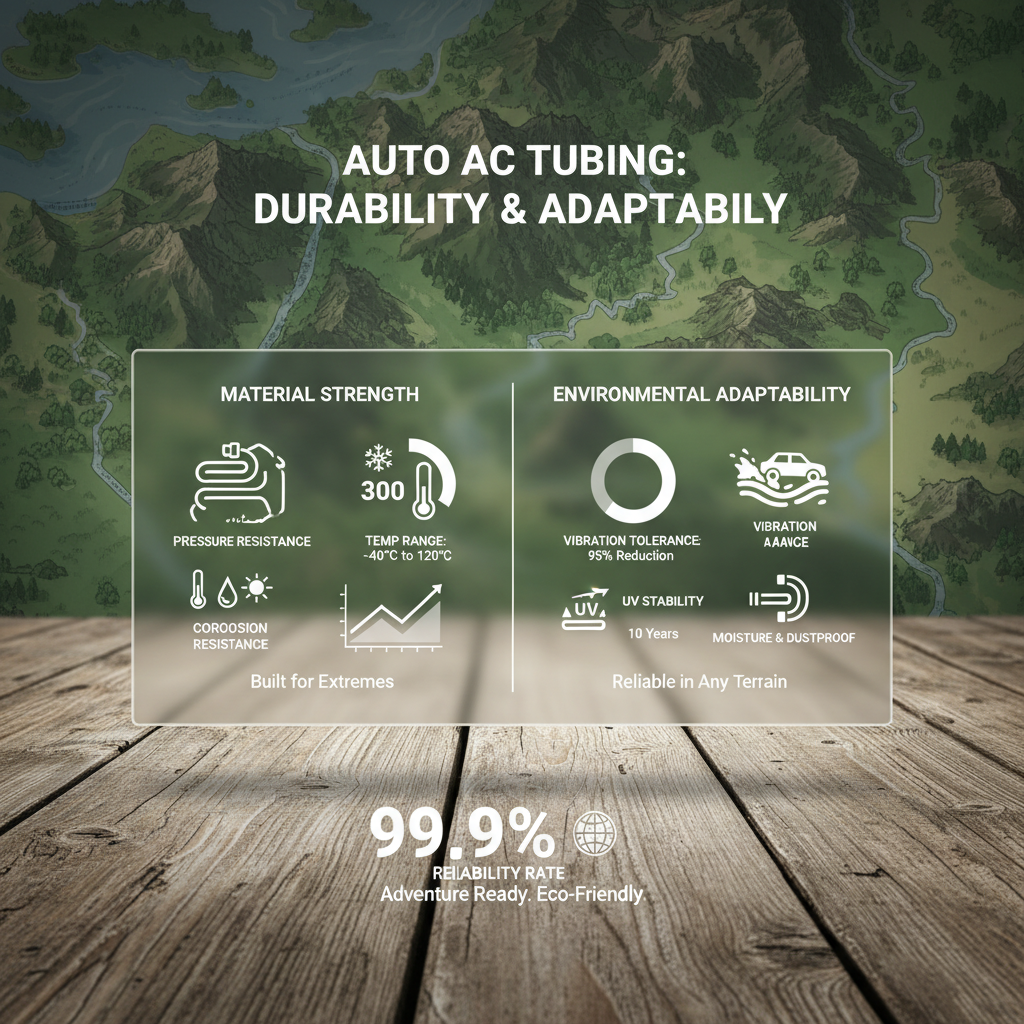
When evaluating the quality of auto ac tubing, engineers look at two primary metrics: Burst Pressure and Cycle Life. The tubing must be capable of handling peak pressure spikes during compressor startup without deformation, while simultaneously enduring thousands of thermal expansion and contraction cycles.
To visualize the performance gap between different material grades, we analyze the relative efficiency and durability ratings across various manufacturing methods.
Performance Rating of Different Auto AC Tubing Material Methods
Global Applications and Use Cases
The application of auto ac tubing extends far beyond passenger cars. In heavy-duty commercial trucking and long-haul logistics, these lines are subjected to constant vibration and exposure to road salts, requiring higher corrosion resistance and reinforced outer jackets to prevent premature failure.
In specialized sectors, such as emergency response vehicles or remote industrial mining trucks, the tubing must operate in extreme temperature swings. For instance, in Arctic mining zones, the rubber components of the tubing must remain flexible at -40°C to prevent cracking, ensuring that the cabin remains habitable for operators in life-critical environments.
Long-Term Value and Reliability
Investing in premium auto ac tubing translates directly into lower Total Cost of Ownership (TCO). While lower-grade tubing may reduce initial assembly costs, the subsequent cost of refrigerant recharge and labor for leak repairs far outweighs the initial savings.
From a sustainability perspective, high-reliability tubing prevents the escape of potent greenhouse gases into the atmosphere. By reducing the frequency of leaks, manufacturers contribute to a smaller environmental footprint, aligning their production with global ESG (Environmental, Social, and Governance) goals.
Ultimately, the reliability of the AC tubing fosters trust between the vehicle manufacturer and the end-user. A system that maintains peak cooling performance for a decade without a single leak is a testament to the engineering precision and material quality of the underlying tubing infrastructure.
Future Trends in Tubing Innovation
The evolution of auto ac tubing is currently being driven by the rise of Electric Vehicles (EVs). Unlike internal combustion engines, EVs require sophisticated thermal management systems that often integrate the cabin AC with the battery cooling loop, necessitating tubing that can handle more complex fluid dynamics and diverse temperature gradients.
We are also seeing a move toward "smart tubing" and additive manufacturing. 3D printing allows for the creation of optimized internal geometries that reduce turbulence and pressure drops, while embedded sensors could one day allow the tubing to "report" a thinning wall or a micro-leak before a total system failure occurs.
As we move toward a circular economy, the focus is shifting toward 100% recyclable thermoplastic elastomers that offer the same performance as traditional rubbers but can be reprocessed at the end of the vehicle's life cycle.
Analysis of Auto AC Tubing Material Specifications
| Material Type |
Pressure Rating |
Thermal Range |
Recyclability |
| Aluminum 6063 |
Very High |
-50°C to 150°C |
Excellent |
| EPDM Rubber |
Medium |
-40°C to 120°C |
Moderate |
| Nylon PA12 |
High |
-60°C to 110°C |
High |
| Fluoropolymer |
High |
-50°C to 200°C |
Low |
| Composite Hybrid |
Very High |
-40°C to 140°C |
Moderate |
| Steel Braided |
Extreme |
-40°C to 130°C |
Moderate |
FAQS
The most frequent failures are caused by vibration-induced friction, where the tubing rubs against other engine components, leading to pinhole leaks. Additionally, thermal degradation of rubber sections and corrosion of aluminum lines in salty coastal environments can compromise the system's integrity over time.
While possible in certain low-pressure sections, it is generally not recommended for high-pressure discharge lines. Aluminum provides the necessary structural rigidity and burst pressure resistance. Rubber hoses are typically reserved for flexible connections to accommodate engine movement.
Different refrigerants have different chemical properties and react differently with lubricants. For example, newer HFO refrigerants require tubing with extremely low permeation rates to prevent gas loss, often requiring specific polymer barriers that weren't necessary for older R-12 systems.
For passenger vehicles, a visual inspection during every annual service is sufficient. However, for commercial fleets, a more rigorous quarterly check for "sweating" (oil residue) at the joints is recommended, as oil leaks are the first sign of a failing seal in the tubing.
Small leaks in rubber sections can sometimes be patched, but aluminum tubing typically requires professional brazing or a complete section replacement. Due to the high pressures involved, using "leak seal" additives is generally discouraged as they can clog the expansion valve.
When manufactured to ISO standards and installed correctly, high-quality tubing should last the entire lifetime of the vehicle (15-20 years). However, environmental factors like extreme heat or road salt can reduce this to 7-10 years if protective coatings are not used.
Conclusion
To summarize, auto ac tubing is far more than a simple set of pipes; it is a precision-engineered component that balances material science, thermal dynamics, and mechanical durability. From the selection of high-grade aluminum and barrier polymers to the implementation of rigorous pressure testing, every detail contributes to the overall efficiency and environmental sustainability of the vehicle's cooling system.
Looking forward, the industry must continue to embrace lightweight, recyclable materials and integrated sensing technologies to meet the demands of the EV era. By prioritizing quality over initial cost, manufacturers and fleet operators can ensure maximum reliability, safety, and comfort for drivers worldwide. For industry-leading solutions in automotive hosing, visit our website: www.kemohose.com.