
Refrigeration Hose: Leak-Tight, Flexible, R1234yf Ready?
Oct . 08, 2025 22:35 Back to list
Refrigeration Hose: Leak-Tight, Flexible, R1234yf Ready?
Refrigeration Hose: Insider Notes, Specs, and Real-World Lessons
If you work around HVACR or mobile A/C long enough, you learn that a good refrigeration hose quietly saves you money. Fewer leak callbacks. Cleaner installs. And, to be honest, fewer awkward conversations with a fleet manager on a hot Friday afternoon. This piece pulls together what’s changing in the market, the nuts-and-bolts specifications, and some field notes I wish I’d known ten years ago.
What’s trending
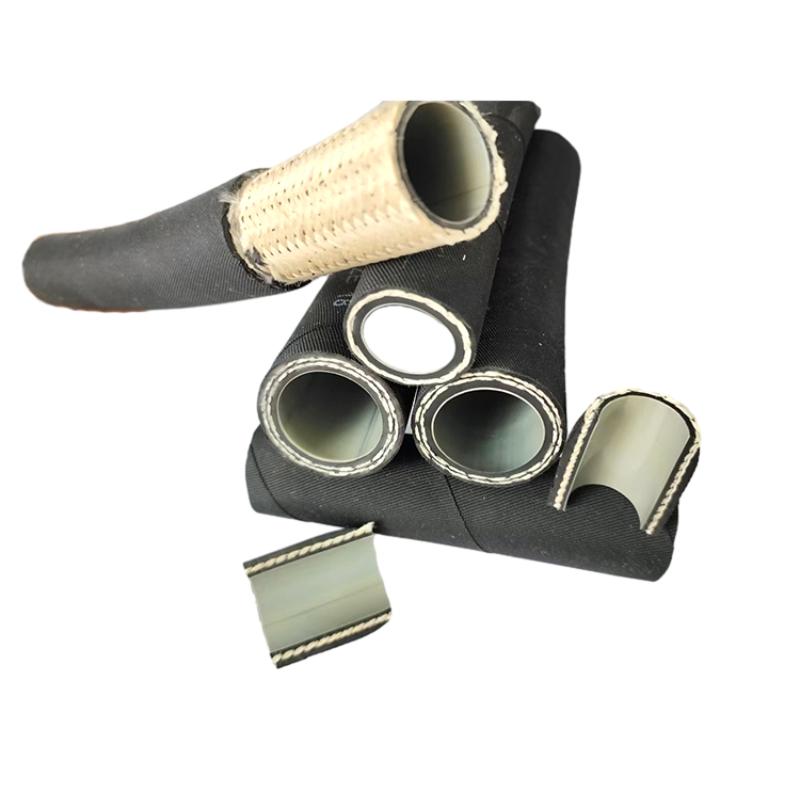
Two things: low-permeation barriers and refrigerant flexibility. With the gradual shift to R1234yf and tighter environmental targets, buyers are asking for hoses that keep charge loss down and handle higher under-hood temps. In fact, many customers say bend radius and vibration control matter almost as much as pressure rating—because routing in cramped bays is… let’s call it creative.
Core specifications (field-friendly)
| Parameter | Spec (≈ real-world) |
|---|---|
| Working temperature | -40℃ to +140℃ (-40°F to 284°F) |
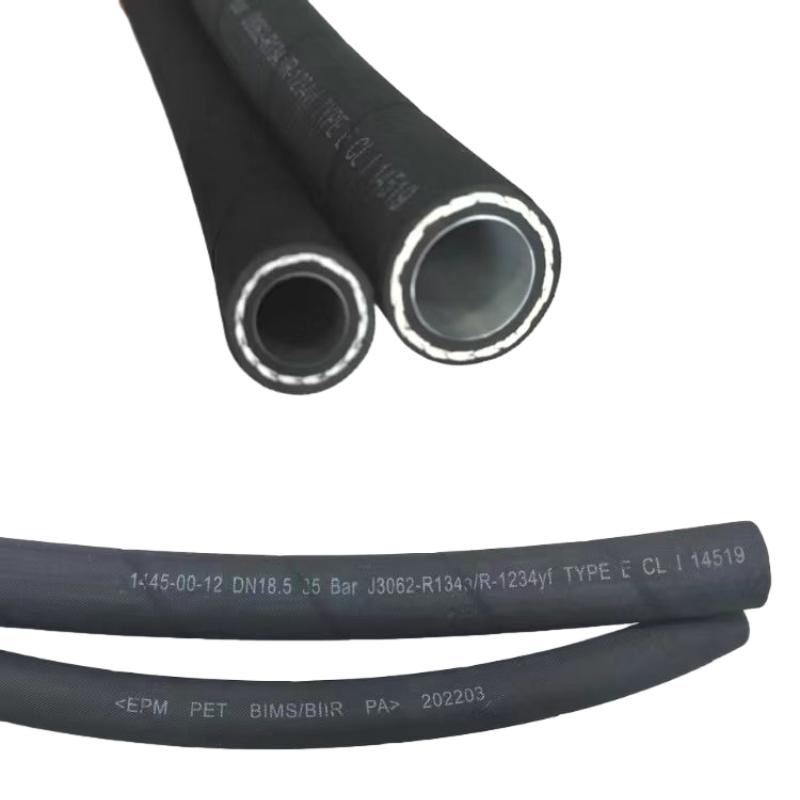
| Barrier layer | PA/Nylon low-permeation (SAE J2064 compliant) |
| Friction/inner tube | EPDM / CSM / IIR blend |
| Reinforcement | PET/PVA textile braid |
| Cover | EPDM or cloth-wrap finish, black (custom colors by request) |
| Standards & certificates | SAE J2064; 3C / DOT |
| Compatible refrigerants | R134a, R1234yf, and many HFC/HFO blends (check oil compatibility) |
| Typical service life | ≈5–8 years in automotive A/C; varies with heat cycling and routing |
| Origin | Niu Jiazhai Industrial Area, Changzhuang Town, Wei County, Hebei Province, China |
Lab snapshots: permeation often ≤2.0 g/m²/day (R134a at elevated temp), proof pressure ≈ 2× working pressure, burst ≥ 5× typical low-side pressure—your mileage depends on size and fittings. Always validate against your duty cycle.
How it’s made (quick process flow)
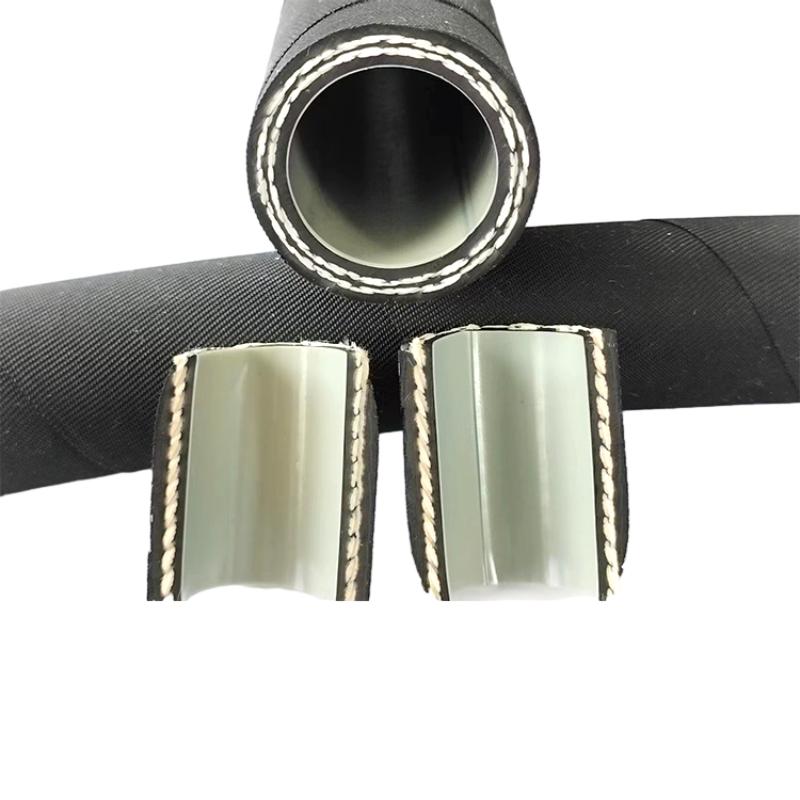
- Compounding: EPDM/CSM/IIR inner layer tailored for oil and refrigerant resistance.
- Co-extrusion: PA/Nylon barrier applied for low permeation.
- Reinforcement: PET/PVA braid for strength without killing flexibility.
- Cover extrusion or cloth-wrap: EPDM outer for ozone/heat; optional fabric imprint.
- Vulcanization: controlled cure for adhesion and dimensional stability.
- Testing: SAE J2064 permeability, proof/burst, bend radius, vacuum collapse, ozone aging, salt spray on assemblies.
Where it’s used
Refrigeration hose finds its way into automotive A/C (cars, buses), electric vehicle heat pumps, supermarket cases, chillers, reefer trucks, construction equipment, and even compact heat-pump retrofits in tight mechanical rooms. Installers like the cloth cover when routing against sharp brackets—less scuffing.
Customization options
IDs from around 5/16″ to 1/2″ (larger upon request), cover color/layline branding, coil lengths, and matched fittings (crimp or reusable). If you’re wrestling with R1234yf, ask for low-perm grade and oil-specific compatibility notes.
Vendor snapshot (what buyers actually compare)
| Vendor | Strengths | Lead time (≈) | Certs | Notes |
|---|---|---|---|---|
| KEMO Hose | SAE J2064 focus, low-perm nylon barrier, custom covers | 2–5 weeks | 3C/DOT | Value pricing, OEM/private-label friendly |
| Global Brand A | Extensive catalog, global stock | In stock–4 weeks | SAE/ISO | Premium pricing |
| Regional Supplier B | Quick small-batch runs | 1–3 weeks | Local compliance | Check J2064 grade by refrigerant |
Mini case files
Transit bus fleet, Southeast Asia: Switching to a low-perm refrigeration hose cut annual top-ups by ~18% and reduced compressor short-cycling in peak season. Techs reported easier routing with cloth cover.
Cold-chain trailers, EU retrofit: After replacing aging lines, leak-related downtime dropped ≈30% over six months; vacuum-hold tests were consistently tighter (simple, but telling).
Practical tips
- Match oil and elastomer: PAG vs POE can matter more than marketing claims.
- Respect bend radius; kinks destroy barrier integrity—permeation spikes later.
- Crimp integrity: follow ferrule/fitting pairing and mic the crimp OD, every time.
- Document vacuum decay; it’s the quickest pre-charge sanity check.
Bottom line: a modern refrigeration hose that’s SAE J2064-compliant, with PA/Nylon barrier and EPDM-based construction, is a safe bet for R134a and R1234yf systems—and a small upgrade that often pays back in avoided leaks.
Authoritative references
- SAE J2064: R-134a (R-1234yf) Automotive Air-Conditioning Hose Requirements and Test Procedures. SAE International.
- SAE J639: Safety Standards for Motor Vehicle Refrigerant Systems. SAE International.
- ASHRAE Handbook—HVAC Systems and Equipment, Refrigeration Piping and Components chapters, latest edition.
Latest news
-
Transmission Oil Cooler Pipe Maintenance and Selection Guide
NewsApr.16,2026
-
Ultimate Guide to Choosing Transmission Oil Cooler Line Hose
NewsApr.09,2026
-
Essential Guide to Transmission Oil Cooler Hose 5/16 for Vehicle Longevity
NewsApr.07,2026
-
Understanding the Critical Role of Transmission Oil Cooler Hose 1 2 for Vehicle Longevity
NewsApr.04,2026
-
Understanding Transmission Oil Coolant Lines For Optimal Vehicle Performance
NewsMar.31,2026
-
Comprehensive Guide to Oil Coolant Pipe Selection and Industrial Applications
NewsMar.28,2026
 Afrikaans
 Albanian
 Amharic
 Arabic
 Armenian
 Azerbaijani
 Basque
 Belarusian
 Bengali
 Bosnian
 Bulgarian
 Catalan
 Cebuano
 Corsican
 Croatian
 Czech
Czech
 Danish
 Dutch
Dutch
 Esperanto
 Estonian
 Finnish
 French
 Frisian
 Galician
 Georgian
 German
 Greek
Greek
 Gujarati
 Haitian Creole
 Hausa
Hausa
 Hawaiian
 Hebrew
 Hindi
Hindi
 Miao
Miao
 Hungarian
 Icelandic
 Igbo
Igbo
 Indonesian
 Irish
Irish
 Italian
 Japanese
 Javanese
 Kannada
 Kazakh
 Khmer
Khmer
 Rwandese
 Korean
 Kurdish
 Kyrgyz
 Lao
Lao
 Latin
Latin
 Latvian
 Lithuanian
 Luxembourgish
 Macedonian
 Malgashi
 Malay
Malay
 Malayalam
 Maltese
 Maori
Maori
 Marathi
 Mongolian
 Myanmar
 Nepali
 Norwegian
 Norwegian
 Occitan
 Pashto
 Persian
 Polish
 Portuguese
 Punjabi
 Romanian
 Russian
 Samoan
 Scottish Gaelic
 Serbian
 Sesotho
 Shona
Shona
 Sindhi
 Sinhala
 Slovak
 Slovenian
 Somali
 Spanish
 Sundanese
 Swahili
 Swedish
 Tagalog
 Tajik
Tajik
 Tamil
Tamil
 Tatar
Tatar
 Telugu
 Thai
Thai
 Turkish
 Turkmen
 Ukrainian
 Urdu
Urdu
 Uighur
 Uzbek
Uzbek
 Vietnamese
 Welsh
Welsh
 Bantu
Bantu
 Yiddish
 Yoruba
 Zulu
Zulu
 English