
Need a Refrigeration Hose: Low-Loss, Flexible, Durable?
Oct . 02, 2025 13:15 Back to list
Need a Refrigeration Hose: Low-Loss, Flexible, Durable?
What’s New in Refrigeration Hoses: Field Notes from the Shop Floor
If you’ve ever chased a tiny refrigerant leak at 7 p.m. on a Friday (I have), you know the hose isn’t a commodity part—it's the heartbeat of a sealed system. The refrigeration hose I’ve been evaluating lately comes out of Niu Jiazhai Industrial Area, Changzhuang Town, Wei County, Hebei, China. The factory people there talk a lot about barrier chemistry and crimp repeatability, which, to be honest, is exactly what you want to hear.
Industry trends (and why they matter)
Two big shifts are reshaping specs: the move toward low-GWP refrigerants (think R1234yf) and tighter emissions rules. In practice, that means you need a refrigeration hose with a stable PA/NYLON barrier and a cover that won’t chalk out when parked under a brutal sun. Many customers say they now prioritize permeation numbers over burst pressure—interesting, because both still matter.
Core construction and process flow
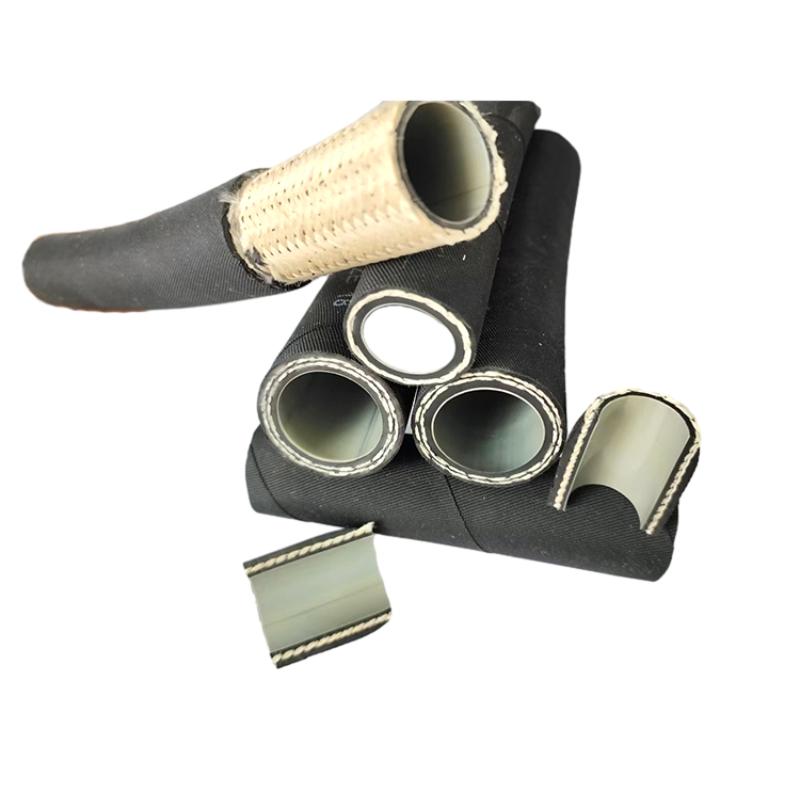
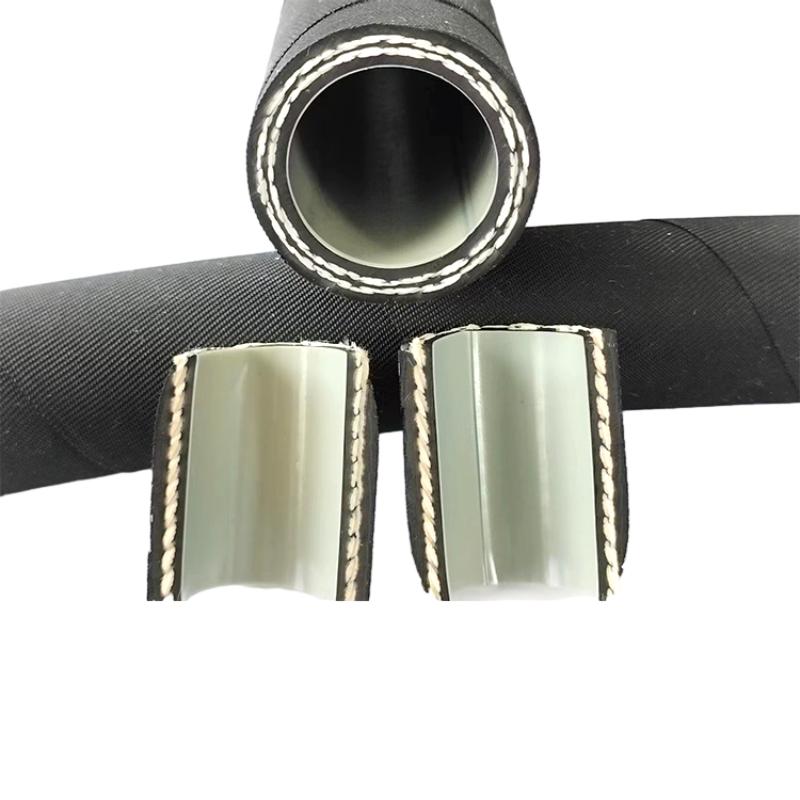
- Inner tube: EPDM/CSM/IIR blend for chemical compatibility and flexibility.
- Barrier: PA/NYLON extruded layer to cut refrigerant permeation.
- Reinforcement: PET/PVA textile braid for pressure stability.
- Cover: EPDM or cloth-wrapped finish for abrasion and ozone resistance.
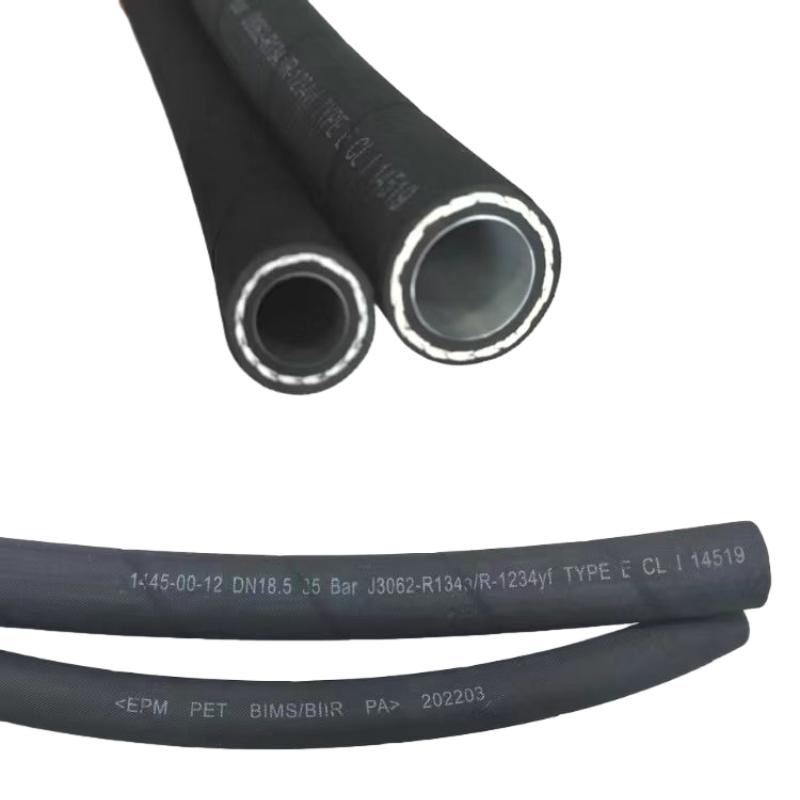
Methods: multi-layer co-extrusion → textile braiding → vulcanization (controlled cure) → cut and crimp → 100% pressure and leak check. Testing: SAE J2064 procedures, hydrostatic proof, burst, permeation (R134a/R1234yf), vacuum collapse, and cyclic flex. Service life is typically 5–10 years depending on thermal cycles, oil, and UV exposure—real-world use may vary.
Quick specification snapshot
| Working temperature | -40℃ to +140℃ (-40°F to 284°F) |
| Barrier | PA/NYLON |
| Inner tube (compound) | EPDM / CSM / IIR |
| Reinforcement | PET / PVA braid |
| Cover | EPDM or cloth-wrapped |
| Standard | SAE J2064 |
| Certificates | 3C / DOT |
Internal test data, ≈ values: R134a permeation ≤ 1.5 g/m²/day; R1234yf ≈ 1.8 g/m²/day; proof pressure ≥ 2.5× WP; burst ≥ 4× WP; vacuum collapse pass at -100 kPa for 10 min (per lab rig). Always verify with your own qualification runs.
Where it’s being used
- Automotive A/C (R134a, R1234yf), buses and off-highway HVAC. - Refrigerated vans and box trucks. - Heat pumps and packaged chillers. - Stationary cold rooms where a flexible refrigeration hose section eases vibration and service.
Vendor comparison (what buyers actually ask)
| Vendor | Permeation (R134a) | Certs/Std | Lead time | Customization |
|---|---|---|---|---|
| KEMO Hose (Hebei) | ≈ 1.5 g/m²/day | SAE J2064; 3C/DOT | 3–5 weeks | ID/OD, print, fittings, color |
| Import OEM A | ≈ 1.8–2.2 g/m²/day | SAE J2064 | 6–8 weeks | Limited SKUs |
| Online Brand B | Not published | Claims DOT | Stock-based | Minimal |
Customization and fittings
You can spec ID from ~6 to 19 mm, custom colors, OEM print lines, and crimped ends (barb/ferrule, beadlock). For assembly QA: measure crimp OD with go/no-go gauges, then helium leak or vacuum decay—sounds fussy, but it saves returns. Customers tell me the pre-crimped refrigeration hose kits cut install time by around 30%.
Mini case study
A refrigerated van fleet in Southeast Asia swapped legacy rubber lines for the PA-barrier refrigeration hose. Over six months, top-up intervals stretched from bi-monthly to quarterly, and compressor cycling smoothed out—likely from lower microleak and better oil return. Not flashy, but the maintenance logs looked happier.
Bottom line
If your spec calls for SAE J2064, wide temp range, and practical certifications (3C/DOT), this build checks the boxes. The real win is consistent barrier performance and clean crimps. Vet it with your refrigerant/oil pair, of course, but it’s a solid contender.
Citations
- SAE International. SAE J2064: R-134a (R-1234yf) Refrigerant Automotive Air-Conditioning Hose and Hose Assemblies. https://www.sae.org/
- ISO 1402: Rubber and plastics hoses — Hydrostatic testing. International Organization for Standardization. https://www.iso.org/
- U.S. EPA SNAP Program: Substitute Refrigerants and Low-GWP Transition Guidance. https://www.epa.gov/snap
Latest news
-
Transmission Oil Cooler Pipe Maintenance and Selection Guide
NewsApr.16,2026
-
Ultimate Guide to Choosing Transmission Oil Cooler Line Hose
NewsApr.09,2026
-
Essential Guide to Transmission Oil Cooler Hose 5/16 for Vehicle Longevity
NewsApr.07,2026
-
Understanding the Critical Role of Transmission Oil Cooler Hose 1 2 for Vehicle Longevity
NewsApr.04,2026
-
Understanding Transmission Oil Coolant Lines For Optimal Vehicle Performance
NewsMar.31,2026
-
Comprehensive Guide to Oil Coolant Pipe Selection and Industrial Applications
NewsMar.28,2026
 Afrikaans
 Albanian
 Amharic
 Arabic
 Armenian
 Azerbaijani
 Basque
 Belarusian
 Bengali
 Bosnian
 Bulgarian
 Catalan
 Cebuano
 Corsican
 Croatian
 Czech
Czech
 Danish
 Dutch
Dutch
 Esperanto
 Estonian
 Finnish
 French
 Frisian
 Galician
 Georgian
 German
 Greek
Greek
 Gujarati
 Haitian Creole
 Hausa
Hausa
 Hawaiian
 Hebrew
 Hindi
Hindi
 Miao
Miao
 Hungarian
 Icelandic
 Igbo
Igbo
 Indonesian
 Irish
Irish
 Italian
 Japanese
 Javanese
 Kannada
 Kazakh
 Khmer
Khmer
 Rwandese
 Korean
 Kurdish
 Kyrgyz
 Lao
Lao
 Latin
Latin
 Latvian
 Lithuanian
 Luxembourgish
 Macedonian
 Malgashi
 Malay
Malay
 Malayalam
 Maltese
 Maori
Maori
 Marathi
 Mongolian
 Myanmar
 Nepali
 Norwegian
 Norwegian
 Occitan
 Pashto
 Persian
 Polish
 Portuguese
 Punjabi
 Romanian
 Russian
 Samoan
 Scottish Gaelic
 Serbian
 Sesotho
 Shona
Shona
 Sindhi
 Sinhala
 Slovak
 Slovenian
 Somali
 Spanish
 Sundanese
 Swahili
 Swedish
 Tagalog
 Tajik
Tajik
 Tamil
Tamil
 Tatar
Tatar
 Telugu
 Thai
Thai
 Turkish
 Turkmen
 Ukrainian
 Urdu
Urdu
 Uighur
 Uzbek
Uzbek
 Vietnamese
 Welsh
Welsh
 Bantu
Bantu
 Yiddish
 Yoruba
 Zulu
Zulu
 English