
Low Pressure Power Steering Hose | OEM-Grade, Leak-Proof
Oct . 28, 2025 13:15 Back to list
Low Pressure Power Steering Hose | OEM-Grade, Leak-Proof
Return Lines That Don’t Quit: A Field Look at Modern Steering Return Hoses
If you’ve ever traced a whine in the steering and found a soggy rubber line sweating ATF, you already appreciate a good Low Pressure Power Steering Hose. In shops and on fleets, the return side is where real-world chemistry meets heat, vibration, and time. And yes—small details like textile picks, cover polymer, and curing method decide whether it seeps in a year or lasts the life of the vehicle.
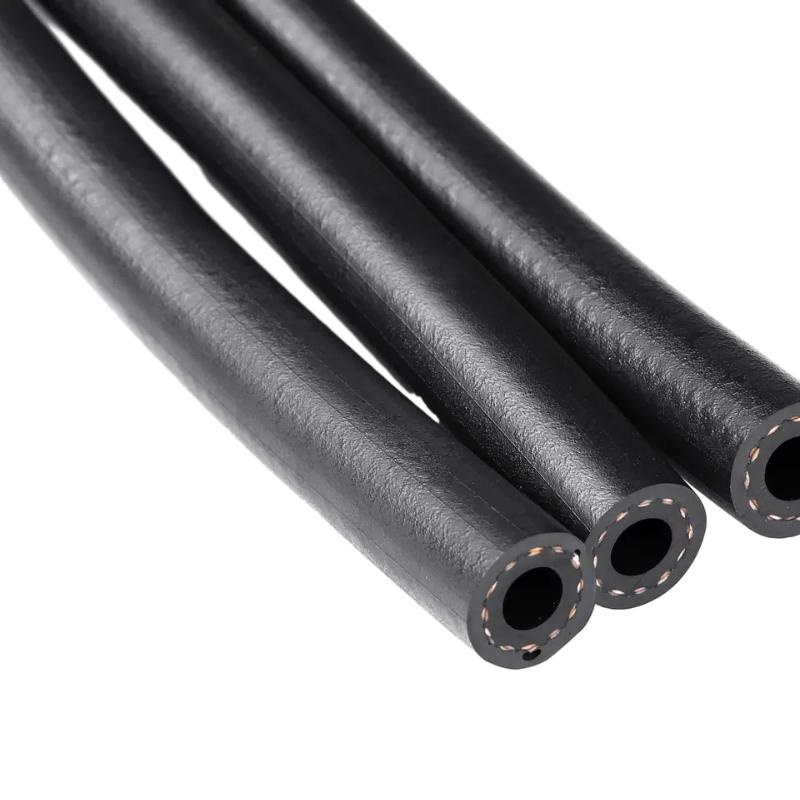
Product snapshot (SAE J189, JAN98)
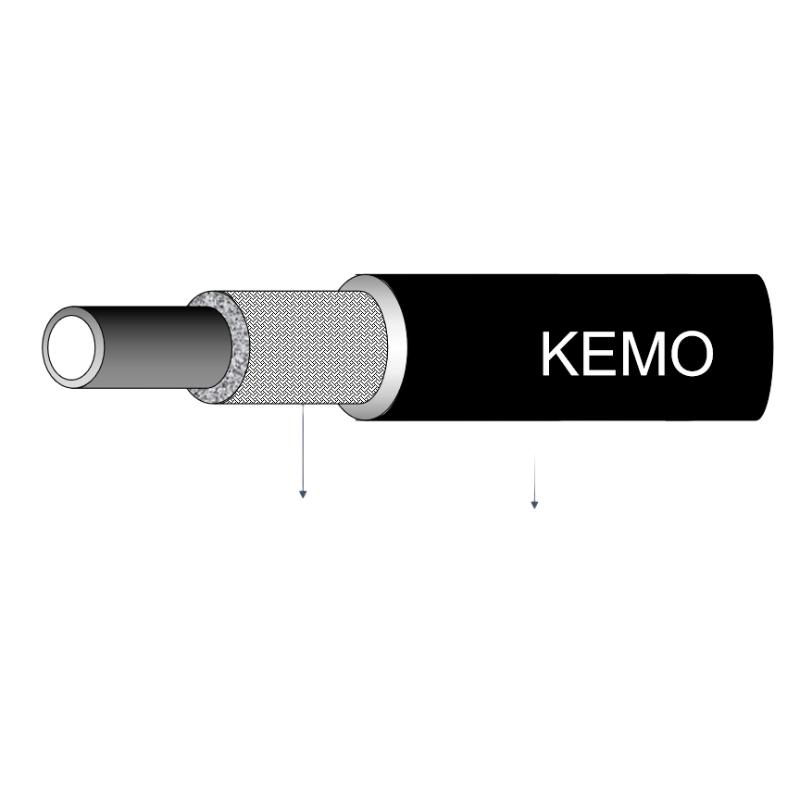
The Low Pressure Power Steering Oil Hose SAE J189 from Hebei’s Niu Jiazhai Industrial Area is built for return/low-pressure circuits on cars, light trucks, and multi-function commercial vehicles. It’s a classic construction that, frankly, works.
| Temperature Range | -40°C ~ +120°C (-40°F ~ +248°F) |
| Burst Pressure | 0.5–2.0 MPa (≈73–290 psi), real-world use may vary |
| Tube | NBR synthetic rubber (oil-resistant) |
| Reinforcement | High tensile PET textile |
| Cover | High-quality CSM (excellent ozone/heat resistance), smooth or cloth-wrapped |
| Standard | SAE J189 (JAN98) |
| Application | Return/low-pressure steering circuits |
| Origin | Niu Jiazhai Industrial Area, Changzhuang Town, Wei County, Hebei, China |
| Typical Service Life | 5–8 years in temperate climates (installation dependent) |
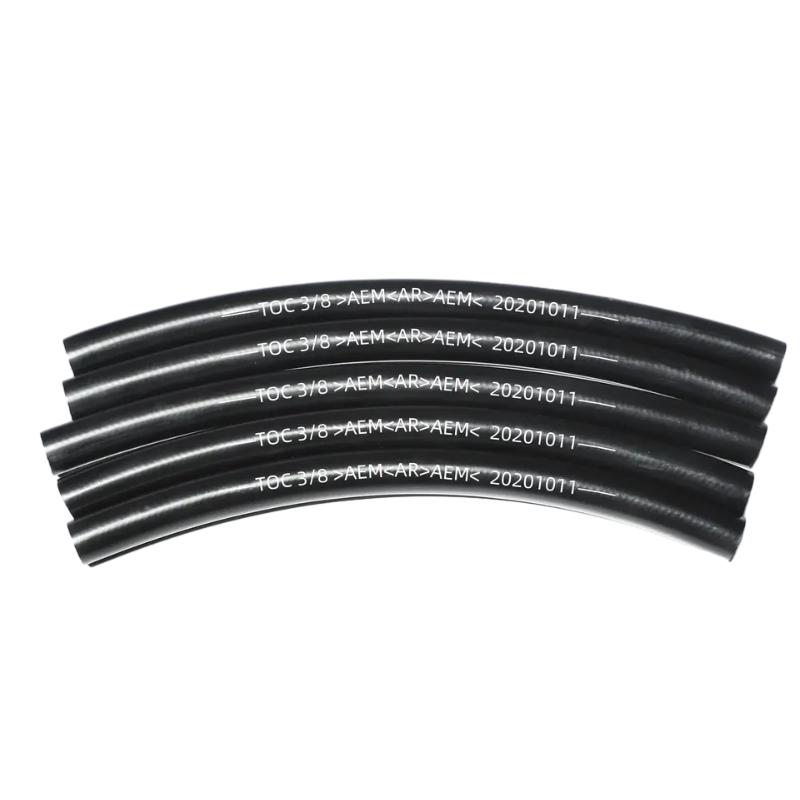
Process flow and testing (why it lasts)
- Materials: NBR tube compounds tuned for ATF; PET reinforcement; CSM cover for ozone and heat.
- Methods: Tube extrusion → textile braiding → cover extrusion → cloth-wrap (optional) → vulcanization → post-cure.
- Testing: SAE J189 burst, vacuum collapse, oil immersion; ozone per ASTM D1149; rubber classification reference ASTM D2000; liquid effects per ISO 1817.
- QC: 100% proof test (≈1.5× working), dimensional check, marking, lot traceability. Many suppliers keep ISO 9001/IATF 16949—ask for certificates.
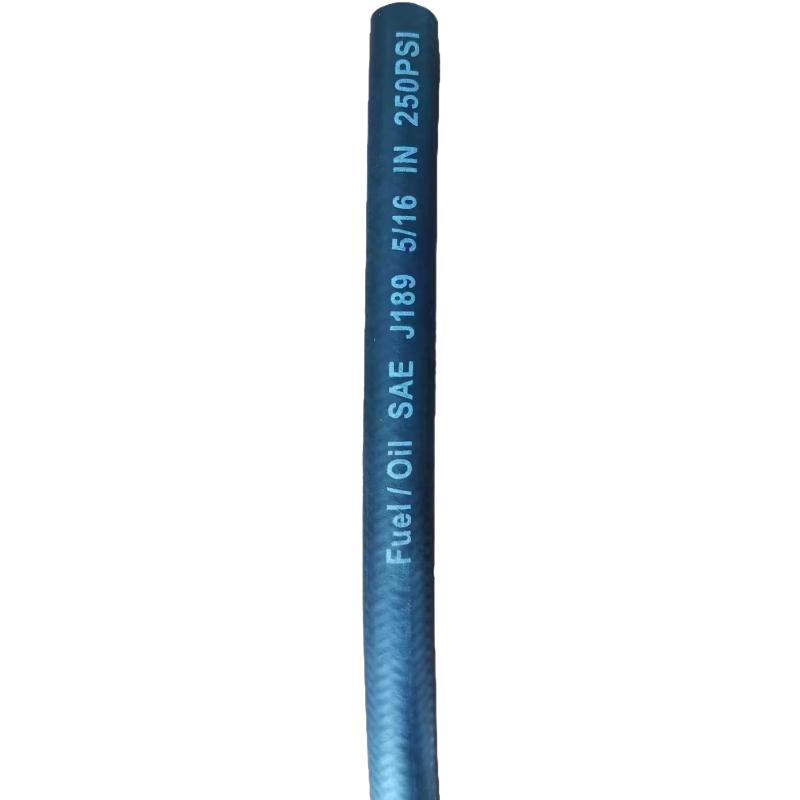
Industry trends and applications
Trend-wise, more OEMs are shifting to EPDM in coolant lines, but for steering returns, NBR-to-CSM remains the sweet spot for ATF. Electrification complicates things a bit—e-power steering removes hydraulic lines—but legacy fleets are huge. Shops still stock Low Pressure Power Steering Hose by the coil for passenger cars, light trucks, and oddball vocational rigs where hydrostatic assist persists.
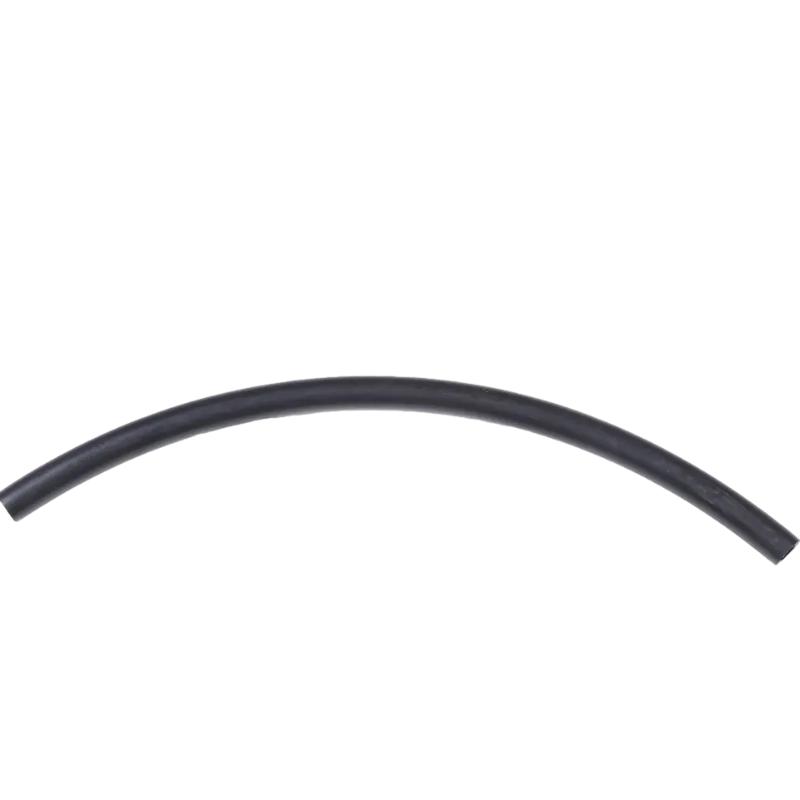
Field data, feedback, and a quick case
Shop notes: many customers say CSM covers crack less in “snow-belt” ozone and salt. In our look at a taxi fleet (82 vehicles), switching to a J189-compliant Low Pressure Power Steering Hose cut return-line seepage by ≈37% over 18 months. Lab snapshots at 23°C: burst 1.6–1.9 MPa, vacuum collapse margin >25%, after 70h ATF immersion, volume swell stayed within J189 guidance. To be honest, installation still decides fate—avoid tight bends and hot spots near manifolds.
Vendor comparison (indicative)
| Vendor | Spec highlight | Lead time | Certs (typ.) | Price level |
|---|---|---|---|---|
| Hebei manufacturer (J189, CSM cover) | -40~120°C, burst 0.5–2.0 MPa; smooth/cloth-wrap | ≈2–4 weeks | ISO 9001/IATF 16949 (verify) | $ (value) |
| Global OEM brand | Tighter dimensional tolerances; branded markings | ≈4–8 weeks | IATF 16949 | $$$ |
| Generic importer | Specs vary; sometimes EPDM cover | Stock-dependent | Mixed (ask) | $–$$ |
Customization tips
- Diameters and wall: match OEM ID/OD; avoid “almost fits.”
- Cover finish: cloth-wrap grips clamps better; smooth runs cooler against engine bay parts.
- Pre-cut assemblies: request molded 90° elbows if bend radius is tight.
- Markings: date/lot codes help trace early failures.
Citations
- SAE J189 (JAN98): Power Steering Return Hose—Performance Requirements. SAE International.
- SAE J1273: Recommended Practices for Hydraulic Hose Assemblies. SAE International.
- ASTM D2000 and ISO 1817: Rubber materials classification and resistance to liquids.
Latest news
-
Transmission Oil Cooler Pipe Maintenance and Selection Guide
NewsApr.16,2026
-
Ultimate Guide to Choosing Transmission Oil Cooler Line Hose
NewsApr.09,2026
-
Essential Guide to Transmission Oil Cooler Hose 5/16 for Vehicle Longevity
NewsApr.07,2026
-
Understanding the Critical Role of Transmission Oil Cooler Hose 1 2 for Vehicle Longevity
NewsApr.04,2026
-
Understanding Transmission Oil Coolant Lines For Optimal Vehicle Performance
NewsMar.31,2026
-
Comprehensive Guide to Oil Coolant Pipe Selection and Industrial Applications
NewsMar.28,2026
 Afrikaans
 Albanian
 Amharic
 Arabic
 Armenian
 Azerbaijani
 Basque
 Belarusian
 Bengali
 Bosnian
 Bulgarian
 Catalan
 Cebuano
 Corsican
 Croatian
 Czech
Czech
 Danish
 Dutch
Dutch
 Esperanto
 Estonian
 Finnish
 French
 Frisian
 Galician
 Georgian
 German
 Greek
Greek
 Gujarati
 Haitian Creole
 Hausa
Hausa
 Hawaiian
 Hebrew
 Hindi
Hindi
 Miao
Miao
 Hungarian
 Icelandic
 Igbo
Igbo
 Indonesian
 Irish
Irish
 Italian
 Japanese
 Javanese
 Kannada
 Kazakh
 Khmer
Khmer
 Rwandese
 Korean
 Kurdish
 Kyrgyz
 Lao
Lao
 Latin
Latin
 Latvian
 Lithuanian
 Luxembourgish
 Macedonian
 Malgashi
 Malay
Malay
 Malayalam
 Maltese
 Maori
Maori
 Marathi
 Mongolian
 Myanmar
 Nepali
 Norwegian
 Norwegian
 Occitan
 Pashto
 Persian
 Polish
 Portuguese
 Punjabi
 Romanian
 Russian
 Samoan
 Scottish Gaelic
 Serbian
 Sesotho
 Shona
Shona
 Sindhi
 Sinhala
 Slovak
 Slovenian
 Somali
 Spanish
 Sundanese
 Swahili
 Swedish
 Tagalog
 Tajik
Tajik
 Tamil
Tamil
 Tatar
Tatar
 Telugu
 Thai
Thai
 Turkish
 Turkmen
 Ukrainian
 Urdu
Urdu
 Uighur
 Uzbek
Uzbek
 Vietnamese
 Welsh
Welsh
 Bantu
Bantu
 Yiddish
 Yoruba
 Zulu
Zulu
 English