
Low Pressure Power Steering Hose - OEM Fit, Leak-Free
Oct . 26, 2025 12:00 Back to list
Low Pressure Power Steering Hose - OEM Fit, Leak-Free
If you work around service bays long enough, you learn which components fail first in the steering loop. Return lines take a beating in heat and ozone. That’s why the Low Pressure Power Steering Hose built to SAE J189 keeps showing up on my short list of “install it once, stop the comebacks.” The model I’ve been tracking comes out of Niu Jiazhai Industrial Area, Changzhuang Town, Wei County, Hebei Province, China—an area that’s quietly become a capable rubber-processing hub, to be honest.
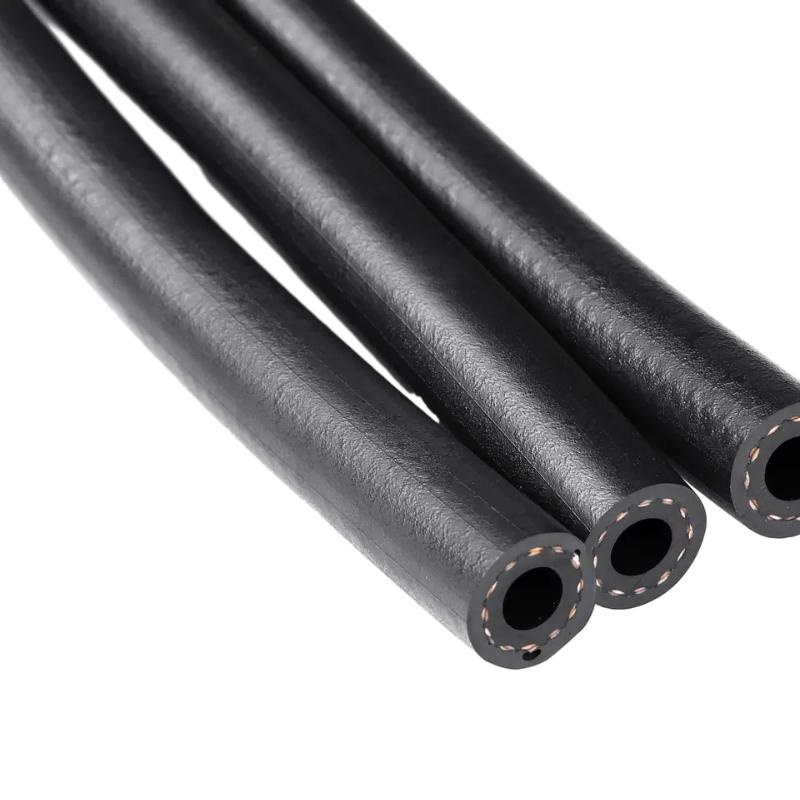
Quick context and a small digression: while full EVs lean electronic, a huge slice of cars, light trucks, and hybrids still rely on hydraulic or electro-hydraulic steering. Return hoses remain essential. The J189 spec exists precisely for this niche—low-pressure flow back to the reservoir, oil resistance first, decent flexibility second, noise damping third. Many customers say the premium feel is in the cover; I’d argue it’s also in the textile pack under the skin.
| Parameter | Spec (≈ / typical) | Notes |
|---|---|---|
| Standard | SAE J189 JAN98 | Power steering return line |
| Temperature range | -40℃ to +120℃ (-40°F to +248°F) | Cold-bend qualified |
| Burst pressure | 0.5–2.0 MPa | Return-side duty (not for pressure feed) |
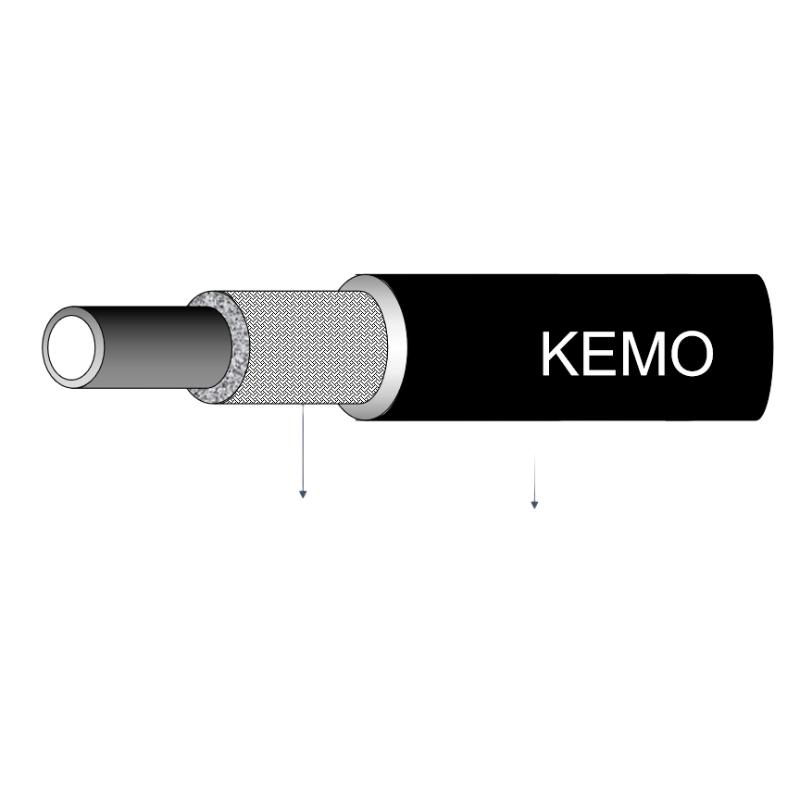
| Tube | NBR synthetic rubber | Mineral & ATF compatibility |
| Reinforcement | High-tensile PET textile | Volume expansion control |
| Cover | CSM rubber, smooth or cloth-wrapped | Ozone/heat/abrasion resistance |
| Service life | ≈ 5–8 years | Real-world use may vary |
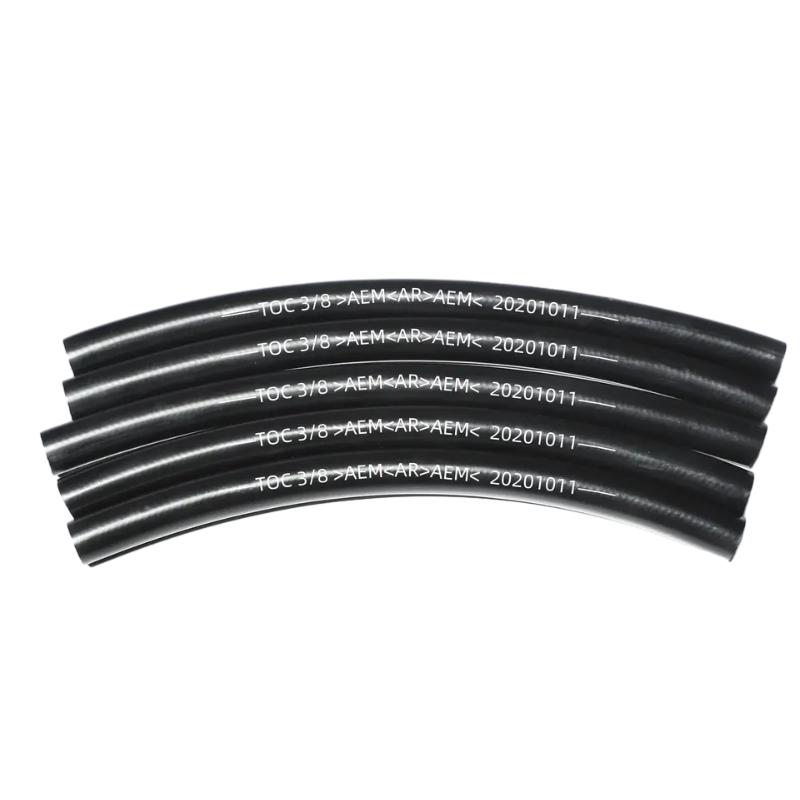
Low Pressure Power Steering Hose trends in 2025? Three big ones: low-permeation covers to keep garages clean, bio-based ATF compatibility (more OEMs ask for it), and tighter dimensional tolerances for push-lock barbs. Surprisingly, the cloth-wrapped finish is making a comeback where vibration chatter is a warranty issue—it damps clamp rub better than many smooth covers.
Manufacturing and validation, condensed: NBR compounding → tube extrusion → textile braid/spiral (PET) → CSM cover extrusion → vulcanization → cut/mark → 100% visual + air-leak test. Type tests include burst, cold-bend at -40℃, oil immersion swell (ATF and power steering fluids), ozone aging, and impulse to ISO 6803 for margin. PPAP and material certs are available from most audited suppliers, although I always ask early.
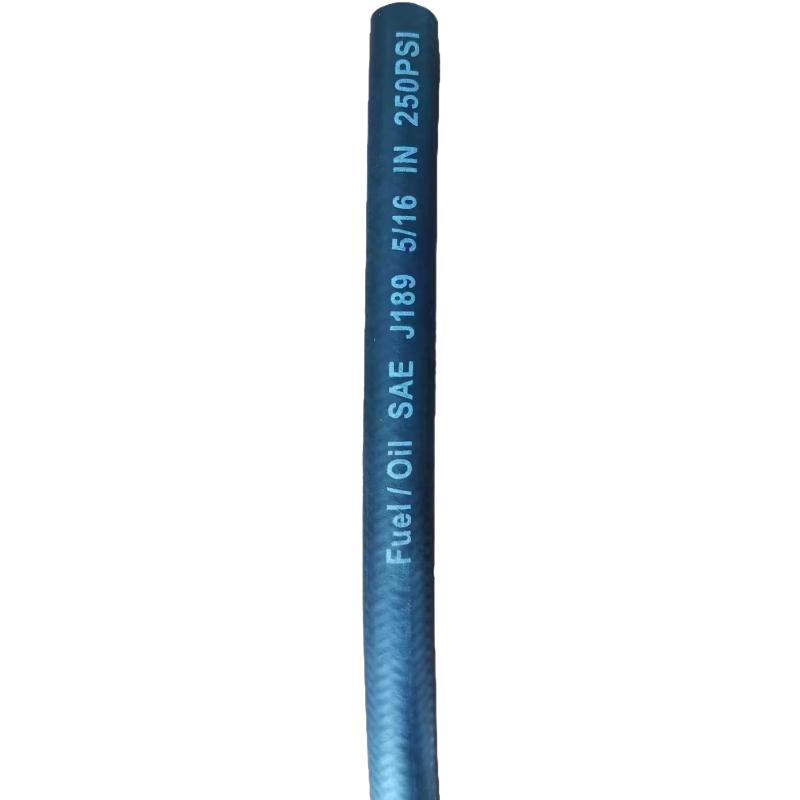
Where it’s used: return lines on sedans, pickups, vans, and multi-function commercial vehicles; retrofits on electro-hydraulic systems; remanufactured racks; fleet maintenance kits. Mechanics tell me it routes neatly in tight engine bays and stays supple on winter mornings—an underrated benefit.
Real-world test snippets (typical lot values, for orientation): burst ≥ 1.5 MPa at 23℃; cold flexibility pass at -40℃ with no cover cracks; volumetric expansion ≤ 0.45 cm³/m at 70℃; ozone 72 h no cracking; oil swell in ATF ≤ 30%. Data varies by size; sample your exact ID.
| Vendor | Compliance | Cover | Lead time | Customization |
|---|---|---|---|---|
| KEMO SAE J189 Hose | SAE J189; RoHS/REACH on request | CSM smooth/cloth | ≈ 2–4 weeks | ID/OD, branding, cut-to-length |
| Generic A | States J189 | CR blend | ≈ 4–6 weeks | Limited sizes |
| Generic B | In-house spec | NBR/PVC | Stock-dependent | Minimal |
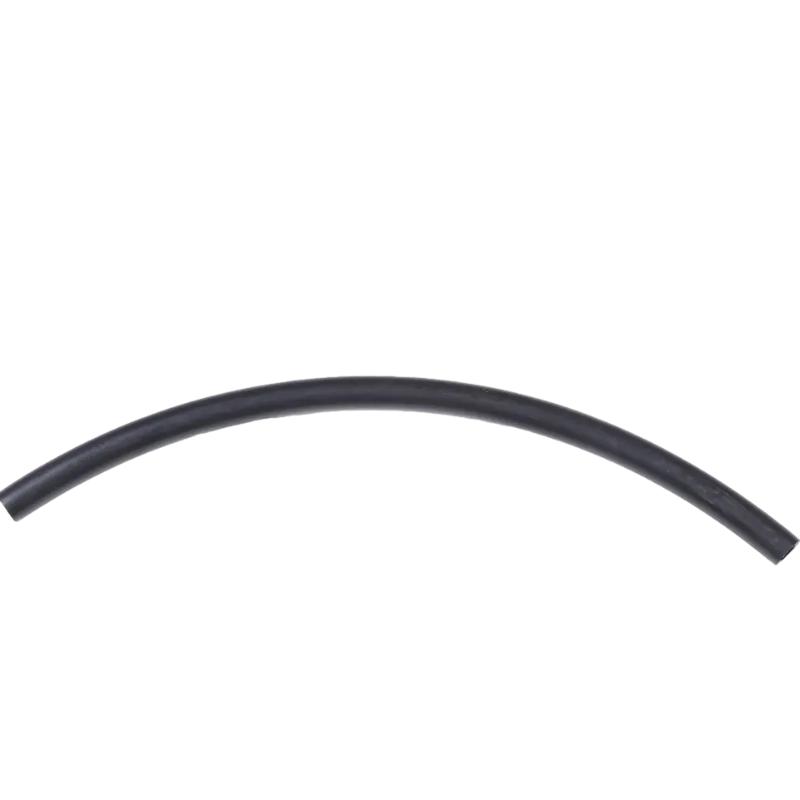
Short case study: a courier fleet in Arizona swapped aging return lines for J189 units with CSM cover during summer. Over 12 months, ATF seepage incidents dropped from 2.1% to 0.4% of vehicles, and clamp re-torques essentially disappeared. Not a lab trial, sure, but the maintenance manager’s log was convincing.
Customization options I’ve seen work: 8–25 mm ID range, cloth or smooth cover, color stripes for assembly ID, private logo ink-jet, pre-cut assemblies, and matched clamps/barbs. If you spec EV-compatible fluids, note it; the NBR tube handles most ATFs, but formulations vary.
Final thought: for the Low Pressure Power Steering Hose category, the quiet value is stability—consistent textile tension, tidy extrusion, and a cover that doesn’t chalk out by year three. This Hebei-built line checks those boxes, and the price is usually sensible.
Latest news
-
Transmission Oil Cooler Pipe Maintenance and Selection Guide
NewsApr.16,2026
-
Ultimate Guide to Choosing Transmission Oil Cooler Line Hose
NewsApr.09,2026
-
Essential Guide to Transmission Oil Cooler Hose 5/16 for Vehicle Longevity
NewsApr.07,2026
-
Understanding the Critical Role of Transmission Oil Cooler Hose 1 2 for Vehicle Longevity
NewsApr.04,2026
-
Understanding Transmission Oil Coolant Lines For Optimal Vehicle Performance
NewsMar.31,2026
-
Comprehensive Guide to Oil Coolant Pipe Selection and Industrial Applications
NewsMar.28,2026
 Afrikaans
 Albanian
 Amharic
 Arabic
 Armenian
 Azerbaijani
 Basque
 Belarusian
 Bengali
 Bosnian
 Bulgarian
 Catalan
 Cebuano
 Corsican
 Croatian
 Czech
Czech
 Danish
 Dutch
Dutch
 Esperanto
 Estonian
 Finnish
 French
 Frisian
 Galician
 Georgian
 German
 Greek
Greek
 Gujarati
 Haitian Creole
 Hausa
Hausa
 Hawaiian
 Hebrew
 Hindi
Hindi
 Miao
Miao
 Hungarian
 Icelandic
 Igbo
Igbo
 Indonesian
 Irish
Irish
 Italian
 Japanese
 Javanese
 Kannada
 Kazakh
 Khmer
Khmer
 Rwandese
 Korean
 Kurdish
 Kyrgyz
 Lao
Lao
 Latin
Latin
 Latvian
 Lithuanian
 Luxembourgish
 Macedonian
 Malgashi
 Malay
Malay
 Malayalam
 Maltese
 Maori
Maori
 Marathi
 Mongolian
 Myanmar
 Nepali
 Norwegian
 Norwegian
 Occitan
 Pashto
 Persian
 Polish
 Portuguese
 Punjabi
 Romanian
 Russian
 Samoan
 Scottish Gaelic
 Serbian
 Sesotho
 Shona
Shona
 Sindhi
 Sinhala
 Slovak
 Slovenian
 Somali
 Spanish
 Sundanese
 Swahili
 Swedish
 Tagalog
 Tajik
Tajik
 Tamil
Tamil
 Tatar
Tatar
 Telugu
 Thai
Thai
 Turkish
 Turkmen
 Ukrainian
 Urdu
Urdu
 Uighur
 Uzbek
Uzbek
 Vietnamese
 Welsh
Welsh
 Bantu
Bantu
 Yiddish
 Yoruba
 Zulu
Zulu
 English