
Low Loss Refrigeration Hose - R1234yf & Refrigerant Pipe
Sep . 02, 2025 02:20 Back to list
Low Loss Refrigeration Hose - R1234yf & Refrigerant Pipe
Understanding Modern refrigeration hose Technologies
In the intricate landscape of HVAC, automotive, industrial refrigeration, and commercial cooling systems, the integrity and performance of every component are paramount. Central to the efficient and safe operation of these systems is the refrigeration hose. Far from a simple conduit, modern refrigeration hose solutions are engineered for specific refrigerant types, extreme pressures, and varying temperature ranges, embodying cutting-edge material science and manufacturing precision. This comprehensive guide delves into the technical aspects, industry trends, and practical applications that define high-performance refrigerant pipe solutions today.
Our focus is on equipping B2B decision-makers and technical professionals with the insights needed to select and implement optimal hose refrigerant solutions, ensuring system reliability, energy efficiency, and compliance with stringent environmental standards.
Industry Trends and Market Dynamics for Refrigeration Hoses
The market for refrigeration hose is being reshaped by several key trends, driven primarily by environmental regulations, technological advancements, and the demand for increased system efficiency. The global phase-down of hydrofluorocarbons (HFCs) under the Kigali Amendment has spurred the adoption of new, low-Global Warming Potential (GWP) refrigerants such as HFOs (e.g., R1234yf) and natural refrigerants like CO2 (R744) and Propane (R290). This transition necessitates a new generation of hose refrigerant products specifically designed for compatibility, lower permeation rates, and enhanced durability under varied operating conditions.
- Low GWP Refrigerants: The shift towards refrigerants like R1234yf hose for automotive AC systems and R744 for commercial refrigeration demands hoses with superior barrier properties to prevent leakage and ensure system longevity.
- Energy Efficiency: Modern systems require components that minimize pressure drop and heat transfer, directly impacting operational costs. Advanced hose designs contribute to overall system efficiency.
- Miniaturization and Modularity: Compact system designs in residential and commercial applications require more flexible and smaller diameter hose refrigerant assemblies without compromising performance.
- Digitalization and IoT: While not directly affecting the hose material, the integration of sensors within systems requires hoses that can withstand dynamic conditions and complement intelligent monitoring.
- Enhanced Durability and Service Life: End-users demand longer service intervals and reduced maintenance, pushing manufacturers to develop more robust and reliable refrigeration hose products.
These trends underscore the critical role of specialized component engineering in achieving sustainable and high-performance refrigeration and air conditioning solutions.
The Manufacturing Process of a High-Performance Refrigeration Hose
The production of a robust refrigeration hose is a sophisticated multi-stage process, demanding precision engineering and stringent quality control. It is designed to ensure superior resistance to permeation, high pressures, temperature extremes, and chemical compatibility with various refrigerants and lubricants. The process primarily involves extrusion, reinforcement, and vulcanization, followed by rigorous testing.
Schematic Steps of Manufacturing:
-
Material Selection & Preparation:
Careful selection of materials is critical. Inner tubes often utilize specialized synthetic rubbers like Chlorobutyl, EPDM, or Polyamide (Nylon) for their low permeation rates and chemical resistance to refrigerants (e.g., R134a, R404A, R410A, R1234yf) and lubricants (e.g., POE, PAG). Reinforcement layers typically involve high-tensile synthetic fibers (polyester, aramid) or steel wire braiding. The outer cover material provides abrasion, ozone, and weather resistance.
-
Inner Tube Extrusion:
The chosen polymer compound is extruded through a die to form a seamless inner tube with precise dimensions and uniform wall thickness. This layer is crucial for containing the refrigerant with minimal leakage.
-
Reinforcement Layer Application (Braiding/Spiraling):
The extruded inner tube is then passed through sophisticated braiding or spiraling machines. These machines apply one or more layers of high-strength textile fibers or steel wire, wound at specific angles to impart burst pressure resistance and prevent kinking under dynamic conditions. This step is critical for handling the high pressures inherent in refrigeration systems.
-
Outer Cover Extrusion:
An outer layer, usually made of EPDM, Neoprene, or a thermoplastic elastomer, is extruded over the reinforced core. This cover protects the hose from external elements such as UV radiation, ozone, abrasion, and chemicals, significantly extending its service life.
-
Vulcanization (Curing):
The raw hose assembly is then subjected to a controlled heating process (vulcanization or curing) under pressure. This process chemically cross-links the polymer chains, transforming the materials into a durable, elastic, and stable product with its final physical properties.
-
Finishing and Cutting:
After cooling, the finished hose is cut to specified lengths, and any final cosmetic treatments or markings are applied.
-
Quality Control & Testing:
Every batch undergoes rigorous testing to ensure compliance with international standards such as ISO 13971, SAE J2064, and EN 1736. Tests include burst pressure, impulse/fatigue testing, permeation rate measurement, vacuum integrity, material compatibility, and dimensional checks. This ensures the hose can withstand operational demands, including resistance to fatigue, vibration, and temperature cycling over an extended service life.
The typical service life of a high-quality refrigeration hose can range from 5 to 15 years, depending on the application, operating conditions, and maintenance schedule. Target industries for these advanced hoses include:
- Automotive: Air conditioning systems (e.g., R1234yf hose for modern vehicles).
- Commercial Refrigeration: Supermarket display cases, cold storage, industrial chillers.
- HVAC: Residential and commercial air conditioning, heat pumps.
- Transportation: Refrigerated trucks and container111s, bus AC systems.
- Petrochemical: Specialized cooling applications where precise temperature control and material compatibility are critical.
These sophisticated manufacturing processes ensure advantages in typical application scenarios such as energy saving through minimal permeation, exceptional corrosion resistance, and robust performance in extreme environments.
Technical Specifications and Performance Parameters
Selecting the correct refrigeration hose requires a thorough understanding of its technical specifications. Key parameters dictate performance, compatibility, and longevity in demanding environments. This section provides a consolidated view of critical data points.
Key Technical Parameters for Refrigeration Hoses:
| Parameter | Description | Typical Range/Value | Relevance |
|---|---|---|---|
| Working Pressure | Maximum continuous pressure the hose can safely withstand. | 300-800 PSI (20-55 Bar) for standard, up to 1500 PSI (100 Bar) for CO2. | Ensures safety and prevents rupture under normal operating conditions. |
| Burst Pressure | Pressure at which the hose will catastrophically fail. (Safety factor usually 4:1) | 1200-3200 PSI (80-220 Bar) for standard. | Critical safety parameter, exceeding working pressure significantly. |
| Temperature Range | Operating ambient and fluid temperatures the hose can withstand. | -30°C to +120°C (-22°F to +248°F) for standard, wider for specialized. | Ensures hose material integrity and flexibility across various climates/applications. |
| Permeation Rate | Rate at which refrigerant escapes through the hose material per unit area per unit time. | Typically | Crucial for environmental compliance and system efficiency (low loss refrigerant hoses). |
| Refrigerant Compatibility | Ability of hose materials to resist degradation from specific refrigerants and lubricants. | R134a, R404A, R410A, R1234yf, R744, R290 (with specified liner materials). | Prevents material breakdown, contamination, and system failure. |
| Minimum Bend Radius | Smallest radius to which a hose can be bent without kinking or damage. | Varies by OD, typically 6-10 times the ID for flexible hoses. | Important for installation in confined spaces and preventing premature wear. |
| Outer Diameter (OD) & Inner Diameter (ID) | Physical dimensions of the hose. | ID: 5mm to 32mm (3/16" to 1-1/4"), OD varies based on construction. | Dictates flow rate, pressure drop, and compatibility with fittings. |
Compliance with industry standards like SAE J2064 (for automotive AC), EN 1736, and ISO 13971 ensures that these specifications are met and validated through rigorous testing.
Application Scenarios and Technical Advantages
The versatility of modern refrigeration hose allows its deployment across a broad spectrum of critical applications, each benefiting from its specific technical advantages.
Key Application Scenarios:
- Automotive Air Conditioning: Essential for connecting compressors, condensers, evaporators, and accumulators in vehicle AC systems. The transition to R1234yf hose has driven demand for specific low permeation designs.
- Commercial Refrigeration Units: Used in supermarkets, restaurants, and cold storage facilities for connecting refrigeration compressors, evaporators, and condensers, especially for systems using refrigerants like R404A, R410A, or R744 (CO2).
- Industrial Chillers and HVAC Systems: Critical for large-scale cooling in manufacturing plants, data centers, and large commercial buildings, where consistent performance under high pressure and temperature is non-negotiable.
- Refrigerated Transport: Maintaining temperature-sensitive cargo in trucks, trains, and marine vessels requires durable and reliable hoses that can withstand vibration and environmental extremes.
- Specialty Laboratory and Medical Cooling: For precise temperature control in sensitive scientific equipment or medical devices where refrigerant integrity is paramount.
Technical Advantages of High-Quality Refrigeration Hoses:
- Superior Permeation Resistance: Multi-layer constructions, often featuring nylon or specialized rubber barrier layers, significantly reduce refrigerant loss. This translates to energy saving by reducing compressor workload and minimizing refrigerant top-ups, aligning with environmental regulations for low loss refrigerant hoses.
- Exceptional Corrosion Resistance: Materials are selected to withstand the chemical attack from refrigerants and lubricants, ensuring the internal integrity of the hose and preventing system contamination over its lifespan. The outer cover also protects against external environmental corrosion.
- High-Pressure Durability: Reinforced designs, often with multiple textile braids or steel wire spirals, provide robust resistance to the high operating and burst pressures common in modern refrigeration systems, enhancing safety and reliability.
- Wide Temperature Range Tolerance: Engineered to maintain flexibility and integrity across extreme hot and cold temperatures, critical for applications ranging from deep-freeze storage to engine bay environments.
- Vibration Dampening: The inherent flexibility of hose refrigerant assemblies helps absorb system vibrations, reducing noise, preventing component fatigue, and extending the life of rigid pipe connections.
- Weight and Space Saving: Compared to rigid refrigerant pipe, flexible hoses offer advantages in complex routings, reduce installation time, and can contribute to overall system weight reduction.
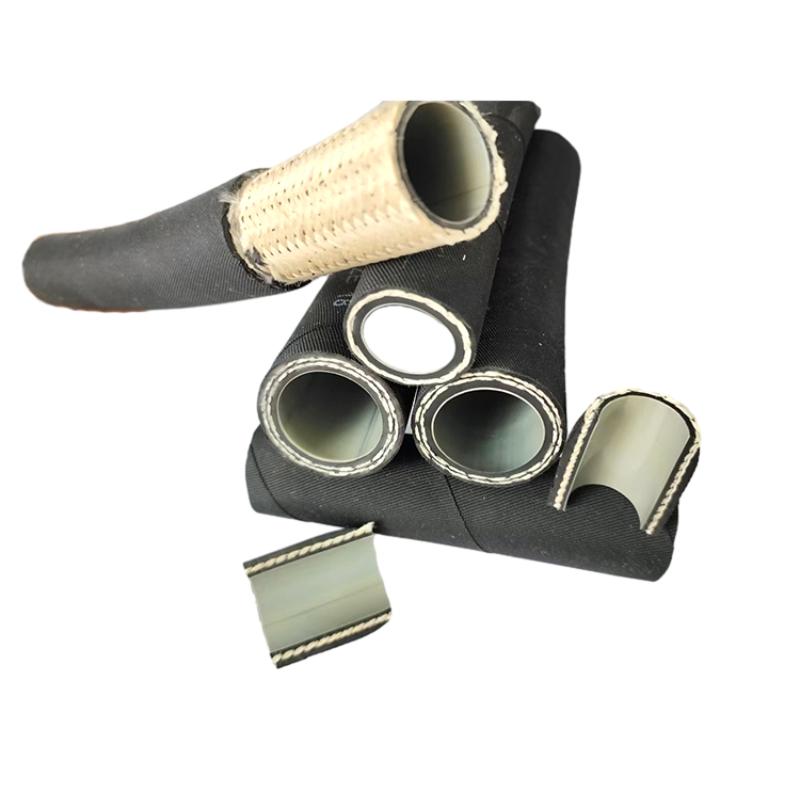
These advantages directly translate into enhanced operational reliability, reduced environmental impact, and lower total cost of ownership for system operators and end-users.
Vendor Comparison: Key Differentiators in Refrigeration Hose Suppliers
Choosing the right vendor for refrigeration hose is as crucial as selecting the hose itself. Suppliers vary significantly in their product offerings, quality assurances, and support services. A comprehensive evaluation ensures long-term system performance and partnership reliability.
Factors for Vendor Evaluation:
- Product Portfolio: Does the vendor offer a wide range of hose refrigerant types, including specialized options like R1234yf hose or high-pressure CO2 hoses?
- Quality & Certifications: Look for ISO 9001, IATF 16949 (for automotive), SAE J2064, EN 1736 certifications, which attest to consistent quality and adherence to industry standards.
- R&D Capabilities: A strong R&D department indicates a commitment to innovation and the ability to adapt to new refrigerant technologies and design challenges.
- Technical Support & Engineering Expertise: Can the vendor provide expert guidance on material compatibility, pressure ratings, routing, and custom solutions? This is critical for complex system designs.
- Customization Options: The ability to provide tailored solutions for specific application requirements (e.g., unique lengths, fittings, colors, or material blends).
- Global Reach & Supply Chain Reliability: For international operations, a vendor with a robust global supply chain ensures consistent product availability and timely delivery.
- Customer Feedback & Case Studies: Evidence of successful past projects and positive client testimonials builds trust and demonstrates proven experience.
Comparative Table: Refrigeration Hose Supplier Attributes
| Attribute | Vendor A (Example) | Vendor B (Example) | KEMO Hose (Illustrative) |
|---|---|---|---|
| Certifications | ISO 9001 | ISO 9001, SAE J2064 | ISO 9001, IATF 16949, EN 1736, SAE J2064 |
| R1234yf Compatibility | Limited range | Good (specific models) | Extensive, Low Permeation (dedicated range) |
| Customization | Standard lengths only | Some bespoke options | Full engineering support, bespoke designs |
| Lead Time (Standard) | 4-6 weeks | 3-5 weeks | 2-4 weeks (expedited options available) |
| Technical Support | Basic documentation | Online resources | Dedicated engineering team, on-site consultation |
| Warranty Period | 1 year | 2 years | 3-5 years (application-dependent) |
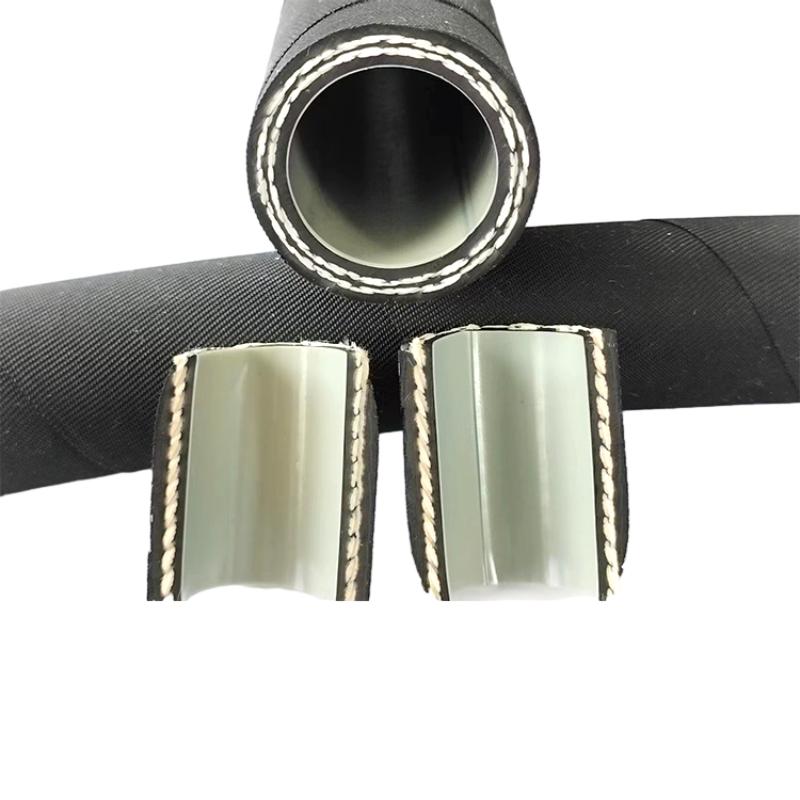
This comparison highlights the importance of evaluating not just the product, but the entire support ecosystem offered by the supplier. KEMO Hose, with its comprehensive certifications and strong focus on R&D, offers a compelling proposition for demanding applications.
Customized Solutions and Engineering Support
Many B2B applications present unique challenges that standard off-the-shelf refrigeration hose products cannot fully address. This is where customized solutions and robust engineering support become invaluable. Leading manufacturers understand that optimizing system performance often requires tailored refrigerant pipe designs.
Aspects of Customization:
- Material Optimization: Custom blends of inner tube elastomers (e.g., EPDM, HNBR, Nylon) or outer covers (e.g., higher abrasion resistance, UV stability) for specific chemical compatibility or environmental exposure.
- Reinforcement Design: Adjusting the number of plies, type of reinforcing fiber (e.g., polyester, aramid, steel wire), and braid angle to meet precise pressure ratings and flexibility requirements. This is particularly crucial for high-pressure applications like CO2 systems.
- Dimensional Modifications: Non-standard inner/outer diameters or specific wall thicknesses to optimize flow rates and pressure drops within unique system architectures.
- End Fitting Integration: Custom crimped or swaged fittings, designed for specific ports, material types, and pressure requirements, minimizing potential leak points and simplifying installation.
- Pre-Formed Hoses: Creating specific bend configurations to streamline assembly, improve fit in tight spaces, and reduce stress on the hose in critical applications (e.g., complex automotive engine bay routings for r1234yf hose).
KEMO Hose excels in providing comprehensive engineering support throughout the design and development cycle. Our team collaborates with clients from concept to production, utilizing advanced simulation tools and in-house testing facilities to validate custom refrigeration hose solutions against rigorous performance criteria. This proactive approach minimizes design risks, accelerates time-to-market, and ensures optimal system integration and longevity for every hose refrigerant solution.
Real-World Application Case Studies
Our commitment to delivering high-performance refrigeration hose solutions is best demonstrated through successful real-world applications. These case studies highlight our capability to meet complex client demands and stringent industry standards.
Case Study 1: Automotive OEM - R1234yf System Integration
A major automotive OEM required a highly durable and exceptionally low permeation refrigeration hose assembly for their next-generation vehicle platform utilizing R1234yf refrigerant. The challenge was to integrate the hoses within a compact engine bay, exposed to high temperatures and constant vibration, while meeting stringent SAE J2064 standards for R1234yf hose.
- Solution: We developed a custom multi-layer hose with a polyamide inner liner and a robust EPDM outer cover, reinforced with high-tensile polyester braid. The assembly included custom-designed aluminum fittings and pre-formed bends to optimize routing.
- Results: The custom hose exceeded SAE J2064 permeation limits by 30%, demonstrated exceptional resistance to impulse pressure and vibration during testing, and reduced assembly time by 15% due to its pre-formed configuration. This led to a significant reduction in warranty claims related to AC system leaks.
Case Study 2: Commercial Refrigeration for Supermarkets - CO2 Systems
A large supermarket chain was transitioning to transcritical CO2 (R744) refrigeration systems to comply with new environmental regulations. They needed high-pressure refrigerant pipe solutions capable of withstanding pressures up to 120 Bar (1740 PSI) and extreme temperature fluctuations while maintaining maximum efficiency. The existing hose refrigerant offerings did not meet the long-term reliability requirements for critical applications.
- Solution: We engineered a specialized multi-spiral steel wire reinforced refrigeration hose with a unique internal elastomer compound optimized for CO2 compatibility and ultra-low permeation. The hose was designed for flexibility in routing and featured high-strength crimped connections.
- Results: The solution provided unparalleled pressure integrity, maintaining stability even during high-pressure defrost cycles. Permeation rates were negligible, leading to minimal refrigerant top-ups and substantial energy savings. The hose demonstrated a service life projected to be 20% longer than competing products, significantly reducing maintenance costs for the client.
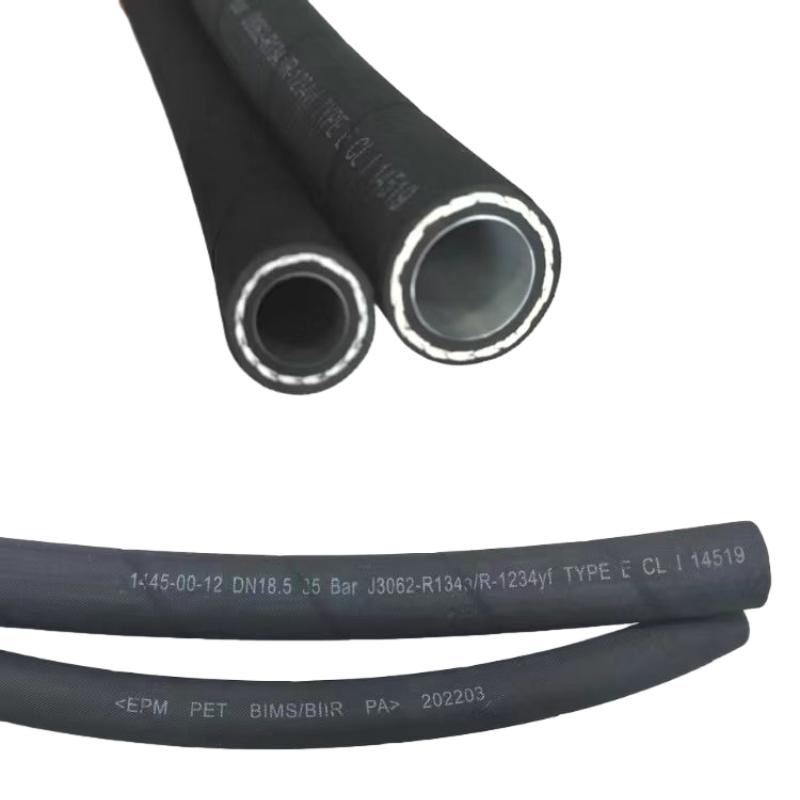
These cases exemplify our expertise in designing and manufacturing robust, application-specific refrigeration hose solutions that address complex industry challenges and deliver tangible benefits in performance and longevity.
Trustworthiness and Support: FAQ, Lead Time, Warranty, and After-Sales
Frequently Asked Questions (FAQ)
Q: What refrigerants are your hoses compatible with?
A: Our hoses are compatible with a wide range of refrigerants, including R134a, R404A, R410A, R1234yf, R290, and R744 (CO2). Specific hose designs are optimized for particular refrigerants to ensure maximum compatibility and low permeation. Please refer to product specifications for precise compatibility details or consult our technical team.
Q: How do your hoses ensure low loss refrigerant properties?
A: Our low loss refrigerant hoses utilize advanced multi-layer barrier technologies, often incorporating specialized polymer liners (e.g., polyamide or modified rubber compounds) that drastically reduce the diffusion of refrigerant molecules through the hose wall. This design minimizes environmental impact and improves system efficiency.
Q: What is the typical lead time for custom refrigeration hose orders?
A: Standard hose assemblies typically have a lead time of 2-4 weeks. For complex customized solutions requiring extensive engineering and tooling, lead times can range from 6-12 weeks, depending on complexity and order volume. We offer expedited options for urgent projects.
Q: Are your products certified to international standards?
A: Yes, all our refrigeration hose products are manufactured under ISO 9001 certified quality management systems. Many specific products also meet industry-specific standards such as SAE J2064 (for automotive R1234yf hose), EN 1736, and other relevant certifications, ensuring the highest levels of performance and reliability.
Lead Time and Fulfillment
We understand the critical importance of timely delivery in B2B operations. Our streamlined production processes and robust supply chain enable competitive lead times. For standard refrigeration hose products, typical lead times range from 2 to 4 weeks. Custom orders, due to specialized design and manufacturing requirements, generally range from 6 to 12 weeks. We actively communicate progress and offer flexible shipping options to meet project deadlines.
Warranty Commitments
KEMO Hose stands behind the quality and performance of its products. We offer a comprehensive warranty, typically ranging from 3 to 5 years, depending on the product type and application. This warranty covers defects in material and workmanship under normal operating conditions. Detailed warranty terms are provided with each product quotation and sales agreement, underscoring our confidence in our hose refrigerant solutions.
Customer Support and After-Sales Service
Our commitment extends beyond product delivery. KEMO Hose provides dedicated after-sales support, including technical assistance, troubleshooting, and replacement part services. Our experienced engineering team is available to assist with any post-installation queries or performance evaluations, ensuring optimal long-term operation of your refrigeration systems. We believe in building lasting partnerships based on trust, reliability, and continuous support.
References
- SAE International. "SAE J2064: R134a and R1234yf Refrigerant Hoses and Hose Assemblies for Mobile Air-Conditioning Systems."
- International Organization for Standardization. "ISO 13971: Refrigerating systems and heat pumps — Flexible pipes, expansion joints, damping pipes and valves — Requirements, design and testing."
- European Committee for Standardization. "EN 1736: Refrigerating systems and heat pumps — Flexible pipe elements, vibration isolators, expansion compensators and valves — Requirements, design and testing."
- ASHRAE Handbook—Refrigeration. (2022). American Society of Heating, Refrigerating and Air-Conditioning Engineers.
Latest news
-
Ultimate Guide to Choosing Transmission Oil Cooler Line Hose
NewsApr.09,2026
-
Essential Guide to Transmission Oil Cooler Hose 5/16 for Vehicle Longevity
NewsApr.07,2026
-
Understanding the Critical Role of Transmission Oil Cooler Hose 1 2 for Vehicle Longevity
NewsApr.04,2026
-
Understanding Transmission Oil Coolant Lines For Optimal Vehicle Performance
NewsMar.31,2026
-
Comprehensive Guide to Oil Coolant Pipe Selection and Industrial Applications
NewsMar.28,2026
-
Comprehensive Guide to Oil Coolant Lines for Industrial Applications
NewsMar.26,2026
 Afrikaans
 Albanian
 Amharic
 Arabic
 Armenian
 Azerbaijani
 Basque
 Belarusian
 Bengali
 Bosnian
 Bulgarian
 Catalan
 Cebuano
 Corsican
 Croatian
 Czech
Czech
 Danish
 Dutch
Dutch
 Esperanto
 Estonian
 Finnish
 French
 Frisian
 Galician
 Georgian
 German
 Greek
Greek
 Gujarati
 Haitian Creole
 Hausa
Hausa
 Hawaiian
 Hebrew
 Hindi
Hindi
 Miao
Miao
 Hungarian
 Icelandic
 Igbo
Igbo
 Indonesian
 Irish
Irish
 Italian
 Japanese
 Javanese
 Kannada
 Kazakh
 Khmer
Khmer
 Rwandese
 Korean
 Kurdish
 Kyrgyz
 Lao
Lao
 Latin
Latin
 Latvian
 Lithuanian
 Luxembourgish
 Macedonian
 Malgashi
 Malay
Malay
 Malayalam
 Maltese
 Maori
Maori
 Marathi
 Mongolian
 Myanmar
 Nepali
 Norwegian
 Norwegian
 Occitan
 Pashto
 Persian
 Polish
 Portuguese
 Punjabi
 Romanian
 Russian
 Samoan
 Scottish Gaelic
 Serbian
 Sesotho
 Shona
Shona
 Sindhi
 Sinhala
 Slovak
 Slovenian
 Somali
 Spanish
 Sundanese
 Swahili
 Swedish
 Tagalog
 Tajik
Tajik
 Tamil
Tamil
 Tatar
Tatar
 Telugu
 Thai
Thai
 Turkish
 Turkmen
 Ukrainian
 Urdu
Urdu
 Uighur
 Uzbek
Uzbek
 Vietnamese
 Welsh
Welsh
 Bantu
Bantu
 Yiddish
 Yoruba
 Zulu
Zulu
 English