
High Pressure Power Steering Hose: Leak-Proof OEM Fit?
Oct . 05, 2025 23:20 Back to list
High Pressure Power Steering Hose: Leak-Proof OEM Fit?
High Pressure Power Steering Hose: Field Notes, Specs, and What Actually Matters
If you work around hydraulic steering long enough, you learn two truths: pressure spikes don’t negotiate, and cheap hose will find the worst possible time to fail. That’s why I took a closer look at this high pressure power steering hose coming out of Niu Jiazhai Industrial Area, Changzhuang Town, Wei County, Hebei Province, China. On paper it’s tidy—SAE J188/MS263-53 compliant, ISO/TS 16949:2009 certified, -40℃ to +150℃—but the devil (and the reliability) lives in the details.
Trend-wise, yes, more passenger platforms are going full electric power steering. However, heavy vehicles, legacy fleets, and markets with brutal heat or dusty duty cycles still lean on hydraulic assist. For them, the high pressure power steering hose is not a commodity; it’s a safety-critical assembly.
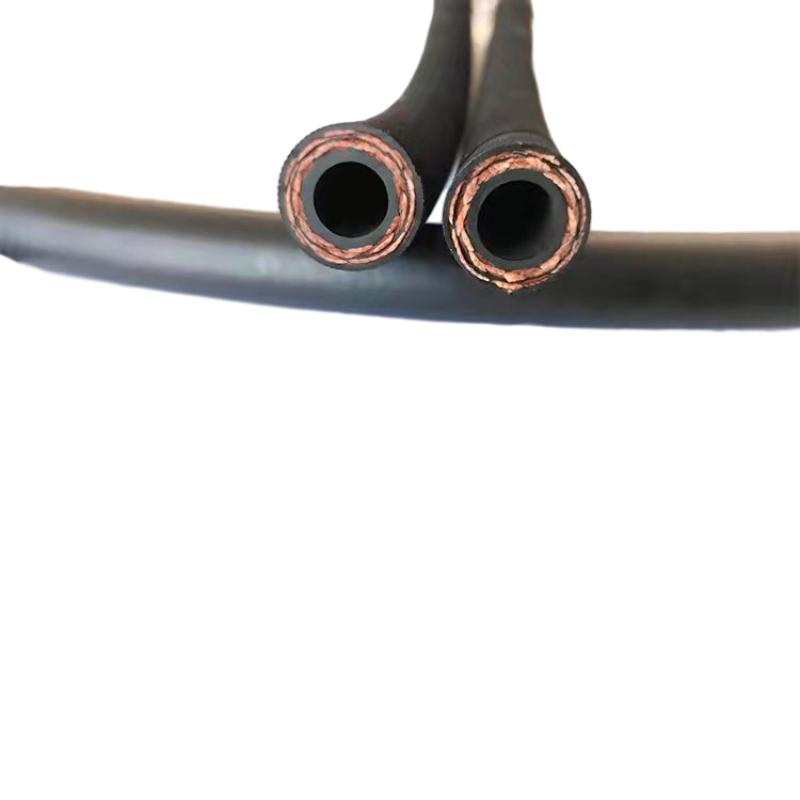
Product Snapshot
| Working temperature | -40℃ to +150℃ (-40°F to 302°F) |
| Standard / Spec | SAE J188, MS263-53 |
| Certification | ISO/TS 16949:2009 |
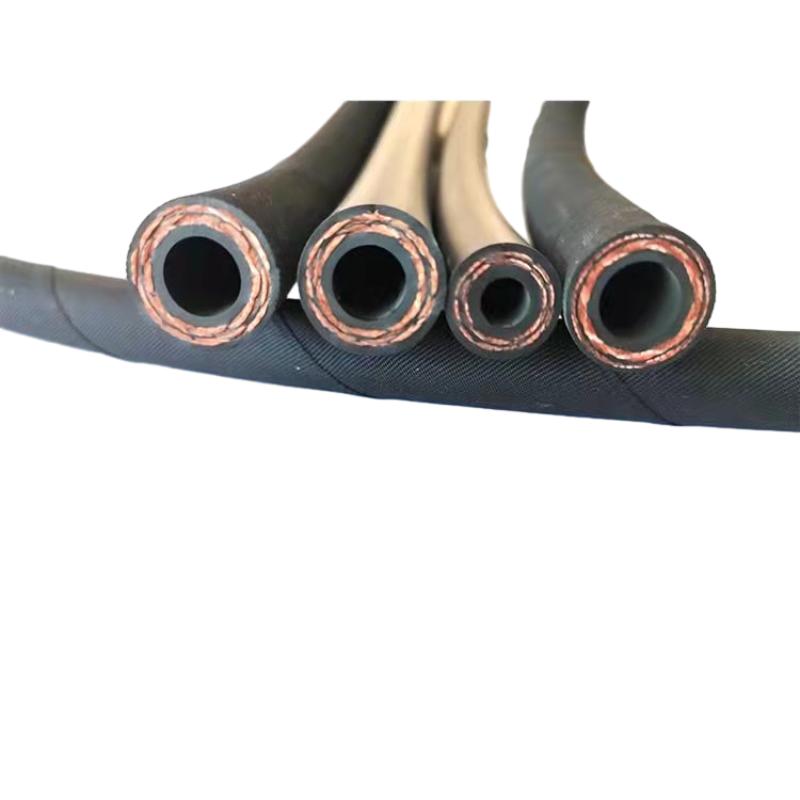
| Surface options | Smooth or cloth-wrapped |
| Typical working pressure | ≈ 8–13 MPa (1,160–1,885 psi), real-world use may vary by ID and platform |
| Suggested service life | ≈ 5–7 years under normal duty; inspect annually |
Materials, Build, and Process Flow
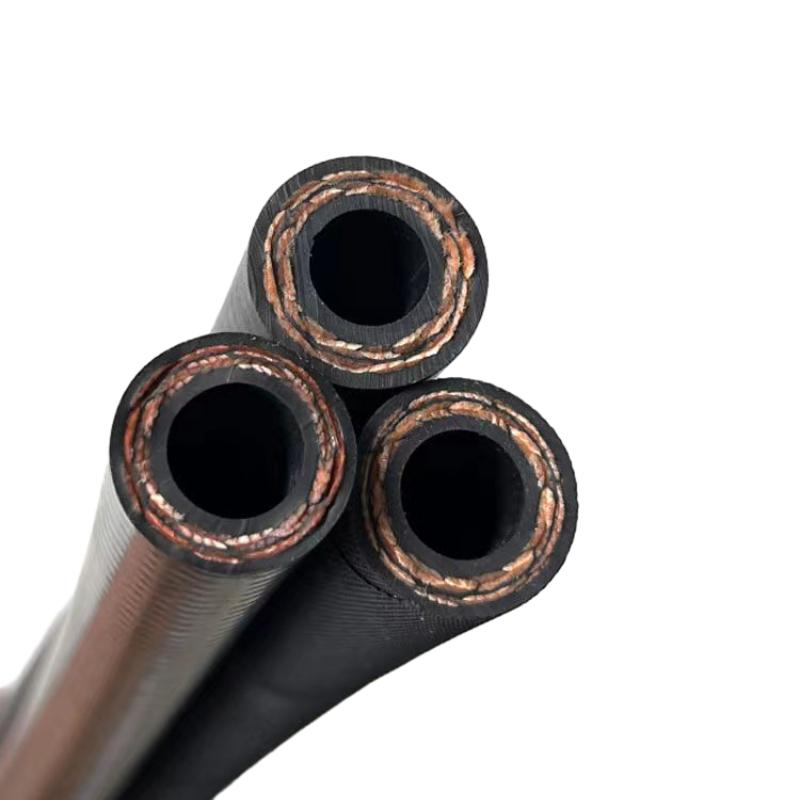
- Inner tube: Oil-resistant NBR or HNBR for ATF compatibility.
- Reinforcement: High-tensile steel wire braid (single or double, depending on spec).
- Cover: CR/CSM blend for heat, ozone, and road-splash resistance; smooth or cloth-wrapped.
- Methods: Precision extrusion → wire braiding → vulcanization → cut/clean → crimped fittings (zinc-nickel coated).
- Testing: Proof test ≈ 2× WP; burst test ≈ ≥4× WP (ref. ISO 6605); impulse per ISO 6803; ozone per ISO 1431; dimensional and salt spray on fittings.
Where It’s Used
Passenger cars and light trucks, buses and vocational vehicles, off-road machinery, and remanufactured racks. Cold-start regions (down to -40℃) and hot climates up to +150℃ fluid temps—think mountain descents, towing, and urban stop‑go. Many customers say the right high pressure power steering hose noticeably reduces pump whine and micro-leaks around banjo fittings.
Vendor Snapshot (What Buyers Compare)
| Vendor | KEMO Hose (Hebei) | Generic Importer A | Aftermarket B |
| Standards / Certs | SAE J188; ISO/TS 16949 | Claims J188 (no audit) | J188 equivalent |
| Traceability | Heat/batch IDs, test records | Limited | SKU-level only |
| Customization | Lengths, IDs, fittings, sleeves | Minimal | Catalog only |
| Lead time | ≈ 2–4 weeks | ≈ 5–8 weeks | Stock dependent |
Customization & QA Notes
- Fittings: banjo, male flare, ORFS, custom bends; torque specs included.
- Labels: laser-etch batch codes for recalls or field audits.
- Cover options: abrasion sleeves, heat shields for turbo-adjacent runs.
- QC: 100% leak test on assemblies; burst and impulse on each batch.
Quick Case Story
A regional fleet maintenance shop switched to this high pressure power steering hose on light trucks operating in hot, hilly routes. After six months, their tech lead told me they saw fewer clamp re-torques and “less ATF misting at flare joints.” Not a lab study, to be honest, but the kind of feedback I hear a lot.
Final Take
If you need consistent crimp integrity, impulse endurance, and traceability without boutique pricing, this spec is solid. The standards box is ticked, and the thermal window is generous. In fact, for legacy hydraulic platforms, it’s a practical upgrade path.
Authoritative references
- SAE J188: Power Steering Pressure Hose, SAE International.
- ISO/TS 16949:2009 – Quality management systems for automotive production, ISO.
- ISO 6803: Hydraulic fluid power—Rubber or plastics hoses—Impulse test without flexing, ISO.
- ASTM D380: Standard Test Methods for Rubber Hose, ASTM International.
Latest news
-
Transmission Oil Cooler Pipe Maintenance and Selection Guide
NewsApr.16,2026
-
Ultimate Guide to Choosing Transmission Oil Cooler Line Hose
NewsApr.09,2026
-
Essential Guide to Transmission Oil Cooler Hose 5/16 for Vehicle Longevity
NewsApr.07,2026
-
Understanding the Critical Role of Transmission Oil Cooler Hose 1 2 for Vehicle Longevity
NewsApr.04,2026
-
Understanding Transmission Oil Coolant Lines For Optimal Vehicle Performance
NewsMar.31,2026
-
Comprehensive Guide to Oil Coolant Pipe Selection and Industrial Applications
NewsMar.28,2026
 Afrikaans
 Albanian
 Amharic
 Arabic
 Armenian
 Azerbaijani
 Basque
 Belarusian
 Bengali
 Bosnian
 Bulgarian
 Catalan
 Cebuano
 Corsican
 Croatian
 Czech
Czech
 Danish
 Dutch
Dutch
 Esperanto
 Estonian
 Finnish
 French
 Frisian
 Galician
 Georgian
 German
 Greek
Greek
 Gujarati
 Haitian Creole
 Hausa
Hausa
 Hawaiian
 Hebrew
 Hindi
Hindi
 Miao
Miao
 Hungarian
 Icelandic
 Igbo
Igbo
 Indonesian
 Irish
Irish
 Italian
 Japanese
 Javanese
 Kannada
 Kazakh
 Khmer
Khmer
 Rwandese
 Korean
 Kurdish
 Kyrgyz
 Lao
Lao
 Latin
Latin
 Latvian
 Lithuanian
 Luxembourgish
 Macedonian
 Malgashi
 Malay
Malay
 Malayalam
 Maltese
 Maori
Maori
 Marathi
 Mongolian
 Myanmar
 Nepali
 Norwegian
 Norwegian
 Occitan
 Pashto
 Persian
 Polish
 Portuguese
 Punjabi
 Romanian
 Russian
 Samoan
 Scottish Gaelic
 Serbian
 Sesotho
 Shona
Shona
 Sindhi
 Sinhala
 Slovak
 Slovenian
 Somali
 Spanish
 Sundanese
 Swahili
 Swedish
 Tagalog
 Tajik
Tajik
 Tamil
Tamil
 Tatar
Tatar
 Telugu
 Thai
Thai
 Turkish
 Turkmen
 Ukrainian
 Urdu
Urdu
 Uighur
 Uzbek
Uzbek
 Vietnamese
 Welsh
Welsh
 Bantu
Bantu
 Yiddish
 Yoruba
 Zulu
Zulu
 English