
Durable Hydraulic Brake Hose: Precision & Reliability
Sep . 22, 2025 11:55 Back to list
Durable Hydraulic Brake Hose: Precision & Reliability
Understanding Hydraulic Brake Hose Systems
In high-performance industrial and automotive systems, the integrity and reliability of fluid transfer components are paramount. A critical component in countless applications is the Hydraulic Brake Hose, engineered to transmit hydraulic pressure efficiently and safely. These hoses are designed to withstand extreme pressures, fluctuating temperatures, and aggressive media, ensuring consistent and responsive braking or operational control. This comprehensive overview delves into the technical aspects, market trends, and practical applications of these essential industrial components.
Current Industry Trends and Market Dynamics
The global market for Hydraulic Brake Hose is experiencing steady growth, driven by increasing industrial automation, advancements in vehicle technology, and stricter safety regulations across various sectors. Key trends include a rising demand for lightweight, high-performance materials, especially in automotive and aerospace applications, where reducing unsprung weight directly impacts fuel efficiency and handling. The integration of advanced polymer composites and multi-layer reinforcement technologies is becoming standard to enhance pressure ratings, flexibility, and fatigue resistance.
Furthermore, environmental considerations are pushing manufacturers towards more sustainable production processes and materials that comply with REACH and RoHS directives. The market is also seeing a shift towards customized solutions, where specific pressure, temperature, and chemical compatibility requirements dictate bespoke hose assemblies, moving beyond off-the-shelf products. Data from industry reports suggests a compound annual growth rate (CAGR) of 4.5% for industrial hose markets, with Hydraulic Brake Hose segments often outperforming due to their critical safety function. The adoption of smart manufacturing and IoT-enabled predictive maintenance for hydraulic systems is also influencing hose design, emphasizing longer service life and easier integration into sensor-equipped environments.
Technical Specifications and Performance Parameters
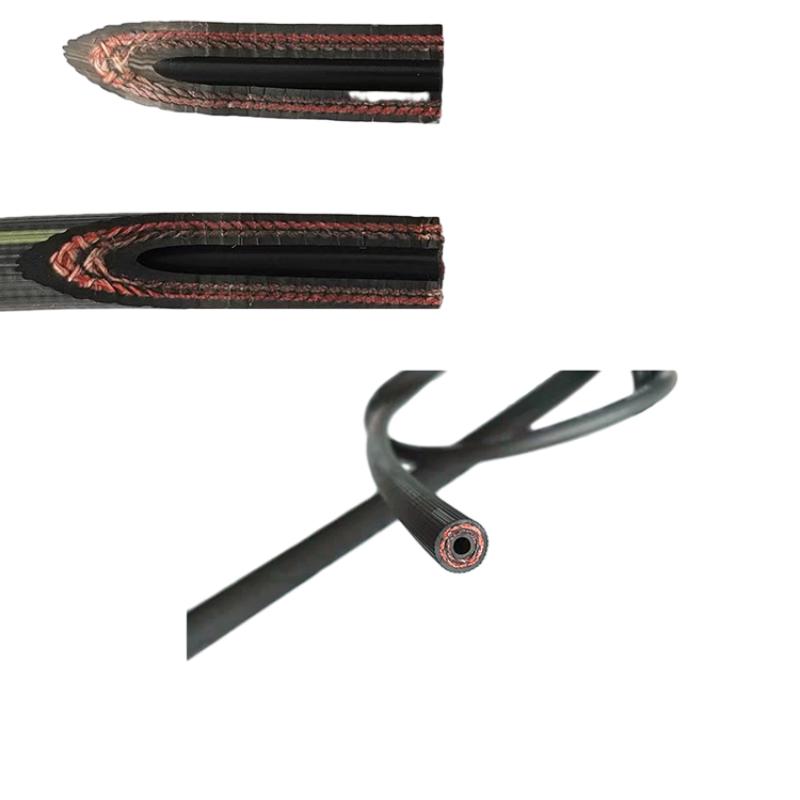
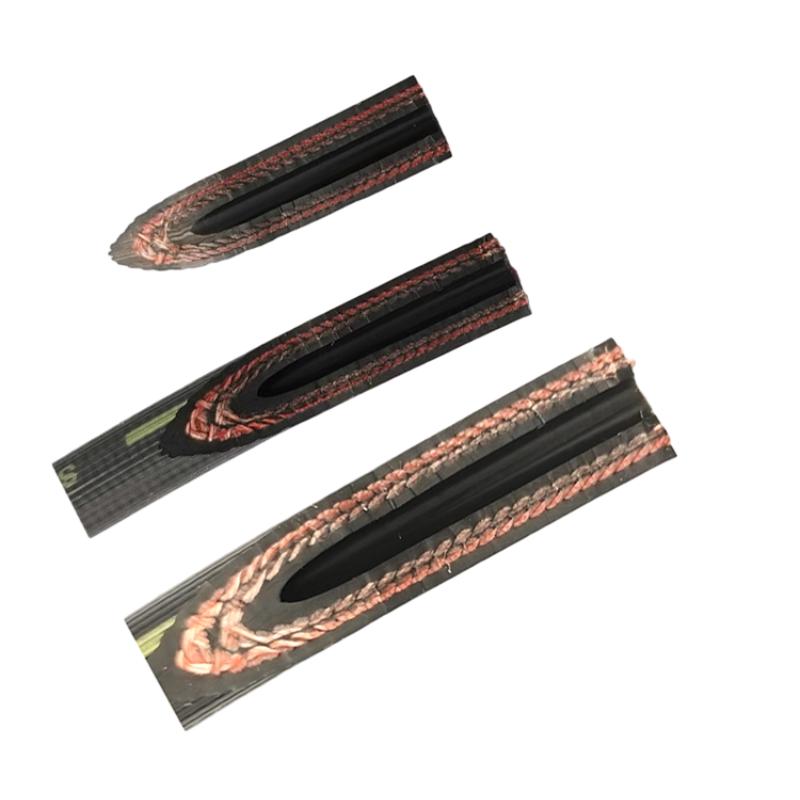
A Hydraulic Brake Hose is typically constructed with an inner tube, reinforcement layers, and an outer cover, each material selected for specific performance characteristics. The inner tube, often made from synthetic rubber (e.g., NBR, EPDM) or thermoplastics (e.g., PTFE), provides chemical resistance and low permeability. Reinforcement layers, critical for pressure containment, commonly use braided steel wire, textile braids, or spiraled synthetic fibers. The outer cover protects against abrasion, ozone, and environmental factors.
Key Technical Parameters:
| Parameter | Typical Range/Value | Description |
|---|---|---|
| Working Pressure | Up to 7000 PSI (48 MPa) | Maximum continuous operating pressure. |
| Burst Pressure | 2.5x to 4x Working Pressure | Minimum pressure at which hose fails, safety factor. |
| Temperature Range | -40°C to +120°C (-40°F to +248°F) | Operating temperature limits without degradation. |
| Minimum Bend Radius | 40mm to 300mm (depends on ID) | Smallest bend allowed without kinking or damage. |
| Fluid Compatibility | Hydraulic oils, brake fluids (DOT 3, 4, 5.1), water-glycol | Resistance to various hydraulic fluids. |
| Standards Compliance | SAE J1401, ISO 3996, FMVSS 106, DIN 73379 | Adherence to international automotive and industrial standards. |
Detailed Manufacturing Process Flow of Hydraulic Brake Hose
The production of a high-quality Hydraulic Brake Hose is a meticulous process, involving several stages that ensure the final product meets stringent performance and safety standards.
Manufacturing Steps:
- Material Preparation: High-grade synthetic rubbers (e.g., EPDM, NBR) or PTFE resins are chosen for the inner tube based on fluid compatibility and temperature resistance requirements. Reinforcement materials like high-tensile steel wire, aramid fiber, or polyester yarn are prepared. Outer cover compounds (e.g., neoprene, synthetic rubber) are selected for abrasion and environmental resistance.
- Inner Tube Extrusion: The chosen inner tube material is extruded through a die to form a seamless, precise internal diameter tube. This stage is critical for maintaining fluid integrity and minimizing pressure loss.
- Reinforcement Layer Application:
- Braiding/Spiraling: Using specialized braiding or spiraling machines, multiple layers of steel wire or textile yarn are applied around the inner tube. This process imbues the hose with its primary pressure resistance. The angle and tension of the braiding are precisely controlled to optimize strength and flexibility.
- Adhesion: Adhesives are often applied between layers to ensure proper bonding and prevent delamination under dynamic stress.
- Outer Cover Extrusion: The protective outer cover material is extruded over the reinforced core. This layer shields the hose from external damage, UV radiation, ozone, and abrasion.
- Curing/Vulcanization: The assembled hose undergoes a curing process (vulcanization for rubber hoses) in high-pressure steam autoclaves. This heat treatment cross-links the polymer chains, solidifying the hose structure and imparting its final mechanical properties and dimensional stability.
- Cutting and Fitting Attachment: Hoses are cut to specified lengths. Precision CNC machining is used to manufacture fittings (e.g., banjo fittings, male/female ends) from high-strength steel or brass. Fittings are then crimped onto the hose ends using specialized machinery, ensuring a leak-proof and secure connection.
- Testing and Quality Control: Each Hydraulic Brake Hose undergoes rigorous testing to comply with international standards such as ISO 3996, SAE J1401, and FMVSS 106.
- Pressure Testing: Hoses are subjected to proof pressure and burst pressure tests, often at 2.5 to 4 times their rated working pressure.
- Impulse Testing: Simulates dynamic pressure cycles to assess fatigue resistance and service life.
- Tensile Strength Test: Checks the integrity of hose-to-fitting connections.
- Flexibility and Bend Radius Test: Ensures the hose maintains performance under specified bending conditions.
- Volume Expansion Test: Measures the change in hose volume under pressure, crucial for brake pedal feel.
- Visual Inspection: For defects, proper labeling, and dimensional accuracy.
- Packaging and Shipment: Finished and tested hose assemblies are cleaned, capped, and packaged to prevent contamination and damage during transit.
Diverse Application Scenarios and Target Industries
The versatility of the Hydraulic Brake Hose makes it indispensable across a multitude of industries, extending far beyond traditional automotive braking systems. Its ability to transmit hydraulic power reliably is crucial for safety and operational efficiency.
- Automotive & Commercial Vehicles: Essential for braking systems in cars, trucks, buses, and trailers, ensuring consistent brake pedal feel and reliable stopping power. Compliance with FMVSS 106 and SAE J1401 is critical here.
- Construction & Heavy Equipment: Used in excavators, bulldozers, cranes, and other machinery for hydraulic control of booms, buckets, and steering. These applications demand high abrasion resistance and flexibility.
- Agriculture: Powering hydraulic implements on tractors, harvesters, and irrigation systems, where resistance to harsh outdoor conditions and agricultural chemicals is vital.
- Marine & Offshore: Employed in steering, winches, and braking systems for ships, boats, and offshore platforms. Requires excellent corrosion resistance to saltwater environments.
- Industrial Machinery: Robotics, manufacturing lines, presses, and material handling equipment rely on hydraulic hoses for precise motion control and power transmission.
- Aerospace: Though specialized, certain hydraulic hoses transmit pressure for landing gear, flight control surfaces, and braking systems in aircraft.
Technical Advantages and Performance Benefits
High-quality Hydraulic Brake Hose offers significant advantages that contribute to the overall efficiency, safety, and longevity of hydraulic systems.
- Superior Pressure Resistance: Engineered to safely operate under extreme pressures, ensuring reliable power transfer and preventing system failures.
- Excellent Flexibility and Durability: Designed to withstand repeated flexing and vibrations without kinking or fatigue, extending service life in dynamic environments.
- Corrosion and Chemical Resistance: Inner tube and outer cover materials are selected to resist degradation from hydraulic fluids, brake fluids, oils, ozone, and environmental contaminants.
- Optimized Volume Expansion: Minimally expands under pressure, ensuring a firm, responsive brake pedal feel and precise hydraulic control.
- Wide Temperature Range: Maintains performance across broad temperature fluctuations, from arctic conditions to high-heat engine compartments.
- Enhanced Safety: Adherence to strict international safety standards reduces the risk of hose failure, fluid leaks, and subsequent operational hazards.
- Energy Saving: Efficient fluid transfer with minimal pressure drop helps maintain system efficiency, contributing to energy savings in the overall hydraulic circuit.
Vendor Comparison: Key Differentiators in Hydraulic Brake Hose Manufacturing
Choosing the right supplier for Hydraulic Brake Hose is crucial for system reliability and cost-efficiency. While many manufacturers exist, their offerings can vary significantly in quality, customization, and support.
| Feature/Criterion | Premium Vendor (e.g., Kemohose) | Standard Vendor |
|---|---|---|
| Material Quality & Sourcing | Virgin high-performance polymers (EPDM, PTFE), aerospace-grade steel reinforcement. Traceable, certified suppliers. | Standard industrial-grade rubbers, potentially lower-grade steel or mixed composites. Less stringent material traceability. |
| Manufacturing Process | Automated precision extrusion, multi-layer braiding with controlled tension, advanced curing, CNC machined fittings. | Semi-automated or manual processes, less consistent layering, generic fittings. |
| Testing & Certifications | 100% batch testing (burst, impulse, volume expansion), ISO 9001, IATF 16949, SAE J1401, FMVSS 106, CE, RoHS. | Sample-based testing, basic ISO 9001, often only meets minimum regional standards. |
| Customization Options | Extensive customization in length, diameter, pressure rating, fluid compatibility, end fittings, color, branding. Rapid prototyping. | Limited standard sizes and fittings. Customization often has high MOQs and long lead times. |
| Technical Support & Warranty | Dedicated engineering support, application consultation, comprehensive warranty (e.g., 5-10 years). | Basic product support, limited warranty (e.g., 1-2 years), less application-specific guidance. |
A premium vendor, like Kemohose, focuses on integrating advanced materials, precision manufacturing, and rigorous testing to deliver a superior Hydraulic Brake Hose product that offers extended service life and enhanced safety, often resulting in a lower total cost of ownership despite a potentially higher initial investment.
Customized Solutions for Specialized Applications
Many industrial and high-performance applications require more than standard off-the-shelf components. We offer comprehensive customization capabilities for Hydraulic Brake Hose, tailored to meet unique operational demands. This includes:
- Specific Lengths and Diameters: Precision-cut hoses to exact dimensional requirements, minimizing waste and optimizing system layout.
- Material Selection: Choice of inner tube and outer cover materials for extreme temperature resistance, chemical compatibility (e.g., for aggressive fluids or high-pH environments), or enhanced abrasion protection.
- Custom End Fittings: Fabrication or sourcing of specialized fittings (e.g., unique angles, thread types, quick-disconnects) to ensure seamless integration with existing systems.
- Reinforcement Layers: Engineering specific reinforcement configurations for higher burst pressures, improved flexibility, or reduced volumetric expansion.
- Protective Sleeves and Coatings: Addition of external sleeves (e.g., fire-retardant, anti-chafing) or coatings for severe operational environments.
Our engineering team collaborates closely with clients from design conceptualization through prototyping and production, ensuring that the customized Hydraulic Brake Hose solution meets all technical specifications and performance expectations.
Application Case Studies and Customer Success
Our expertise in Hydraulic Brake Hose solutions has been proven in various demanding scenarios, contributing to enhanced safety and operational efficiency for our clients.
Case Study 1: Heavy-Duty Mining Equipment
A leading global mining corporation faced frequent failures of standard hydraulic hoses in their earth-moving equipment due to extreme abrasion, constant vibration, and exposure to corrosive minerals. The failures led to costly downtime and safety concerns. Our team engineered a customized Hydraulic Brake Hose with a multi-layer aramid fiber reinforcement for superior fatigue resistance and an extra-thick, abrasion-resistant polyurethane outer cover. After implementation, the client reported a 70% reduction in hose-related maintenance incidents and extended service life by over 150%, significantly improving operational uptime and safety compliance.
Case Study 2: Precision Robotics in Manufacturing
An automotive manufacturing plant required a highly flexible Hydraulic Brake Hose for robotic welding arms, which undergo millions of repetitive, high-speed movements. Standard hoses exhibited premature fatigue cracking and volumetric expansion, impacting the precision of robotic movements. We provided a custom PTFE-lined, stainless steel braided hose with a minimal bend radius and ultra-low volumetric expansion. This solution not only ensured consistent hydraulic pressure transmission but also extended the hose's operational lifespan by a factor of three, enhancing robotic accuracy and reducing line stoppages for maintenance.
Frequently Asked Questions (FAQ)
Q1: How often should a Hydraulic Brake Hose be inspected or replaced?
A1: Inspection frequency depends on the application, operating environment, and manufacturer recommendations. Generally, a visual inspection for cracks, abrasions, bulges, or leaks should be performed regularly (e.g., quarterly for heavy industrial use, annually for automotive). Replacement intervals vary widely, from 5-7 years for typical automotive use to much shorter periods in extreme industrial conditions, or immediately if any damage is detected. Adherence to ISO and SAE standards often provides guidelines for service life.
Q2: What are the key factors to consider when selecting a Hydraulic Brake Hose?
A2: Critical factors include: 1) Working pressure and burst pressure ratings; 2) Temperature range of operation; 3) Fluid compatibility with the hydraulic medium; 4) Minimum bend radius required for installation; 5) Abrasion resistance and environmental protection (outer cover); 6) Required length and inner diameter; and 7) Compliance with relevant industry standards (e.g., SAE J1401, ISO 3996).
Q3: Can these hoses be repaired, or must they always be replaced?
A3: For safety-critical applications like brake systems, repair of a damaged Hydraulic Brake Hose is generally not recommended. Any compromise to the hose's structural integrity can lead to catastrophic failure. It is almost always advisable to replace the entire hose assembly with a new, certified component to ensure maximum safety and performance.
Lead Time, Warranty, and Customer Support
We understand the importance of timely delivery and reliable after-sales support for B2B operations.
- Lead Time/Fulfillment: Standard Hydraulic Brake Hose orders typically ship within 5-7 business days. Customized solutions or large-volume orders may require 2-4 weeks, depending on complexity and material availability. Expedited manufacturing and shipping options are available upon request to meet urgent project deadlines.
- Warranty Commitments: All our hydraulic brake hoses come with a comprehensive 5-year limited warranty against manufacturing defects and material failures under normal operating conditions. This commitment reflects our confidence in the quality and durability of our products, exceeding many industry standards. Specific terms and conditions are available upon request.
- Customer Support: Our dedicated technical support team comprises experienced engineers ready to assist with product selection, technical specifications, installation guidance, and troubleshooting. We offer phone and email support during business hours and have an online portal for comprehensive product documentation and resources.
Authoritative References
- SAE International. (2020). SAE J1401: Road Vehicle - Hydraulic Brake Hose Assemblies for Use with Nonpetroleum-Base Hydraulic Fluids. Warrendale, PA: SAE International.
- International Organization for Standardization. (2018). ISO 3996: Road vehicles — Brake hose assemblies for hydraulic braking systems used with non-petroleum base fluid. Geneva, Switzerland: ISO.
- National Highway Traffic Safety Administration. (2023). Federal Motor Vehicle Safety Standard (FMVSS) No. 106: Brake Hoses. Washington D.C.: U.S. Department of Transportation.
- Parker Hannifin Corporation. (2019). Hose Products Division Reference Guide. Cleveland, OH: Parker Hannifin.
Latest news
-
Transmission Oil Cooler Pipe Maintenance and Selection Guide
NewsApr.16,2026
-
Ultimate Guide to Choosing Transmission Oil Cooler Line Hose
NewsApr.09,2026
-
Essential Guide to Transmission Oil Cooler Hose 5/16 for Vehicle Longevity
NewsApr.07,2026
-
Understanding the Critical Role of Transmission Oil Cooler Hose 1 2 for Vehicle Longevity
NewsApr.04,2026
-
Understanding Transmission Oil Coolant Lines For Optimal Vehicle Performance
NewsMar.31,2026
-
Comprehensive Guide to Oil Coolant Pipe Selection and Industrial Applications
NewsMar.28,2026
 Afrikaans
 Albanian
 Amharic
 Arabic
 Armenian
 Azerbaijani
 Basque
 Belarusian
 Bengali
 Bosnian
 Bulgarian
 Catalan
 Cebuano
 Corsican
 Croatian
 Czech
Czech
 Danish
 Dutch
Dutch
 Esperanto
 Estonian
 Finnish
 French
 Frisian
 Galician
 Georgian
 German
 Greek
Greek
 Gujarati
 Haitian Creole
 Hausa
Hausa
 Hawaiian
 Hebrew
 Hindi
Hindi
 Miao
Miao
 Hungarian
 Icelandic
 Igbo
Igbo
 Indonesian
 Irish
Irish
 Italian
 Japanese
 Javanese
 Kannada
 Kazakh
 Khmer
Khmer
 Rwandese
 Korean
 Kurdish
 Kyrgyz
 Lao
Lao
 Latin
Latin
 Latvian
 Lithuanian
 Luxembourgish
 Macedonian
 Malgashi
 Malay
Malay
 Malayalam
 Maltese
 Maori
Maori
 Marathi
 Mongolian
 Myanmar
 Nepali
 Norwegian
 Norwegian
 Occitan
 Pashto
 Persian
 Polish
 Portuguese
 Punjabi
 Romanian
 Russian
 Samoan
 Scottish Gaelic
 Serbian
 Sesotho
 Shona
Shona
 Sindhi
 Sinhala
 Slovak
 Slovenian
 Somali
 Spanish
 Sundanese
 Swahili
 Swedish
 Tagalog
 Tajik
Tajik
 Tamil
Tamil
 Tatar
Tatar
 Telugu
 Thai
Thai
 Turkish
 Turkmen
 Ukrainian
 Urdu
Urdu
 Uighur
 Uzbek
Uzbek
 Vietnamese
 Welsh
Welsh
 Bantu
Bantu
 Yiddish
 Yoruba
 Zulu
Zulu
 English