
Automotive Fuel Line – Durable, Ethanol-Safe, OEM-Grade
Oct . 16, 2025 14:40 Back to list
Automotive Fuel Line – Durable, Ethanol-Safe, OEM-Grade
The automotive fuel line market has been quietly reinventing itself. Ethanol blends, tighter evaporative-emission limits, and longer service intervals have pushed suppliers to up their game. And honestly, the best parts may not shout; they just don’t fail. That’s why this Fuel Hose SAE J30R6/R7 from Niu Jiazhai Industrial Area, Changzhuang Town, Wei County, Hebei, China kept popping up in my notes—durable, price-sane, and a bit under the radar.
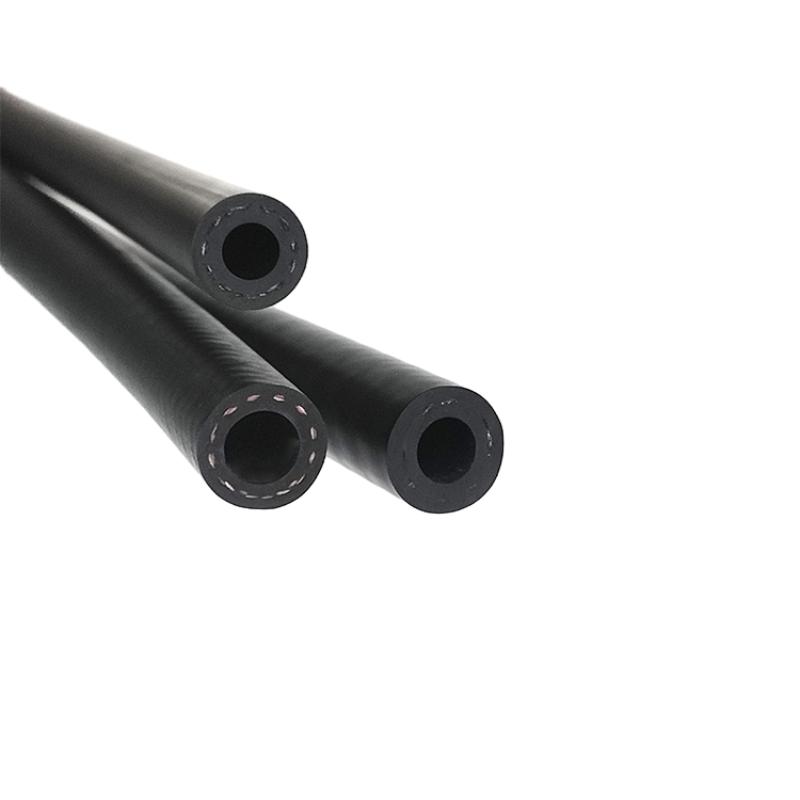
What it is (and why techs like it)
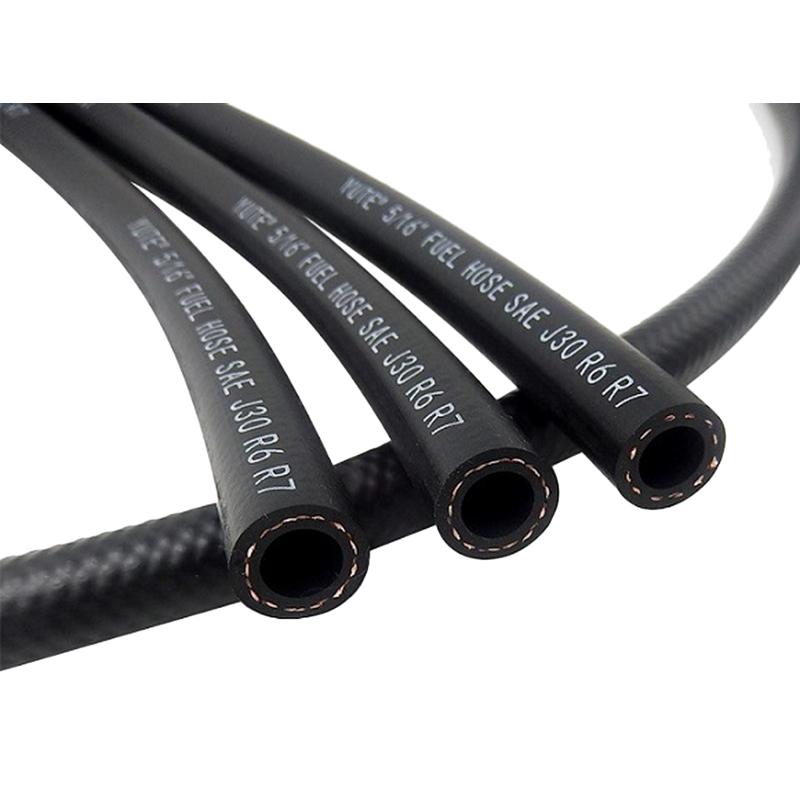
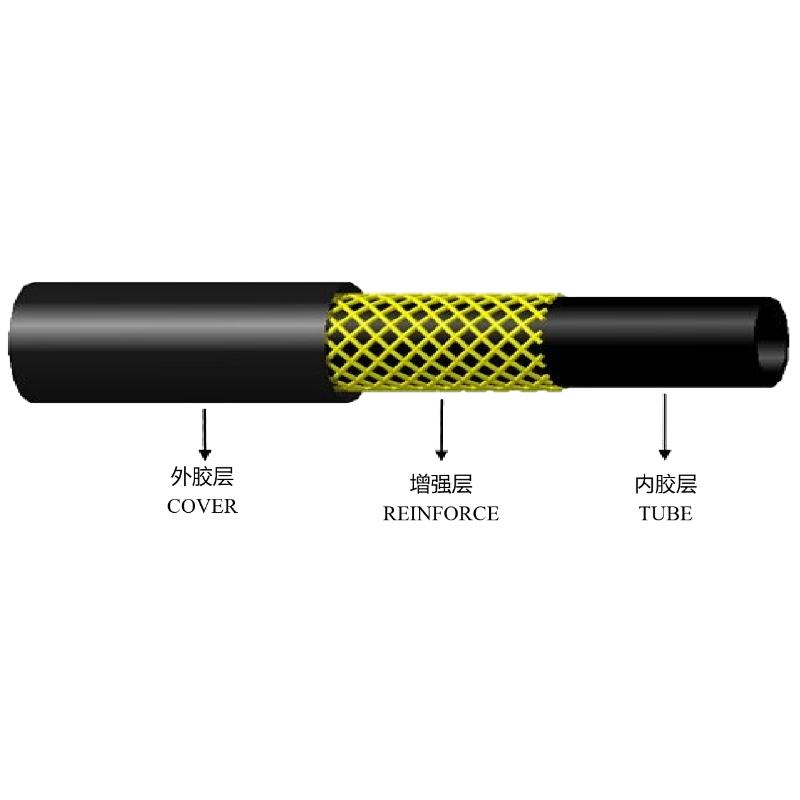
Product: Fuel Hose SAE J30R6/R7. Temperature window covers -40℃ to +150℃ (-40°F to +300°F). Tube is NBR synthetic rubber, reinforced with high tensile braid, and finished with an NBR + environment-resistant cover. It’s certified to ISO/TS 16949:2009 and built around SAE J30 R6/R7 and DIN 73379 Type 2A. In the field, that translates to solid performance on gasoline engines, diesel engines, and mechanical lubrication systems. In fact, several fleet mechanics I spoke with mentioned fewer clamp re-torques over seasonal swings.
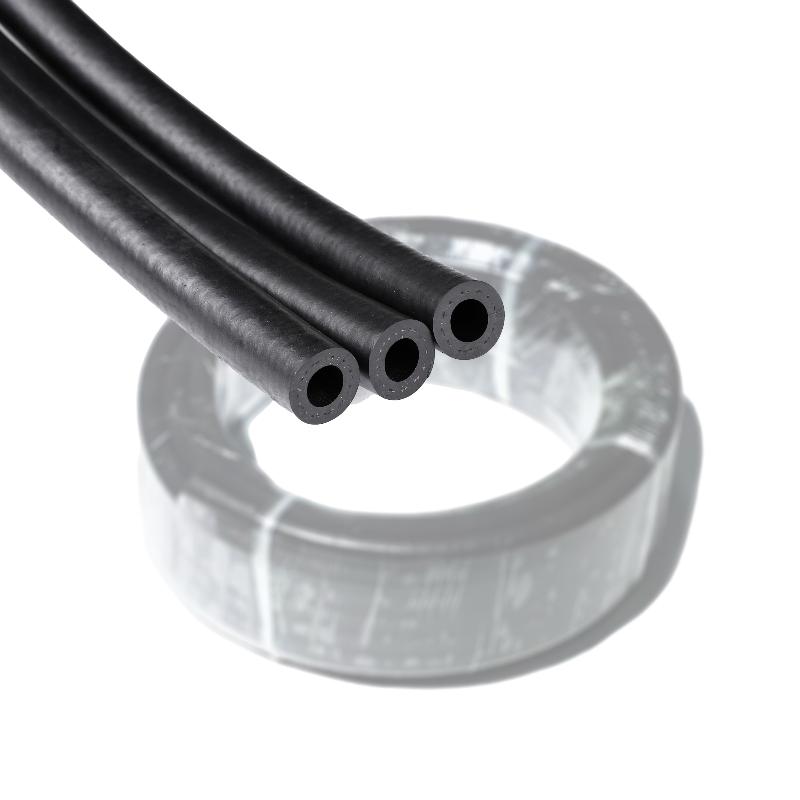
Quick spec sheet
| Standard | SAE J30 R6/R7; DIN 73379 Type 2A |
| Temperature | -40℃ ~ +150℃ (real-world may vary with fuel type) |
| Tube | NBR synthetic rubber (fuel-resistant) |
| Reinforcement | High tensile braided fiber |
| Cover | NBR + environment/ozone resistant blend |
| Working Pressure | ≈0.5 MPa (≈72 psi) typical for R7; check size-specific data |
| Burst (Lab) | ≥2.5× working (sample avg ≈1.5–2.0 MPa), supervised tests |
| Certifications | ISO/TS 16949:2009 |
How it’s made (short version)
- Materials: NBR tube compound tailored for petrol/diesel; ozone-stable cover blend.
- Methods: Precision extrusion → braiding → cover extrusion → vulcanization → cut/print → 100% visual check.
- Testing: SAE J30R6/R7 dimensional checks, burst/pressure hold, low-temp flex (-40℃), heat aging (+125–150℃), permeation per spec, fuel B/C soak, and ozone exposure.
- Service life: Around 5–8 years in typical under-hood routing when installed correctly. Harsh duty may shorten it.
- Industries: Passenger cars, light trucks, ag machinery, small gensets, shop lubrication circuits.
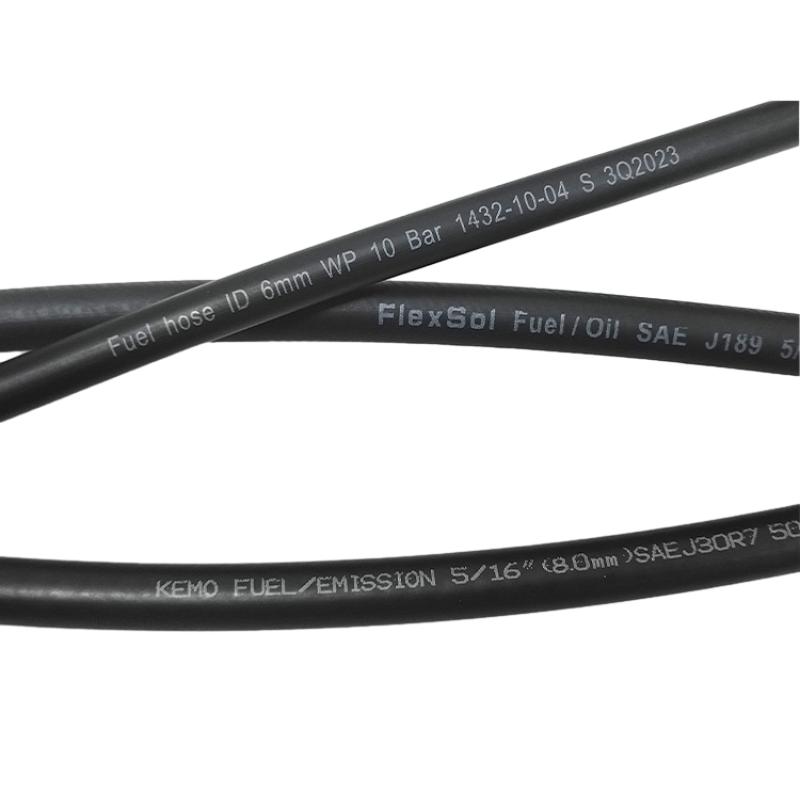
Where it shines
Use it for carbureted feeds, return lines, diesel transfer, and mechanical lube loops. For modern high-pressure EFI rails, you’ll need EFI-rated hose—common sense, I guess. Still, as a automotive fuel line for low-pressure circuits, it’s a workhorse. Many customers say clamp sealing is consistent and cold starts don’t crack the cover—small wins that matter.
Customization options
Cut-to-length kits, ID range from small motorcycle diameters to light-truck sizes, private labeling, color-stripe IDs, and barcoded bags or spool packaging. MOQ is flexible for OEMs; aftermarket boxes for retailers are available. To be honest, having the ISO/TS framework keeps PPAP/APQP paperwork tidy for larger programs.
Vendor snapshot (my quick notes)
| Vendor | Standards | Temp | Permeation | Lead Time | Customization |
|---|---|---|---|---|---|
| KEMO Hose (Hebei, CN) | SAE J30 R6/R7; DIN 73379 2A; ISO/TS 16949 | -40℃~+150℃ | Meets J30 limits | ≈2–4 weeks | High (IDs, print, kits) |
| EU OEM-grade supplier | SAE/DIN, OEM specs | -40℃~+135℃ | Low | ≈4–6 weeks | Medium |
| Aftermarket (Asia) | R6/R7 (varies) | -30℃~+120℃ | Varies | ≈1–3 weeks | Low–Medium |
Field story
A regional ag-equipment dealer swapped legacy return lines for this automotive fuel line on diesel tractors. After 14 months, their warranty tickets for seepage dropped noticeably. Not a lab trial, but still, a useful datapoint.
Final notes
If you’re standardizing on low-pressure fuel or lube circuits, this automotive fuel line hits the sweet spot: compliant, temperature-capable, and realistically priced. Just match the hose spec to the system pressure and fuel blend (E10 is fine; for higher ethanol, verify compound).
Authoritative citations
- SAE International. SAE J30: Fuel and Oil Hoses.
- DIN. DIN 73379-2A: Fuel Hoses for Motor Vehicles.
- ISO. ISO/TS 16949:2009 Quality management systems — Automotive production.
- SAE International. Permeation and Fuel Hose Test Methods (referenced within SAE J30 family).
Latest news
-
Transmission Oil Cooler Pipe Maintenance and Selection Guide
NewsApr.16,2026
-
Ultimate Guide to Choosing Transmission Oil Cooler Line Hose
NewsApr.09,2026
-
Essential Guide to Transmission Oil Cooler Hose 5/16 for Vehicle Longevity
NewsApr.07,2026
-
Understanding the Critical Role of Transmission Oil Cooler Hose 1 2 for Vehicle Longevity
NewsApr.04,2026
-
Understanding Transmission Oil Coolant Lines For Optimal Vehicle Performance
NewsMar.31,2026
-
Comprehensive Guide to Oil Coolant Pipe Selection and Industrial Applications
NewsMar.28,2026
 Afrikaans
 Albanian
 Amharic
 Arabic
 Armenian
 Azerbaijani
 Basque
 Belarusian
 Bengali
 Bosnian
 Bulgarian
 Catalan
 Cebuano
 Corsican
 Croatian
 Czech
Czech
 Danish
 Dutch
Dutch
 Esperanto
 Estonian
 Finnish
 French
 Frisian
 Galician
 Georgian
 German
 Greek
Greek
 Gujarati
 Haitian Creole
 Hausa
Hausa
 Hawaiian
 Hebrew
 Hindi
Hindi
 Miao
Miao
 Hungarian
 Icelandic
 Igbo
Igbo
 Indonesian
 Irish
Irish
 Italian
 Japanese
 Javanese
 Kannada
 Kazakh
 Khmer
Khmer
 Rwandese
 Korean
 Kurdish
 Kyrgyz
 Lao
Lao
 Latin
Latin
 Latvian
 Lithuanian
 Luxembourgish
 Macedonian
 Malgashi
 Malay
Malay
 Malayalam
 Maltese
 Maori
Maori
 Marathi
 Mongolian
 Myanmar
 Nepali
 Norwegian
 Norwegian
 Occitan
 Pashto
 Persian
 Polish
 Portuguese
 Punjabi
 Romanian
 Russian
 Samoan
 Scottish Gaelic
 Serbian
 Sesotho
 Shona
Shona
 Sindhi
 Sinhala
 Slovak
 Slovenian
 Somali
 Spanish
 Sundanese
 Swahili
 Swedish
 Tagalog
 Tajik
Tajik
 Tamil
Tamil
 Tatar
Tatar
 Telugu
 Thai
Thai
 Turkish
 Turkmen
 Ukrainian
 Urdu
Urdu
 Uighur
 Uzbek
Uzbek
 Vietnamese
 Welsh
Welsh
 Bantu
Bantu
 Yiddish
 Yoruba
 Zulu
Zulu
 English