
Automotive AC Hard Lines – OEM Fit, Leak-Proof, Durable
Oct . 25, 2025 12:40 Back to list
Automotive AC Hard Lines – OEM Fit, Leak-Proof, Durable
If you work around mobile HVAC, you already know: Automotive Ac Hard Lines (and the flexible hoses that connect to them) are the quiet backbone of cabin comfort. Lately, with the shift to R‑1234yf, tighter engine bays, and electrified compressors, the conversation has turned to barrier performance and vibration tolerance. And yes, that’s where a modern seven‑layer hose can save the day.
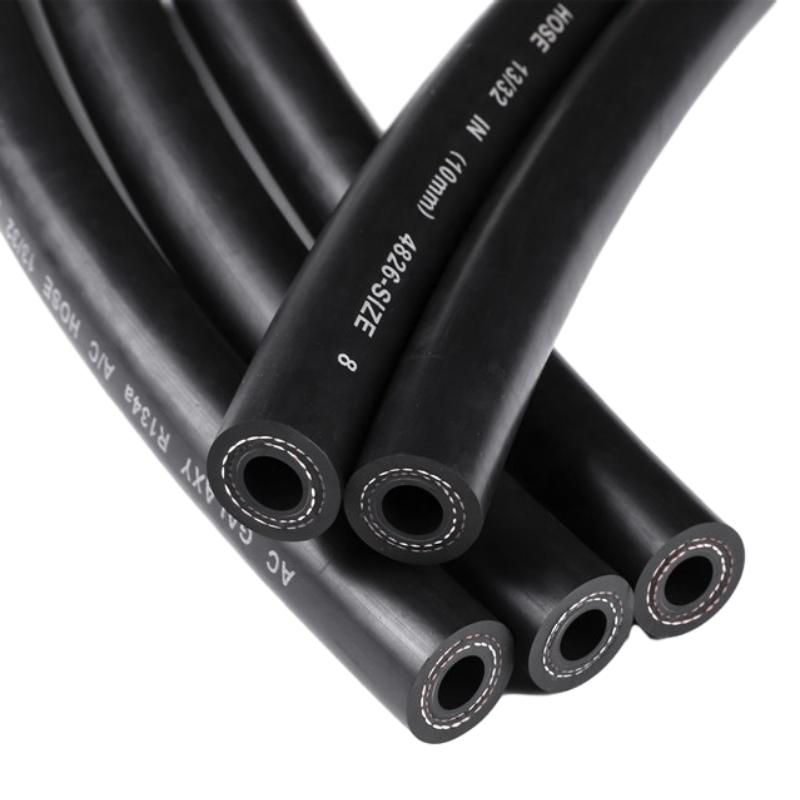
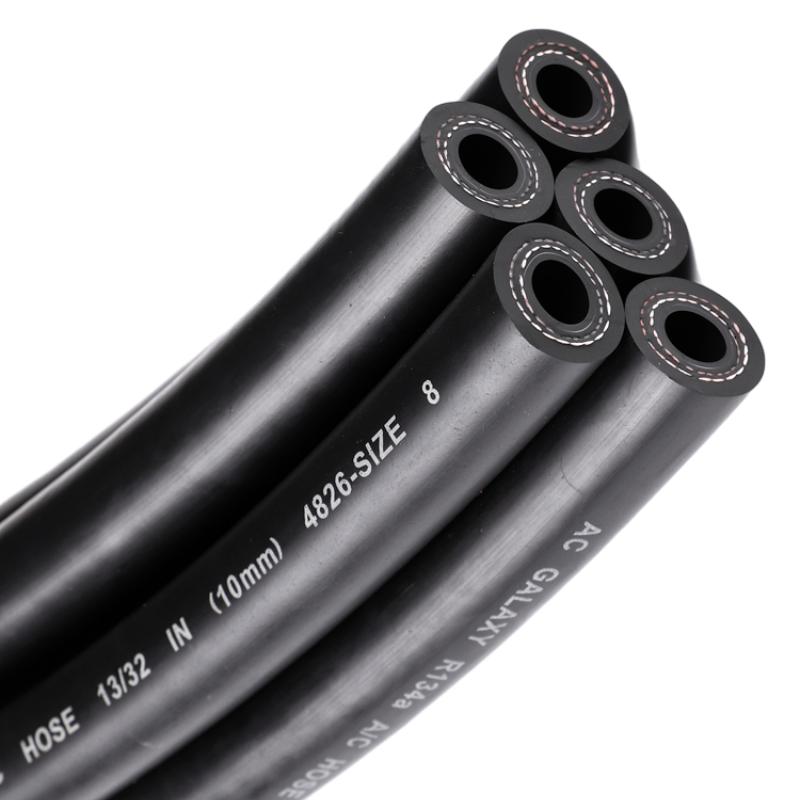
Quick context: aluminum Automotive Ac Hard Lines handle long, fixed runs beautifully, but they don’t love engine roll, road shock, or misalignment. OEMs pair them with flexible barrier hoses at the compressor, condenser, and firewall. One of the tidier solutions I’ve seen on the aftermarket and in Tier‑2 supply is KEMO’s 4826 A/C HOSE (Type C) Seven Layer Winding, made in Niu Jiazhai Industrial Area, Changzhuang Town, Wei County, Hebei, China. It’s built to bridge those NVH hot spots without bleeding refrigerant or inviting moisture.
Product snapshot: 4826 Seven‑Layer Barrier Hose
| Tube | EPDM |
| Barrier | PA/Nylon multilayer |
| Reinforcement | PET/PVA textile winding |
| Cover | EPDM, ozone‑resistant |
| Temperature range | -40℃~+135℃ (-40°F~+275°F) |
| Standards | SAE J2064 / SAE J3062 / QC/T 664 |
| Certification | ISO/TS 16949:2009 |
| Typical refrigerants | R‑134a, R‑1234yf (real‑world use may vary) |
| Indicative sizes | ID ≈ 5/16"–13/32"; bend radius tuned per ID |
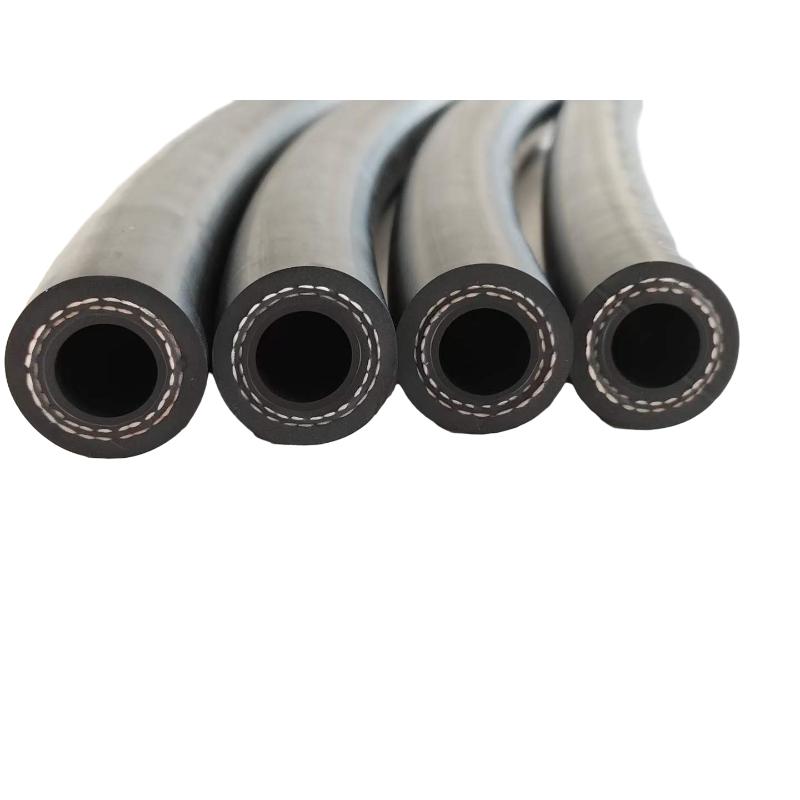
Where it fits in the system
Use it to connect compressor discharge to condenser inlet, condenser outlet to TXV, and evaporator return to compressor suction—especially where Automotive Ac Hard Lines meet vibrating components. On EVs and hybrids with e‑compressors, that vibration isolation is even more valuable.
Process flow and quality gates (short version)
Materials prep → seven‑layer winding → vulcanization → cut‑to‑length → fitting crimping (if assembly) → cleanliness & dryness check → pressure/leak test → labeling/traceability. Tests typically include burst, impulse, permeation (per SAE J2064/J3062), ozone aging, and salt‑spray on metal ends. Service life? In my experience, ≈ 8–12 years in typical duty, assuming proper routing and crimp spec.
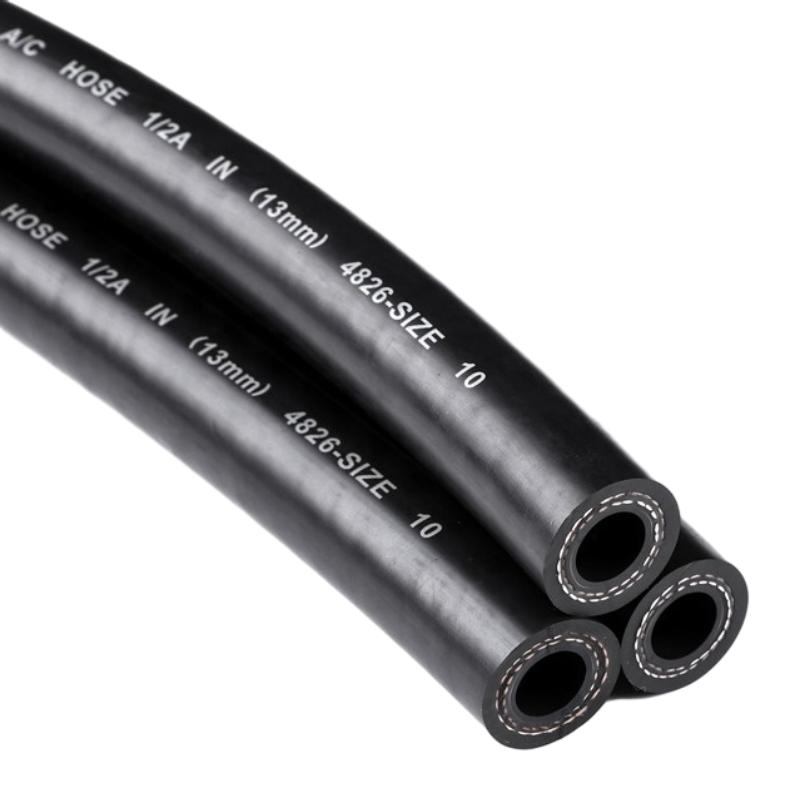
Real‑world test notes
- Permeation: designed to meet SAE barrier requirements for R‑134a/R‑1234yf.
- Burst/impulse: validated against SAE profiles; internal lab data shows stable performance (indicative; application‑specific).
- Cleanliness: assemblies flushed/dried to protect TXVs and e‑compressors.
Vendor snapshot (what buyers usually ask)
| Vendor | KEMO 4826 | Supplier A | Supplier B |
| Standards coverage | J2064, J3062, QC/T 664 | J2064 only | J2064/J3062 |
| Certification | ISO/TS 16949:2009 | IATF 16949 | ISO 9001 |
| Layer count | Seven | Five | Six |
| Customization | Cut length, fittings, private label | Limited fittings | MOQ ≥ 2,000 pcs |
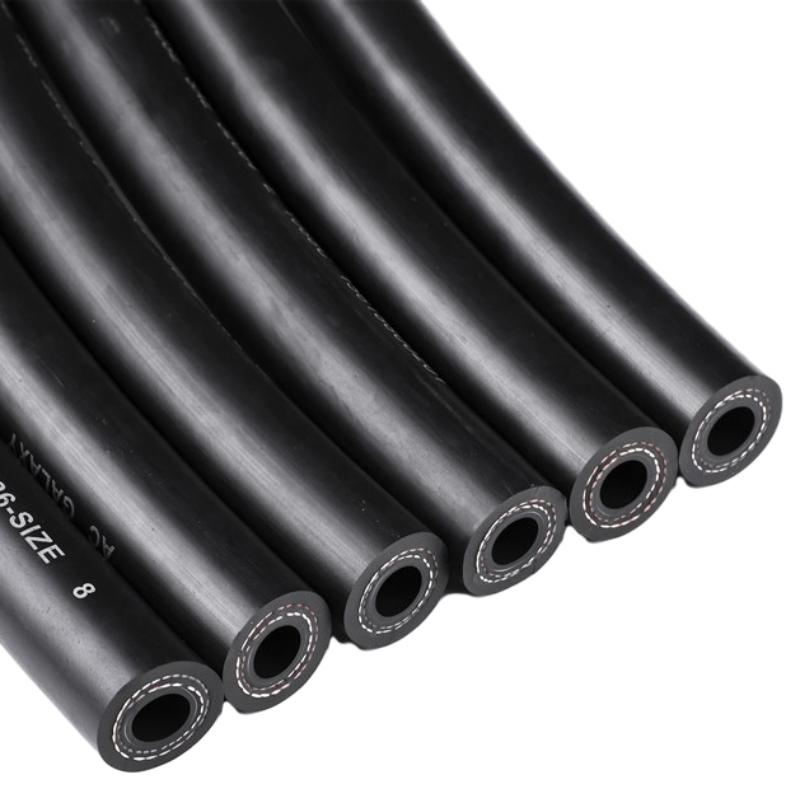
Use cases and field feedback
- OEM and Tier‑1: compressor jumpers where Automotive Ac Hard Lines interface with vibrating components.
- Aftermarket: retrofits for condenser swaps; mechanics like the bendability and consistent crimp grip. One shop owner told me, “It seals first try—less comeback.”
- Electrified buses/trucks: thermal circuits for batteries and inverters, where barrier integrity matters.
Why seven layers matter
The EPDM/PA stack cuts refrigerant permeation and moisture ingress, while PET/PVA reinforcement keeps the hose stable under pulse loads. Compared to all‑aluminum Automotive Ac Hard Lines, you gain misalignment forgiveness and better NVH behavior around the compressor.
Customization and logistics
Available as bulk hose or crimped assemblies (straight/angled fittings, beadlock options). Branding, lot traceability, and packaging per OEM spec are common requests. Lead times depend on ID and fittings—around 3–6 weeks in my notes, but expedite is sometimes doable.
Bottom line
If your build mixes rigid Automotive Ac Hard Lines with high‑vibe components, a seven‑layer barrier hose that’s compliant with SAE J2064/J3062 is the practical, low‑drama choice. The 4826 checks the right boxes without getting precious about it.
- SAE International – J2064: R‑134a and R‑1234yf Refrigerant Automotive Air‑Conditioning Hose and Hose Assemblies
- SAE International – J3062: Refrigerant Vapor Compression Systems R‑134a and R‑1234yf Service Hose Requirements
- QC/T 664: Automotive Air‑Conditioning Hose Technical Requirements (China, Ministry of Industry and Information Technology)
- ISO/TS 16949:2009 – Quality management systems—Particular requirements for the application of ISO 9001 for automotive production and relevant service part organizations
Latest news
-
Transmission Oil Cooler Pipe Maintenance and Selection Guide
NewsApr.16,2026
-
Ultimate Guide to Choosing Transmission Oil Cooler Line Hose
NewsApr.09,2026
-
Essential Guide to Transmission Oil Cooler Hose 5/16 for Vehicle Longevity
NewsApr.07,2026
-
Understanding the Critical Role of Transmission Oil Cooler Hose 1 2 for Vehicle Longevity
NewsApr.04,2026
-
Understanding Transmission Oil Coolant Lines For Optimal Vehicle Performance
NewsMar.31,2026
-
Comprehensive Guide to Oil Coolant Pipe Selection and Industrial Applications
NewsMar.28,2026
 Afrikaans
 Albanian
 Amharic
 Arabic
 Armenian
 Azerbaijani
 Basque
 Belarusian
 Bengali
 Bosnian
 Bulgarian
 Catalan
 Cebuano
 Corsican
 Croatian
 Czech
Czech
 Danish
 Dutch
Dutch
 Esperanto
 Estonian
 Finnish
 French
 Frisian
 Galician
 Georgian
 German
 Greek
Greek
 Gujarati
 Haitian Creole
 Hausa
Hausa
 Hawaiian
 Hebrew
 Hindi
Hindi
 Miao
Miao
 Hungarian
 Icelandic
 Igbo
Igbo
 Indonesian
 Irish
Irish
 Italian
 Japanese
 Javanese
 Kannada
 Kazakh
 Khmer
Khmer
 Rwandese
 Korean
 Kurdish
 Kyrgyz
 Lao
Lao
 Latin
Latin
 Latvian
 Lithuanian
 Luxembourgish
 Macedonian
 Malgashi
 Malay
Malay
 Malayalam
 Maltese
 Maori
Maori
 Marathi
 Mongolian
 Myanmar
 Nepali
 Norwegian
 Norwegian
 Occitan
 Pashto
 Persian
 Polish
 Portuguese
 Punjabi
 Romanian
 Russian
 Samoan
 Scottish Gaelic
 Serbian
 Sesotho
 Shona
Shona
 Sindhi
 Sinhala
 Slovak
 Slovenian
 Somali
 Spanish
 Sundanese
 Swahili
 Swedish
 Tagalog
 Tajik
Tajik
 Tamil
Tamil
 Tatar
Tatar
 Telugu
 Thai
Thai
 Turkish
 Turkmen
 Ukrainian
 Urdu
Urdu
 Uighur
 Uzbek
Uzbek
 Vietnamese
 Welsh
Welsh
 Bantu
Bantu
 Yiddish
 Yoruba
 Zulu
Zulu
 English