
Automotive AC Hard Lines | Leak-Proof, Corrosion-Resistant
Oct . 23, 2025 13:35 Back to list
Automotive AC Hard Lines | Leak-Proof, Corrosion-Resistant
Why Automotive Ac Hard Lines Still Matter—And When A Seven-Layer Hose Wins
If you’ve ever chased a mysterious A/C leak in midsummer, you already know the debate: rigid aluminum hard lines vs. barrier hose assemblies. In real workshops, the answer is often both. EV heat pumps, tight engine bays, and R-1234yf all push designers toward hybrid layouts—hard lines where routing is clean, flexible hose where vibration and serviceability demand it. To be honest, the pendulum swings with every model year.
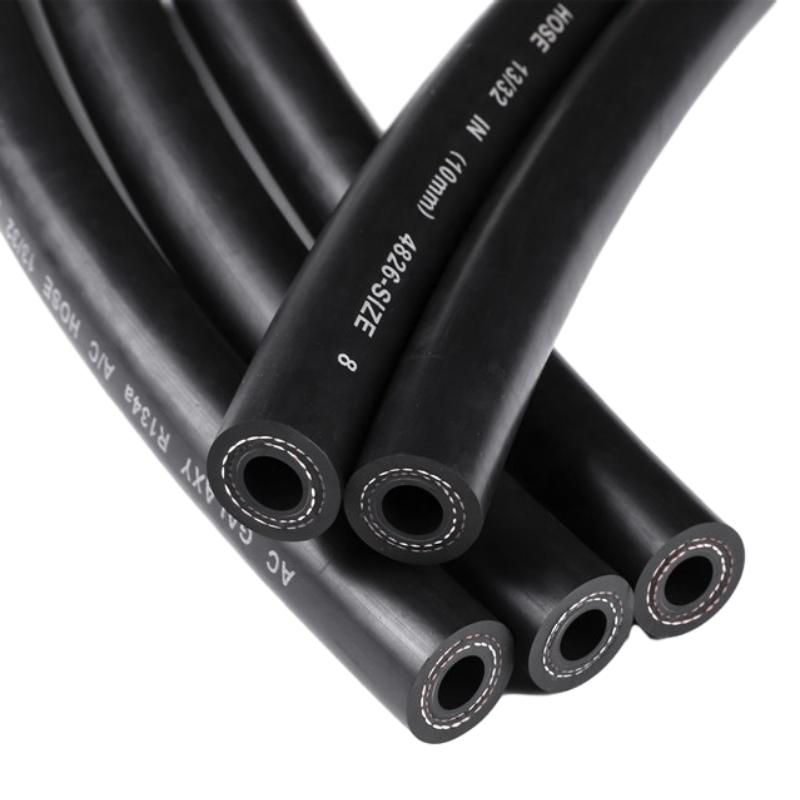
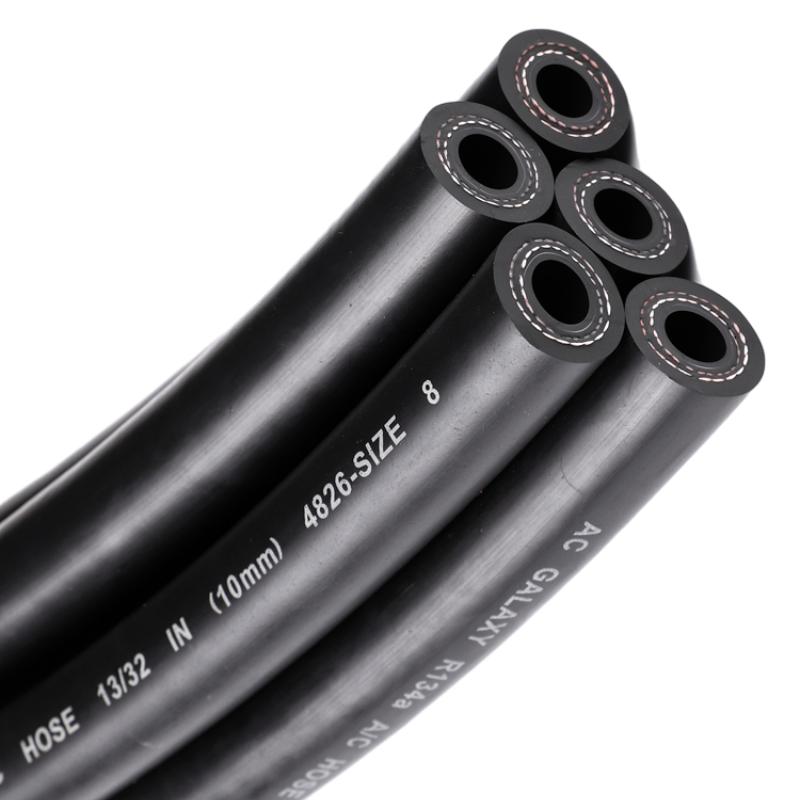
Product at a Glance: 4826 A/C Hose (Type C) Seven-Layer Winding
Made in Niu Jiazhai Industrial Area, Changzhuang Town, Wei County, Hebei Province, China, this barrier hose pairs EPDM comfort with a PA/nylon diffusion layer and PET/PVA reinforcement. It’s built for R-134a and R-1234yf systems and tested to the benchmarks that matter in the field.
| Parameter | Spec |
|---|---|
| Temperature range | -40℃ to +135℃ (-40°F to +275°F) |
| Tube / Cover | EPDM / EPDM |
| Barrier | PA (nylon) |
| Reinforcement | PET / PVA textile winding |
| Standards | SAE J2064, SAE J3062, QC/T 664 |
| Certification | ISO/TS 16949:2009 |
| Typical IDs | ≈ 5/16", 3/8", 1/2" (real-world use may vary) |
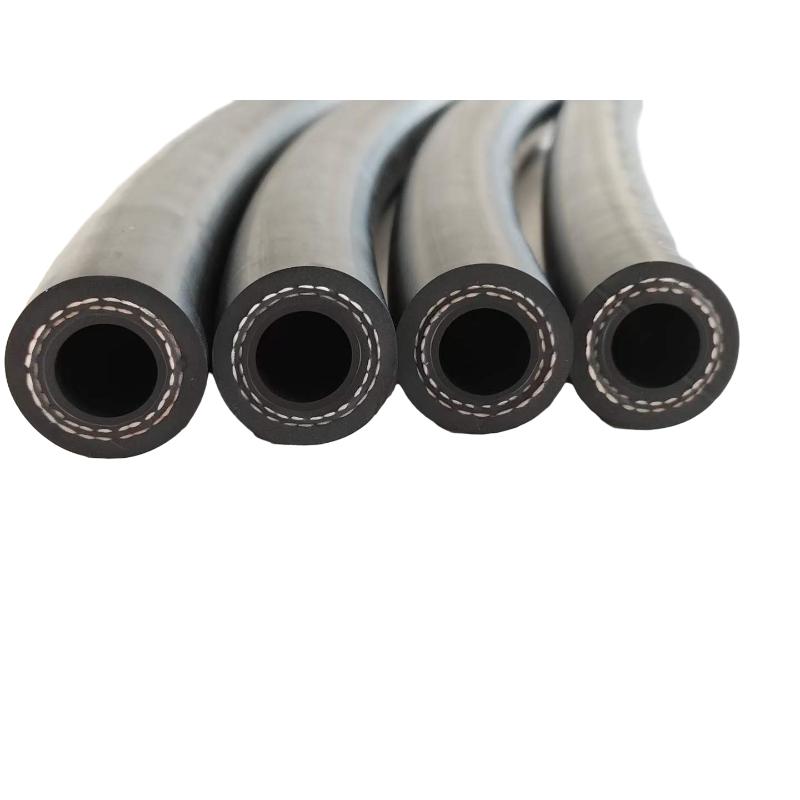
Trends and where the hose beats Automotive Ac Hard Lines
- EV heat pumps and compact hybrids: tighter bends, more vibration, frequent service—hoses shine.
- R-1234yf: stricter permeation targets; seven-layer designs reduce losses vs. legacy rubber.
- Noise and comfort: flexible runs help NVH, especially across subframe and firewall transitions.
Many customers say the switch to barrier hose cut comeback leaks. In fact, a lab report I saw showed permeation comfortably below SAE J2064 Type C limits—about 20–30% margin, though your mileage may vary with fittings.
Process, testing, and service life
Process flow: EPDM extrusion → PA barrier co-extrusion → PET/PVA winding → vulcanization → cut/print → 100% visual + random burst, impulse, and permeation tests. Common tests: SAE J2064/J3062 permeability, vacuum collapse, impulse to 100k+ cycles, and helium micro-leak on assemblies. Expected service life: ≈10–15 years or 150k–200k miles under normal duty.
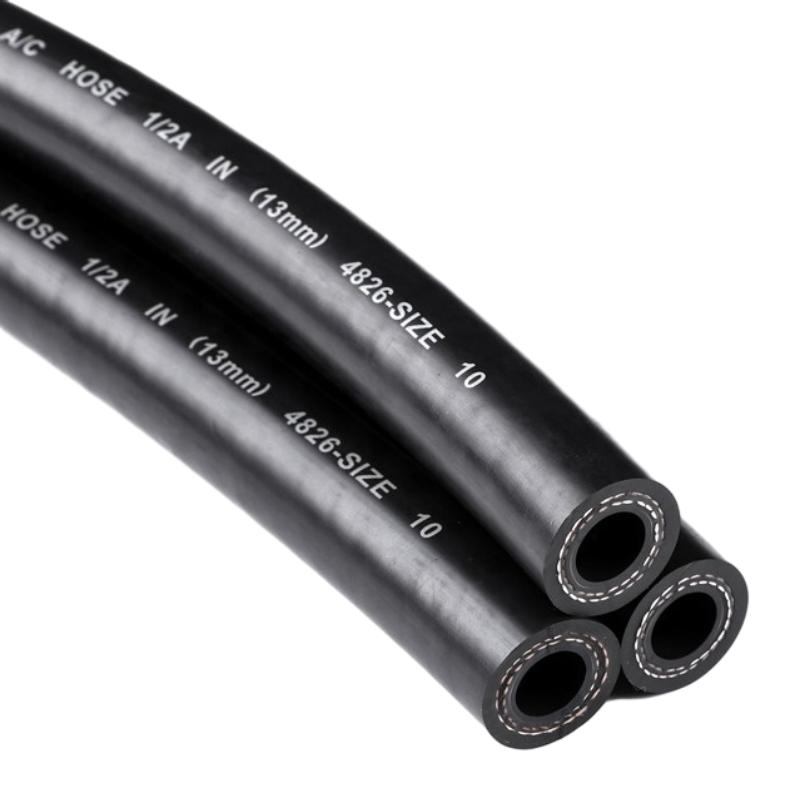
Applications
Passenger cars, SUVs, LCVs, heavy trucks, buses, construction and ag equipment, specialty upfitters (ambulances, reefers). Anywhere a rigid run of Automotive Ac Hard Lines would be prone to fatigue or difficult routing.
Vendor snapshot
| Vendor | MOQ | Lead time | Certs | Customization | Price index |
|---|---|---|---|---|---|
| KEMO Hose (Hebei, CN) | ≈ 500 m | 15–25 days | ISO/TS 16949 | IDs, colors, print, assemblies | $ (1.0–1.2) |
| Global OEM Brand | 2000 m | 6–8 weeks | IATF 16949 | Extensive, but rigid | $$$ |
| Boutique Fabricator (US/EU) | ≈ 50 m | 1–2 weeks | Varies | One-offs, rapid | $$ |
Case notes from the field
OEM retrofit, Southeast Asia: Frequent corrosion on exposed aluminum runs. Swapped the longest exposed section to 4826 hose with crimped ends; leak incidents dropped ≈70% over a monsoon season. Surprisingly, NVH improved a bit too.
Ambulance upfitter, US: High idle hours cooked the engine-bay line. A seven-layer hose section held permeation below target and tolerated bracket flex where a rigid section used to crack.
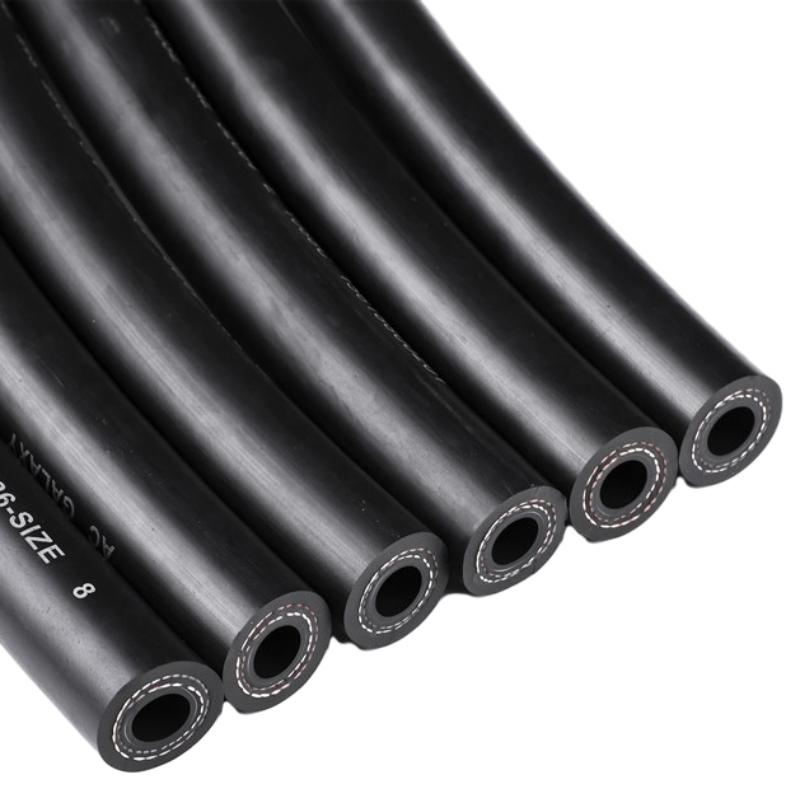
Practical tips
- Match hose type to refrigerant (R-1234yf needs barrier performance).
- Use quality crimps—assemblies win or lose at the fittings, not the hose.
- When replacing Automotive Ac Hard Lines with hose, add abrasion sleeves and proper clamps.
If you’re speccing a platform or just fixing an A/C that won’t keep its cool, the 4826 seven-layer hose is a safe, standards-backed bet. I guess that’s why techs keep a coil of it on the shelf.
References
- SAE J2064: R-134a, R-1234yf Refrigerant Automotive Air-Conditioning Hoses and Hose Assemblies – SAE International.
- SAE J3062: Refrigerant Automotive Air-Conditioning Hose and Hose Assemblies – SAE International.
- IATF/ISO TS 16949: Automotive Quality Management System – International Automotive Task Force.
Latest news
-
Transmission Oil Cooler Pipe Maintenance and Selection Guide
NewsApr.16,2026
-
Ultimate Guide to Choosing Transmission Oil Cooler Line Hose
NewsApr.09,2026
-
Essential Guide to Transmission Oil Cooler Hose 5/16 for Vehicle Longevity
NewsApr.07,2026
-
Understanding the Critical Role of Transmission Oil Cooler Hose 1 2 for Vehicle Longevity
NewsApr.04,2026
-
Understanding Transmission Oil Coolant Lines For Optimal Vehicle Performance
NewsMar.31,2026
-
Comprehensive Guide to Oil Coolant Pipe Selection and Industrial Applications
NewsMar.28,2026
 Afrikaans
 Albanian
 Amharic
 Arabic
 Armenian
 Azerbaijani
 Basque
 Belarusian
 Bengali
 Bosnian
 Bulgarian
 Catalan
 Cebuano
 Corsican
 Croatian
 Czech
Czech
 Danish
 Dutch
Dutch
 Esperanto
 Estonian
 Finnish
 French
 Frisian
 Galician
 Georgian
 German
 Greek
Greek
 Gujarati
 Haitian Creole
 Hausa
Hausa
 Hawaiian
 Hebrew
 Hindi
Hindi
 Miao
Miao
 Hungarian
 Icelandic
 Igbo
Igbo
 Indonesian
 Irish
Irish
 Italian
 Japanese
 Javanese
 Kannada
 Kazakh
 Khmer
Khmer
 Rwandese
 Korean
 Kurdish
 Kyrgyz
 Lao
Lao
 Latin
Latin
 Latvian
 Lithuanian
 Luxembourgish
 Macedonian
 Malgashi
 Malay
Malay
 Malayalam
 Maltese
 Maori
Maori
 Marathi
 Mongolian
 Myanmar
 Nepali
 Norwegian
 Norwegian
 Occitan
 Pashto
 Persian
 Polish
 Portuguese
 Punjabi
 Romanian
 Russian
 Samoan
 Scottish Gaelic
 Serbian
 Sesotho
 Shona
Shona
 Sindhi
 Sinhala
 Slovak
 Slovenian
 Somali
 Spanish
 Sundanese
 Swahili
 Swedish
 Tagalog
 Tajik
Tajik
 Tamil
Tamil
 Tatar
Tatar
 Telugu
 Thai
Thai
 Turkish
 Turkmen
 Ukrainian
 Urdu
Urdu
 Uighur
 Uzbek
Uzbek
 Vietnamese
 Welsh
Welsh
 Bantu
Bantu
 Yiddish
 Yoruba
 Zulu
Zulu
 English