
Automotive AC Hard Lines – Durable, Leak-Proof, Custom Fit
Oct . 24, 2025 12:50 Back to list
Automotive AC Hard Lines – Durable, Leak-Proof, Custom Fit
The Quiet Workhorses Behind Cool Cabins: Automotive AC Lines, Hoses, and What Really Matters
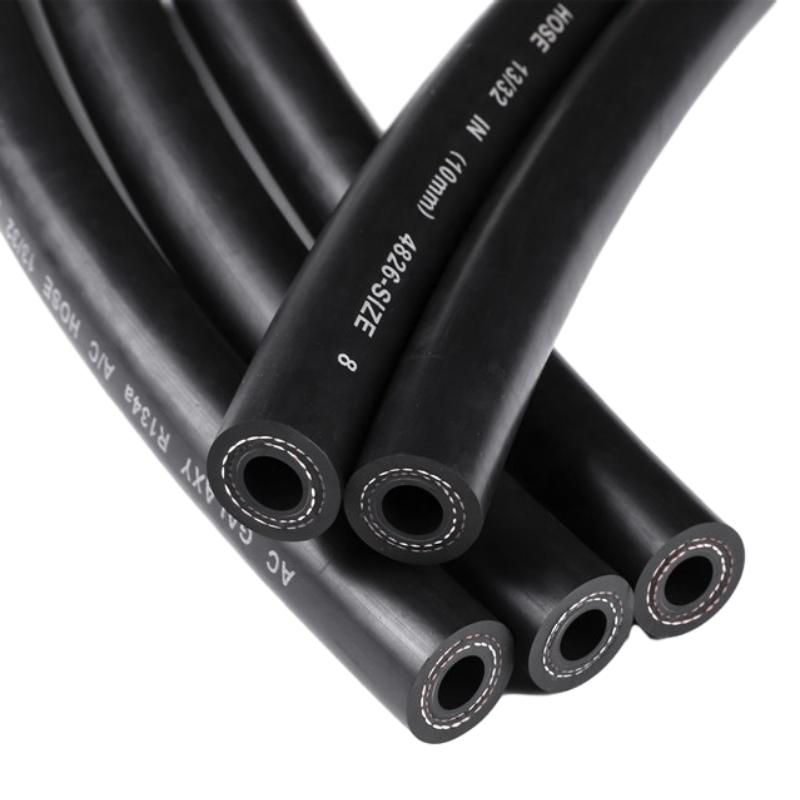
If you’ve ever chased a mysterious A/C hiss on a summer afternoon, you know the difference between theory and road reality. In the shop and on the line, we talk about Automotive Ac Hard Lines all the time—aluminum tubes that hold pressure like champs. But to be honest, the flexible sections are where engineering finesse shows. They link compressors, condensers, evaporators, and those hard lines without transmitting too much vibration or leaking refrigerant.
Industry snapshot and trends
Two big forces shape A/C plumbing today: low‑permeation requirements (R‑1234yf, anyone?) and electrification. OEMs need hose/line assemblies that keep charge mass stable for years, tame NVH, and still snake through tighter engine bays. Many customers say the winning combo is aluminum Automotive Ac Hard Lines for dimensional stability paired with high‑barrier multi‑layer hoses for dynamic sections. Honestly, that’s what we keep seeing on late-model platforms.
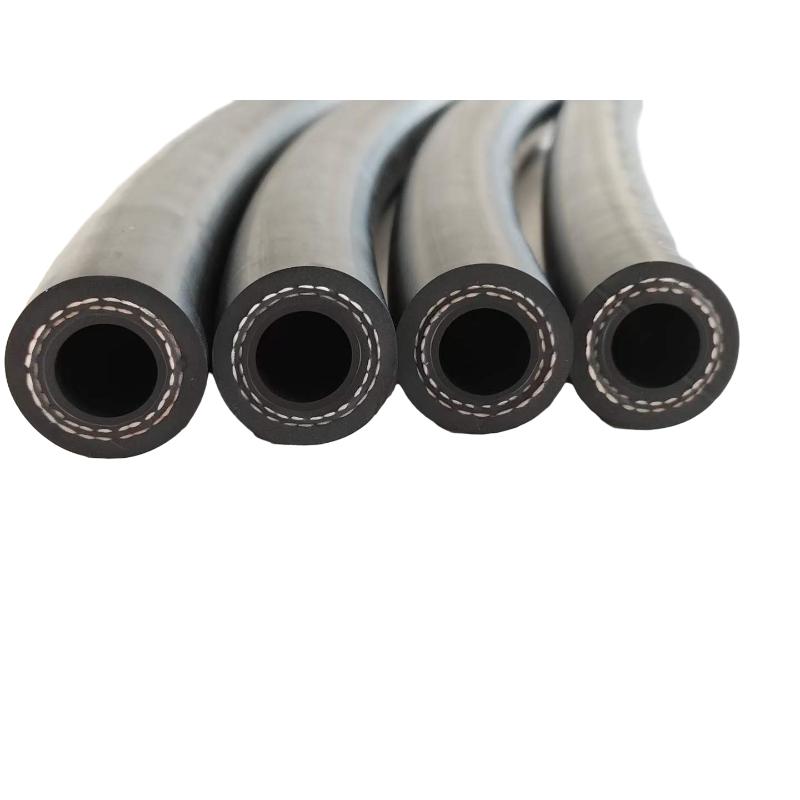
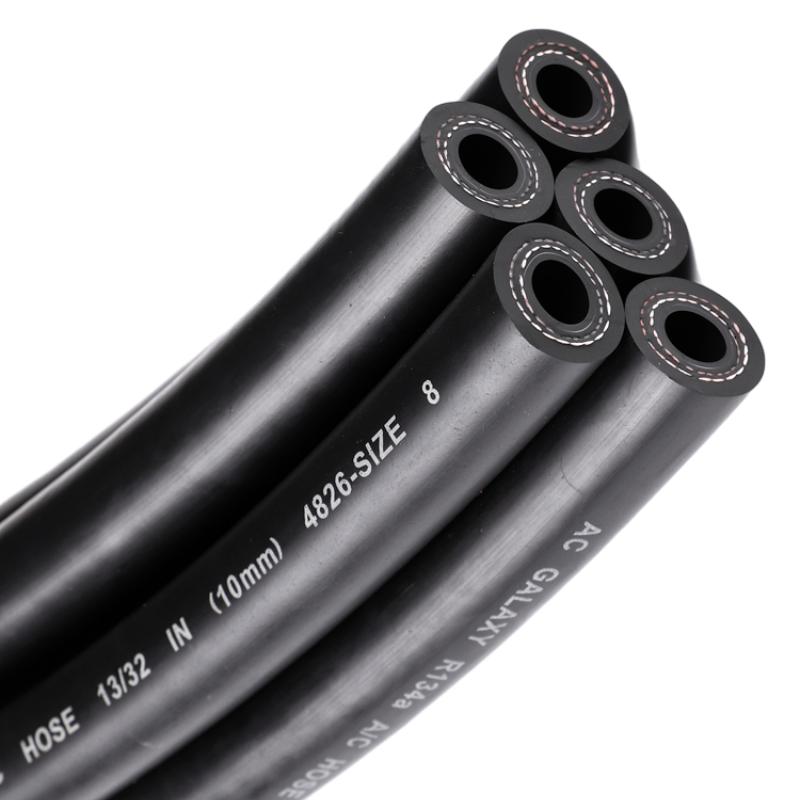
Product spotlight: 4826 A/C HOSE (Type C) Seven Layer Winding
Built in Niu Jiazhai Industrial Area, Changzhuang Town, Wei County, Hebei, this hose is designed to pair cleanly with Automotive Ac Hard Lines in mixed assemblies—compressor jumpers, condenser links, and flexible joints near engine mounts.
| Product Name | 4826 A/C HOSE (Type C) Seven Layer Winding |
| Temperature Range | -40℃ ~ +135℃ (-40°F ~ +275°F) |
| Tube / Friction / Cover | EPDM / EPDM / EPDM |
| Barrier | PA/Nylon (low‑permeation) |
| Reinforcement | PET / PVA winding (≈ seven-layer construction) |
| Standards | SAE J2064, SAE J3062, QC/T 664 |
| Certification | ISO/TS 16949:2009 (automotive quality management) |
Process, testing, and service life
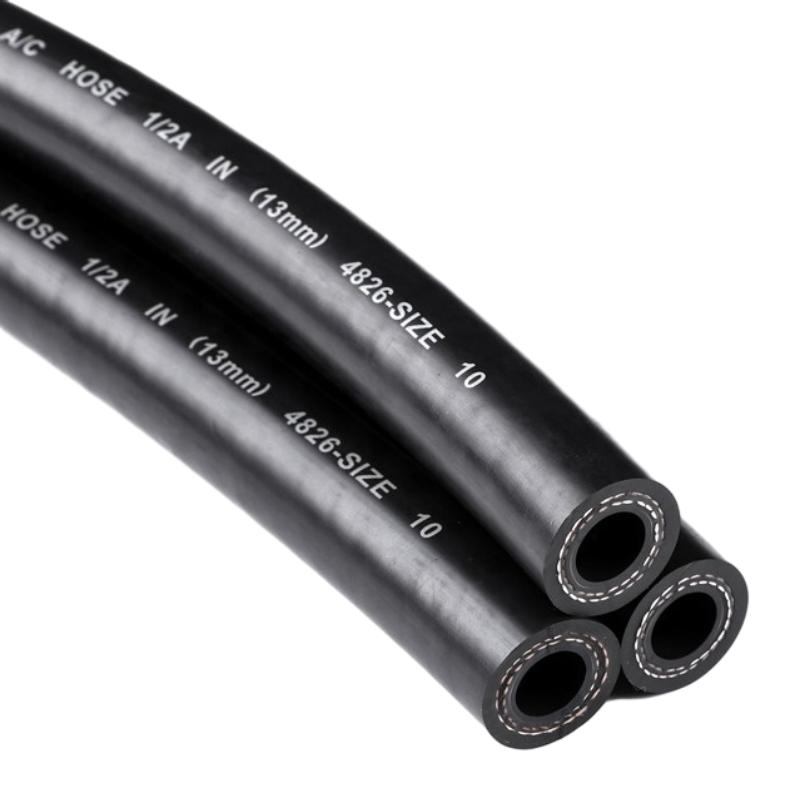
- Materials: EPDM inner/outer for heat/ozone resistance; PA barrier for low permeation; PET/PVA for tensile strength and kink resistance.
- Methods: Co-extrusion, multi-layer winding, continuous vulcanization; crimped to aluminum or steel ferrules to mate with Automotive Ac Hard Lines.
- Testing (typical): Permeation per SAE J2064; burst pressure and impulse per J3062; thermal cycling -40~135℃; salt-fog on fittings; helium leak checks. Sample data: R‑1234yf permeation ≤ ≈1.5 g/m²/day at 40℃ (lab; real-world use may vary).
- Expected life: ≈8–12 years vehicle service, assuming proper routing and clamp support.
- Industries: Passenger cars, light/heavy trucks, buses, off-road, specialty EV thermal loops.
Where it fits and why it helps
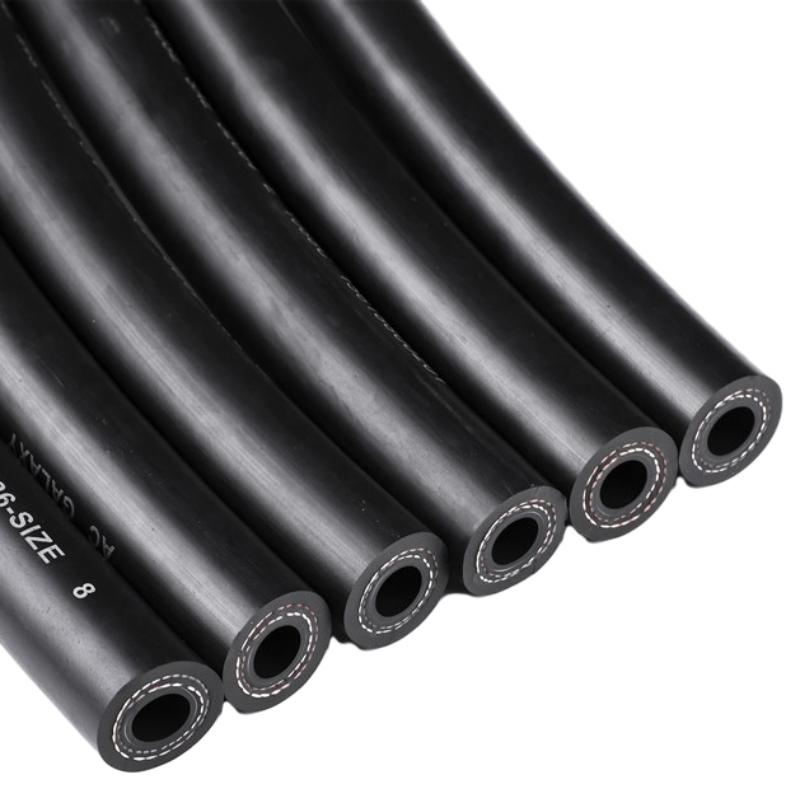
Application scenarios include compressor discharge/suction jumpers, condenser to receiver-drier links, and EV chiller loops. Compared with pure Automotive Ac Hard Lines, this hose segment absorbs engine rock and road shock, reduces NVH, and eases assembly—especially around tight radii.
Quick case study
A Tier‑2 module builder swapped a legacy two-layer hose for the seven-layer Type C on an export SUV program. After 50k‑mile fleet validation, warranty claims tied to micro‑leaks dropped noticeably (their word, not mine), and assembly time improved thanks to better kink resistance near the compressor ear. Sometimes the simple stuff wins.
Vendor comparison (condensed)
| Criterion | KEMO 4826 | Vendor A | Vendor B |
|---|---|---|---|
| Standards compliance | SAE J2064/J3062, QC/T 664 | Claims J2064 | J2064 + OEM spec addendums |
| Quality system | ISO/TS 16949:2009 | ISO 9001 | IATF 16949 |
| Customization | Cut length, fittings, branding | Limited SKUs | Full, higher MOQ |
| Lead time (typ.) | Around 2–4 weeks | 1–2 weeks | 6–8 weeks |
Customization and integration
Options include crimped ends for quick coupling to Automotive Ac Hard Lines, EPDM color markings, batch traceability, and salt‑spray‑rated fittings. For EVs, ask about vapor‑compression chiller compatibility and tighter bend radii.
Certifications and documentation
Lot‑wise test reports (permeation, burst, leak) are available. Compliance with SAE J2064/J3062 and QC/T 664 is documented; quality system per ISO/TS 16949:2009. Yes, paperwork matters when you’re signing off PPAP.
Authoritative references
- SAE International – J2064: Refrigerant Automotive Air-Conditioning Hose and Hose Assemblies.
- SAE International – J3062: Nonmetallic Refrigerant Automotive Air-Conditioning Hose and Hose Assemblies.
- IATF/ISO – ISO/TS 16949 (superseded by IATF 16949) automotive quality management.
- QC/T 664 – Chinese automotive industry standard for A/C hose assemblies.
- U.S. EPA – R-1234yf adoption and service guidelines (Section 609 technician guidance).
Latest news
-
Transmission Oil Cooler Pipe Maintenance and Selection Guide
NewsApr.16,2026
-
Ultimate Guide to Choosing Transmission Oil Cooler Line Hose
NewsApr.09,2026
-
Essential Guide to Transmission Oil Cooler Hose 5/16 for Vehicle Longevity
NewsApr.07,2026
-
Understanding the Critical Role of Transmission Oil Cooler Hose 1 2 for Vehicle Longevity
NewsApr.04,2026
-
Understanding Transmission Oil Coolant Lines For Optimal Vehicle Performance
NewsMar.31,2026
-
Comprehensive Guide to Oil Coolant Pipe Selection and Industrial Applications
NewsMar.28,2026
 Afrikaans
 Albanian
 Amharic
 Arabic
 Armenian
 Azerbaijani
 Basque
 Belarusian
 Bengali
 Bosnian
 Bulgarian
 Catalan
 Cebuano
 Corsican
 Croatian
 Czech
Czech
 Danish
 Dutch
Dutch
 Esperanto
 Estonian
 Finnish
 French
 Frisian
 Galician
 Georgian
 German
 Greek
Greek
 Gujarati
 Haitian Creole
 Hausa
Hausa
 Hawaiian
 Hebrew
 Hindi
Hindi
 Miao
Miao
 Hungarian
 Icelandic
 Igbo
Igbo
 Indonesian
 Irish
Irish
 Italian
 Japanese
 Javanese
 Kannada
 Kazakh
 Khmer
Khmer
 Rwandese
 Korean
 Kurdish
 Kyrgyz
 Lao
Lao
 Latin
Latin
 Latvian
 Lithuanian
 Luxembourgish
 Macedonian
 Malgashi
 Malay
Malay
 Malayalam
 Maltese
 Maori
Maori
 Marathi
 Mongolian
 Myanmar
 Nepali
 Norwegian
 Norwegian
 Occitan
 Pashto
 Persian
 Polish
 Portuguese
 Punjabi
 Romanian
 Russian
 Samoan
 Scottish Gaelic
 Serbian
 Sesotho
 Shona
Shona
 Sindhi
 Sinhala
 Slovak
 Slovenian
 Somali
 Spanish
 Sundanese
 Swahili
 Swedish
 Tagalog
 Tajik
Tajik
 Tamil
Tamil
 Tatar
Tatar
 Telugu
 Thai
Thai
 Turkish
 Turkmen
 Ukrainian
 Urdu
Urdu
 Uighur
 Uzbek
Uzbek
 Vietnamese
 Welsh
Welsh
 Bantu
Bantu
 Yiddish
 Yoruba
 Zulu
Zulu
 English