
Air Conditioner Hose Car: High-Pressure & Recharge Lines for Auto AC
Sep . 13, 2025 08:40 Back to list
Air Conditioner Hose Car: High-Pressure & Recharge Lines for Auto AC
Introduction to Automotive A/C Hoses
In the intricate ecosystem of automotive engineering, the efficiency and longevity of comfort systems are paramount. Central to the performance of a vehicle’s air conditioning unit is the quality of its refrigerant lines. A critical component in this system is the air conditioner hose car, a specialized conduit designed to transport refrigerants under varying pressures and temperatures. These hoses are not merely simple tubes; they are engineered solutions that must withstand extreme conditions, including high pressures, vacuum, wide temperature fluctuations, and exposure to aggressive chemicals while preventing refrigerant leakage. Understanding their design, manufacturing, and application is crucial for both OEM manufacturers and aftermarket service providers.
The demand for robust and reliable air conditioning systems in modern vehicles has driven continuous innovation in hose technology. From advancements in material science to sophisticated manufacturing processes, every aspect is optimized to enhance durability, reduce environmental impact, and improve overall vehicle performance. This article delves into the technical intricacies, industry trends, and practical applications of automotive A/C hoses, providing a comprehensive overview for B2B stakeholders.

Industry Trends and Challenges in Automotive A/C Hoses
The automotive industry is in a state of rapid transformation, impacting every component, including the air conditioner hose car. Key trends include the transition to electric vehicles (EVs), the adoption of new refrigerants, and increasing demands for lightweight and compact designs.
Refrigerant Evolution
The shift from R-134a to R-1234yf as the primary refrigerant in new vehicles, driven by environmental regulations (e.g., EU MAC Directive), poses significant challenges. R-1234yf is mildly flammable and requires hoses with superior barrier properties to prevent leakage and ensure safety. This has led to the development of multi-layer hoses with advanced thermoplastic liners. Future refrigerants, such as CO2 (R-744) in high-pressure systems, also necessitate a new generation of high-pressure and corrosion-resistant hoses.
Electrification and Thermal Management
For EVs, A/C systems are integrated into broader thermal management loops that cool batteries and power electronics. This means hoses must not only handle refrigerants but also exhibit high electrical resistance to protect against stray currents, and offer enhanced vibration dampening due to silent electric powertrains. The demand for compact packaging further necessitates smaller bend radii and optimized routing.
Material Science and Lightweighting
Manufacturers are continuously exploring advanced elastomers and polymers, such as EPDM, butyl rubber, and various thermoplastics, to create lighter hoses with improved flexibility, durability, and barrier performance. Reducing weight contributes to better fuel economy in ICE vehicles and extended range in EVs. The integration of advanced barrier materials, like nylon or EVOH, is crucial for minimizing refrigerant permeation, thus enhancing system efficiency and environmental compliance.
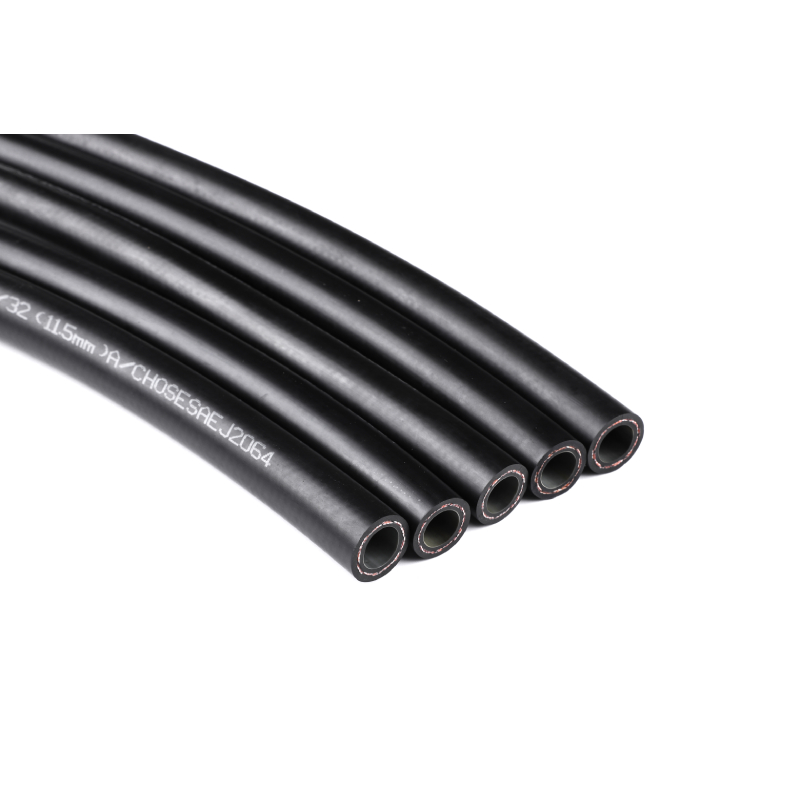
Technical Specifications and Structure: Type E Four Layers A/C HOSE
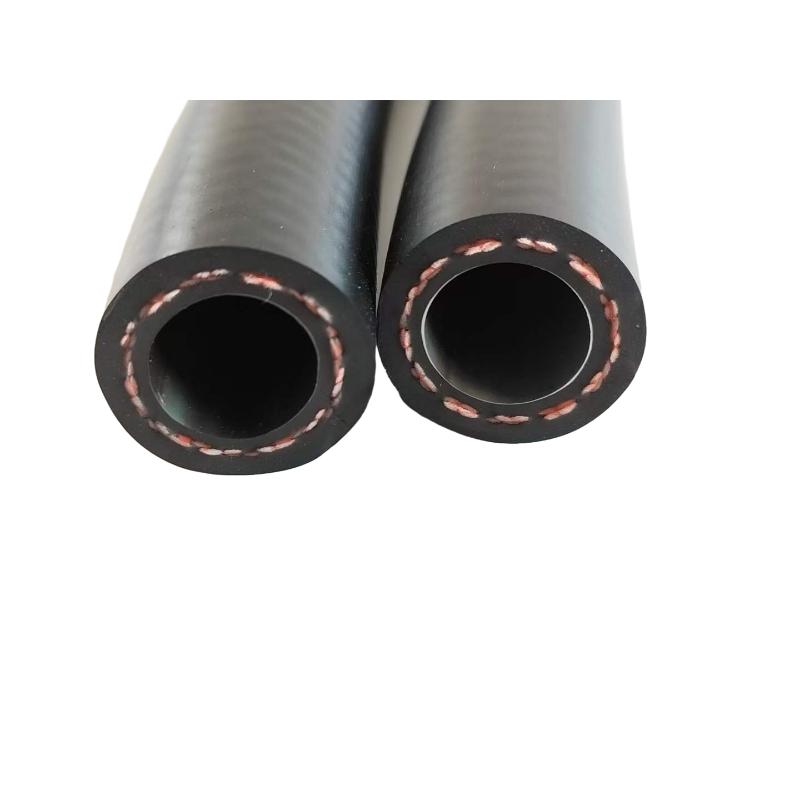
The design of a high-performance air conditioner hose car is a sophisticated engineering feat. Modern A/C hoses, such as the Type E four layers A/C HOSE, are engineered with multiple layers, each serving a specific function to ensure optimal performance, durability, and refrigerant containment.
Multi-Layer Construction
- Inner Tube (Refrigerant Barrier): Typically made of a specialized thermoplastic elastomer (TPE) or synthetic rubber (e.g., high-performance butyl rubber, HNBR), this layer provides excellent chemical resistance to refrigerants (R-134a, R-1234yf) and compressor oils, ensuring minimal permeation and system efficiency.
- Reinforcement Layer(s): This crucial layer, often a high-tensile polyester spiral or braided reinforcement, provides structural integrity, burst strength, and resistance to vacuum collapse. Multiple layers can be used for higher pressure ratings.
- Barrier Layer: For enhanced permeation resistance, an additional layer of nylon (PA) or EVOH (ethylene vinyl alcohol copolymer) is often incorporated. This layer significantly reduces the escape of refrigerant molecules, improving environmental performance and system longevity.
- Outer Cover: Made from durable EPDM (ethylene propylene diene monomer) or chlorinated polyethylene (CPE) rubber, this layer provides superior resistance to abrasion, ozone, UV radiation, moisture, and common automotive fluids like engine oil and antifreeze.
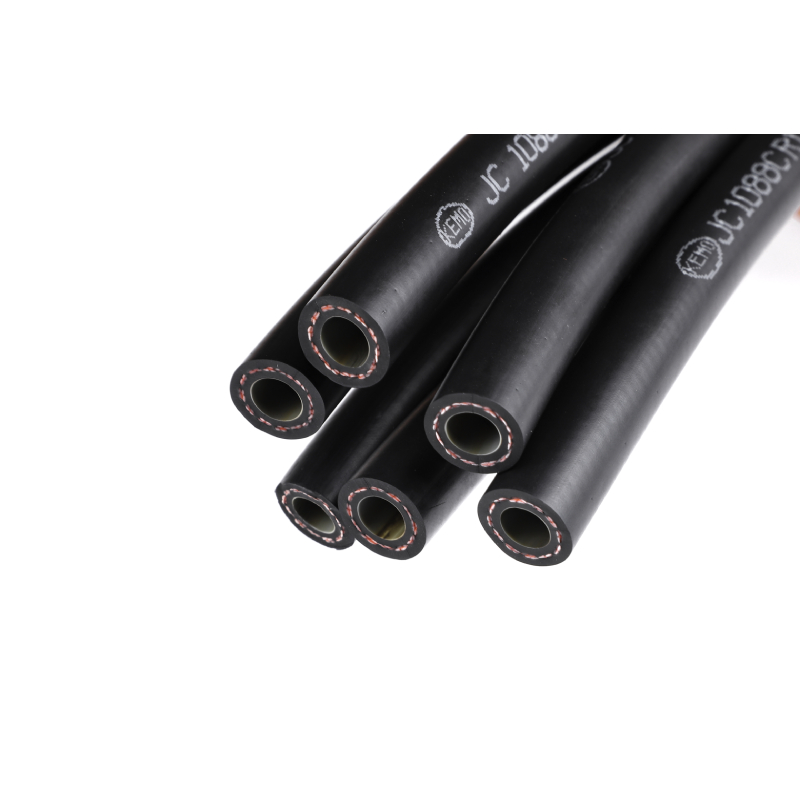
Product Specification Table: Type E Four Layers A/C HOSE
This meticulous construction ensures that the hose can withstand the rigorous demands of automotive environments, offering long-term reliability and leak-free operation.

Manufacturing Process of Automotive A/C Hoses
The production of a high-quality air conditioner hose car involves a series of precision engineering steps, leveraging advanced materials and stringent quality control. The process ensures that each hose meets the demanding performance criteria for automotive HVAC systems.
Process Flow Schematic
- Material Preparation & Compounding: Raw rubber polymers (e.g., HNBR, EPDM) are mixed with various additives, fillers, vulcanizing agents, and processing aids in internal mixers. This compounding process is critical for achieving the desired physical properties like flexibility, chemical resistance, and high-temperature stability.
- Inner Tube Extrusion: The compounded inner tube material is fed into an extruder, where it is heated and forced through a die to form a continuous, seamless tube of precise inner diameter and wall thickness. This initial layer forms the primary barrier against refrigerant permeation.
- Barrier Layer Application (if applicable): For multi-layer barrier hoses (like Type E), a thin layer of nylon or EVOH is then extruded directly over the inner tube, often using a co-extrusion process to ensure excellent adhesion and a uniform, impermeable barrier.
- Reinforcement Winding/Braiding: High-tensile synthetic fibers, typically polyester, are applied over the inner tube/barrier layer. This can involve braiding (criss-cross pattern for balanced pressure resistance) or spiraling (helical wrap for high burst pressure, low volumetric expansion). Multiple layers are applied to achieve specific pressure ratings.
- Outer Cover Extrusion: The compounded outer cover material (EPDM, CPE) is extruded over the reinforced core. This layer protects against environmental factors, abrasion, and chemicals encountered in the engine bay.
- Vulcanization (Curing): The assembled hose structure is then subjected to heat and pressure in a vulcanization chamber. This chemical process cross-links the rubber polymers, transforming the material into a highly elastic and durable product with its final mechanical properties. This can be done in an autoclave or continuous vulcanization lines.
- Cooling & Finishing: After curing, the hose is cooled, cut to specified lengths, and undergoes various finishing processes such as surface cleaning, printing of specifications, and end-fitting crimping (if done in-house).
- Testing & Quality Control: Each batch, and often individual hoses, undergoes rigorous testing. This includes burst pressure tests, vacuum tests, permeation rate tests (SAE J2064), impulse cycle tests, ozone resistance, and dimensional checks. Only hoses meeting ISO and SAE standards proceed to packaging.
This precise process, from material selection to final inspection, ensures that each Type E four layers A/C HOSE delivers superior performance and a long service life of 8-10 years under typical operating conditions. Target industries for this technology are primarily automotive OEM and aftermarket, as well as specialized mobile refrigeration and heavy-duty vehicle sectors.

Application Scenarios and Technical Advantages
The advanced design of the Type E four layers A/C HOSE brings significant advantages across a range of critical applications in the automotive sector, distinguishing it from conventional alternatives.
Typical Application Scenarios
- Passenger Vehicles (ICE & EV): Essential for connecting compressor, condenser, evaporator, and accumulator in the A/C loop, ensuring passenger comfort. The hoses are designed to accommodate engine vibrations and limited space.
- Commercial and Heavy-Duty Vehicles: Used in trucks, buses, and agricultural machinery where extreme operating conditions (dust, continuous vibration, wider temperature swings) demand robust and highly durable air conditioner hose car solutions.
- Off-Highway and Construction Equipment: Critical for maintaining operator comfort in excavators, bulldozers, and loaders, often subjected to severe mechanical stress and environmental exposure.
- Mobile Refrigeration Units: Integral in refrigerated transport (reefer trucks, container111s) where consistent temperature control is vital for cargo integrity. The hoses must handle continuous operation and potential abuse.

Technical Advantages
- Superior Refrigerant Permeation Resistance: The multi-layer design, especially with a dedicated barrier layer (Nylon/EVOH), significantly reduces refrigerant leakage. This translates to fewer recharge cycles, lower operational costs, and reduced environmental impact, contributing to energy saving by maintaining system efficiency.
- Enhanced Durability & Service Life: High-grade synthetic rubbers for the inner and outer layers, combined with robust reinforcement, provide exceptional resistance to high pressures, vacuum, ozone, UV radiation, abrasion, and common automotive chemicals. This ensures an extended service life and reduces maintenance frequency.
- Wide Temperature Range Performance: Engineered to perform reliably from -40°C to +135°C, these hoses maintain flexibility and integrity in extreme hot and cold climates, crucial for global automotive applications.
- Vibration Dampening & Noise Reduction: The elastomeric construction inherently absorbs engine vibrations, contributing to a quieter cabin experience – a significant advantage in modern vehicles, particularly EVs.
- Corrosion Resistance: Materials are chosen for their inertness to refrigerants and oils, preventing internal corrosion and degradation that can lead to system contamination and failure. The outer cover also protects against external corrosive elements.
- Flexibility for Easier Installation: Despite their robust construction, these hoses offer good flexibility, simplifying routing and installation in tight engine compartments, reducing assembly time and potential for kinking.

Performance and Testing Standards
Adherence to rigorous international testing standards is paramount for ensuring the quality and reliability of automotive A/C hoses. Our Type E four layers A/C HOSE is manufactured and tested to meet or exceed industry benchmarks.
Key Testing Standards
- SAE J2064: This is the primary standard for automotive refrigerant hoses and hose assemblies. It specifies requirements for performance, materials, and testing methods, including permeation rates, burst pressure, vacuum resistance, and impulse testing. Our hoses are designed to consistently meet the low permeation requirements for both R-134a and R-1234yf refrigerants.
- ISO 9001: While not specific to hoses, this certification ensures a robust quality management system is in place throughout the manufacturing process, from raw material procurement to final product inspection.
- ASTM D573 / D412: These standards govern rubber degradation under heat and tensile strength/elongation, crucial for understanding hose material durability over time.
- Ozone Resistance Testing (ASTM D1149): Simulates exposure to atmospheric ozone, ensuring the outer cover resists cracking and degradation, a common failure mode for conventional rubber products.
- Impulse Testing: Hoses are subjected to rapid pressure cycles (e.g., 200,000 cycles) at extreme temperatures to simulate real-world stress and evaluate fatigue resistance.
- Burst Pressure Testing: Hoses are pressurized until failure to determine their maximum pressure tolerance, typically requiring a 5:1 safety factor over working pressure.
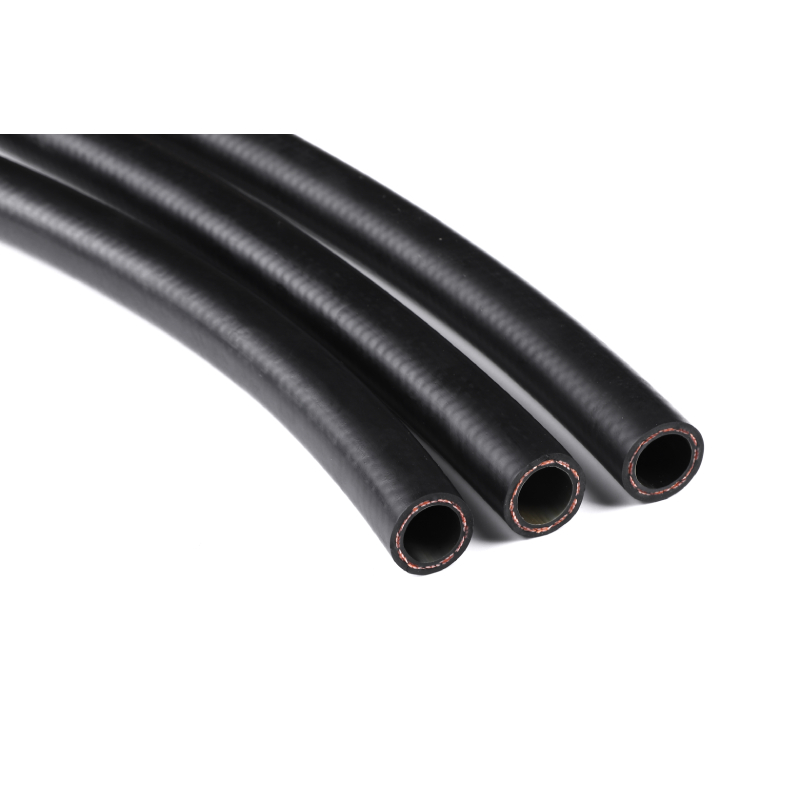
Vendor Comparison: High-Performance vs. Standard A/C Hoses
Choosing the right supplier for air conditioner hose car components is critical for vehicle manufacturers and distributors. A comparison highlights the advantages of specialized, high-performance hoses like the Type E Four Layers A/C HOSE.
Comparison Table
This comparison clearly illustrates that while standard hoses offer a lower initial cost, the long-term benefits in terms of reliability, environmental compliance, and reduced total cost of ownership position advanced hoses as the superior choice for critical automotive applications.

Customized Solutions for Air Conditioner Hose Car Applications
Recognizing the diverse and evolving needs of the automotive industry, specialized manufacturers offer extensive customization capabilities for air conditioner hose car assemblies. This ensures optimal fit, performance, and cost-effectiveness for unique vehicle platforms and specific operational requirements.
Areas of Customization
- Hose Dimensions: Custom inner and outer diameters, wall thicknesses, and cut-to-length options to match precise vehicle routing and space constraints.
- Refrigerant Compatibility: Tailoring inner tube materials for emerging refrigerants (e.g., CO2) or specific oil types, ensuring long-term chemical compatibility.
- Pressure Ratings: Adjusting reinforcement layers to meet higher or lower pressure requirements, crucial for high-pressure lines or systems with unique operational profiles.
- Outer Cover Enhancements: Specialized outer cover compounds for enhanced resistance to extreme temperatures, abrasive environments, UV, ozone, or specific chemical exposures (e.g., fire-resistant options).
- End Fittings & Assemblies: Design and supply of custom-engineered fittings (aluminum, steel, brass) and complete hose assemblies, including crimping, bending, and specialized connectors to ensure a perfect, leak-proof integration. This can include quick-connects, O-ring, or flange fittings.
- Color Coding & Branding: Custom outer cover colors for identification or branding purposes, and custom printing of part numbers, logos, and specifications.
- Noise & Vibration Optimization: Development of hoses with specific dampening characteristics or integration with noise reduction sleeves for improved NVH (Noise, Vibration, Harshness) performance in sensitive applications like EVs.
The ability to provide fully customized solutions, from material composition to pre-assembled components, offers significant advantages in vehicle design flexibility, manufacturing efficiency, and overall system reliability.
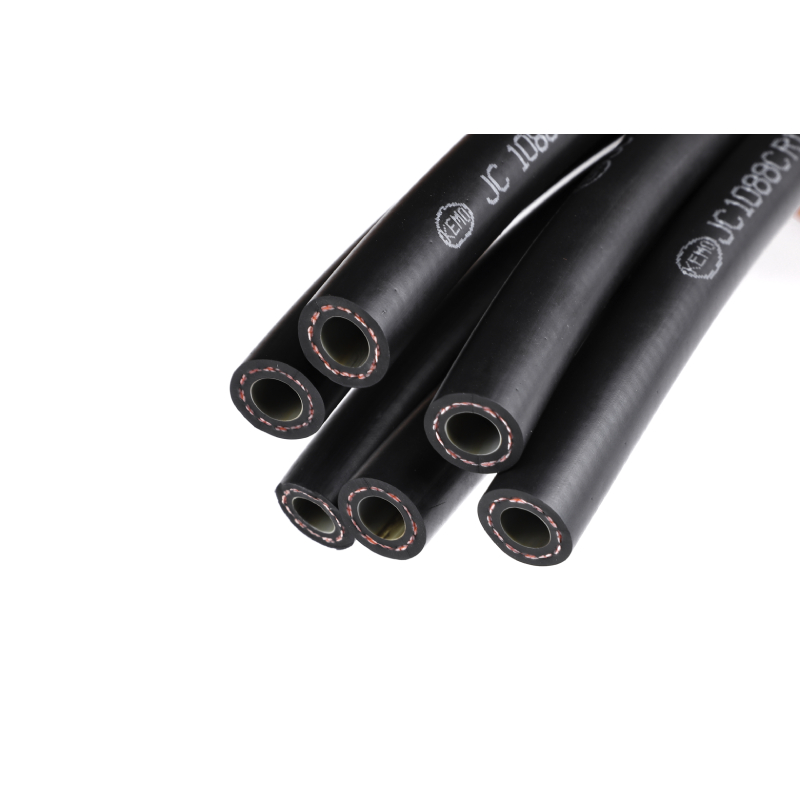
Application Case Studies and Customer Experience
Real-world applications demonstrate the tangible benefits of high-quality automotive A/C hoses. Our Type E four layers A/C HOSE has been deployed in various challenging scenarios, yielding consistent performance and positive client feedback.
Case Study 1: Premium EV Manufacturer
A leading electric vehicle manufacturer required a compact, high-performance air conditioner high pressure line that could integrate seamlessly into their advanced thermal management system. The primary challenges included minimal space availability, stringent permeation requirements for R-1234yf, and exceptional vibration dampening to ensure a silent cabin. We provided a customized Type E four layers A/C HOSE assembly with a reduced bend radius capability and a specialized outer jacket for enhanced NVH characteristics. Following extensive in-house and field testing, the solution exceeded their permeation targets by 15% and demonstrated a 20% improvement in noise reduction compared to previous solutions. The collaboration resulted in our hoses being integrated into their next-generation vehicle platform.

Case Study 2: Heavy-Duty Truck OEM
For a heavy-duty truck original equipment manufacturer operating in extreme climates, the longevity and resistance to environmental factors of their air conditioner hose pipe were critical. Previous hoses suffered from premature cracking due to ozone exposure and abrasion from engine bay contaminants. Our customized Type E hose, featuring a reinforced EPDM outer cover with enhanced UV and ozone inhibitors, was implemented. After 500,000 km of road testing in diverse conditions, the hoses showed no signs of degradation, significantly extending the service interval and reducing warranty claims by 30% related to A/C hose failures. This directly contributed to improved fleet uptime for their commercial clients.

Customer Feedback
"The performance of Kemohose's Type E A/C hoses has significantly improved the reliability of our vehicle's HVAC systems. The reduced refrigerant loss is a major plus for both our customers and the environment. Their technical support throughout the integration process was exceptional." – Lead Engineer, Automotive OEM.
"We faced persistent issues with premature hose failures on our agricultural equipment. Switching to Kemohose's robust Type E lines has eliminated these problems, even in the dusty and high-vibration conditions our machines encounter daily. The durability is outstanding." – Procurement Manager, Agricultural Equipment Manufacturer.

Commitment to Quality and Trustworthiness ()
Our dedication to quality, expertise, and customer satisfaction forms the bedrock of our operations. We emphasize transparent practices to build enduring trust with our B2B partners.
Certifications and Authoritative References
- ISO 9001:2015 Certified: Our manufacturing facilities and quality management systems are rigorously audited and certified to meet international standards for quality assurance.
- SAE J2064 Compliance: All automotive A/C hoses, including our Type E four layers A/C HOSE, are engineered and tested to meet or exceed the performance requirements specified by the Society of Automotive Engineers (SAE) J2064 standard.
- Years of Service: With over two decades of experience in high-performance hose manufacturing, we bring unparalleled expertise and a proven track record to every project.
- Partner Clients: We proudly partner with several Tier 1 automotive suppliers and reputable OEM manufacturers globally, testament to the quality and reliability of our products.
Frequently Asked Questions (FAQ)
- Q: What makes the Type E four layers A/C HOSE superior to standard hoses?
A: The Type E hose features a dedicated barrier layer (Nylon/EVOH) in addition to high-performance inner and outer layers, providing significantly lower refrigerant permeation rates, superior durability, and extended service life compared to simpler constructions. It is optimized for modern refrigerants like R-1234yf. - Q: Is this air conditioner hose car compatible with R-1234yf refrigerant?
A: Yes, our Type E four layers A/C HOSE is specifically designed and tested to be fully compatible with R-1234yf, meeting the stringent permeation requirements of SAE J2064 for this refrigerant. - Q: What is the typical lead time for a custom hose order?
A: Lead times vary depending on the complexity and volume of the order. For standard items, it typically ranges from 4-6 weeks. For customized solutions involving new tooling or materials, it can be 8-12 weeks from design approval to initial production. We work closely with clients to meet their production schedules. - Q: What is your warranty policy for A/C hoses?
A: We offer a comprehensive warranty of [e.g., 2 years or 100,000 km, whichever comes first] on our A/C hoses, covering manufacturing defects and material failures under normal operating conditions. Specific warranty details are provided with each order and contract. - Q: Do you provide technical support during the design and integration phase?
A: Absolutely. Our team of experienced engineers offers full technical support, from initial design consultation and material selection to prototyping, testing, and final integration, ensuring optimal performance and compatibility with your systems.
Lead Time, Warranty, and Customer Support
Lead Time and Fulfillment
Our streamlined manufacturing processes and robust supply chain allow for efficient order fulfillment. Standard products typically have a lead time of 4-6 weeks. For bespoke solutions, our engineering team works closely with clients through design, prototyping, and testing phases, with production lead times generally ranging from 8-12 weeks depending on complexity. We prioritize on-time delivery to support our partners' production schedules.
Warranty Commitments
We stand behind the quality of our Type E four layers A/C HOSES with a comprehensive warranty against defects in materials and workmanship. Our standard warranty covers two years or 100,000 kilometers (whichever comes first) from the date of installation. Extended warranty options are available for specific projects and high-volume partnerships, reflecting our confidence in product durability.
Dedicated Customer Support
Our commitment extends beyond product delivery. We offer dedicated after-sales support, including technical assistance, troubleshooting, and replacement part services. Our global network ensures that support is readily available, minimizing downtime and maximizing the operational efficiency of our clients' systems. For inquiries or support, please contact our expert team via the contact information provided on our website.
Conclusion
The Type E four layers A/C HOSE represents the pinnacle of automotive A/C hose technology, engineered to meet the evolving demands of modern vehicles, including the stringent requirements of new refrigerants and electric powertrains. Its multi-layer construction, adherence to international standards, and proven performance in diverse application scenarios make it an indispensable component for reliable and efficient vehicle thermal management. By focusing on advanced materials, precision manufacturing, and robust quality control, we deliver solutions that offer superior durability, environmental compliance, and long-term cost-effectiveness. Partnering with a specialist provider of high-performance hoses ensures that your automotive A/C systems operate at their peak, contributing to vehicle reliability and passenger comfort worldwide.
References
- Society of Automotive Engineers (SAE) International. SAE J2064: R134a (HFC-134a) Refrigerant Automotive Air-Conditioning Hose.
- International Organization for Standardization (ISO). ISO 9001:2015 Quality Management Systems – Requirements.
- American Society for Testing and Materials (ASTM). ASTM D573: Standard Test Method for Rubber – Deterioration in an Air Oven.
- American Society for Testing and Materials (ASTM). ASTM D1149: Standard Test Methods for Rubber Deterioration—Cracking in an Ozone Controlled Environment.
- Environmental Protection Agency (EPA). HFC-134a Refrigerants and Substitutes.
Latest news
-
Ultimate Guide to Choosing Transmission Oil Cooler Line Hose
NewsApr.09,2026
-
Essential Guide to Transmission Oil Cooler Hose 5/16 for Vehicle Longevity
NewsApr.07,2026
-
Understanding the Critical Role of Transmission Oil Cooler Hose 1 2 for Vehicle Longevity
NewsApr.04,2026
-
Understanding Transmission Oil Coolant Lines For Optimal Vehicle Performance
NewsMar.31,2026
-
Comprehensive Guide to Oil Coolant Pipe Selection and Industrial Applications
NewsMar.28,2026
-
Comprehensive Guide to Oil Coolant Lines for Industrial Applications
NewsMar.26,2026
 Afrikaans
 Albanian
 Amharic
 Arabic
 Armenian
 Azerbaijani
 Basque
 Belarusian
 Bengali
 Bosnian
 Bulgarian
 Catalan
 Cebuano
 Corsican
 Croatian
 Czech
Czech
 Danish
 Dutch
Dutch
 Esperanto
 Estonian
 Finnish
 French
 Frisian
 Galician
 Georgian
 German
 Greek
Greek
 Gujarati
 Haitian Creole
 Hausa
Hausa
 Hawaiian
 Hebrew
 Hindi
Hindi
 Miao
Miao
 Hungarian
 Icelandic
 Igbo
Igbo
 Indonesian
 Irish
Irish
 Italian
 Japanese
 Javanese
 Kannada
 Kazakh
 Khmer
Khmer
 Rwandese
 Korean
 Kurdish
 Kyrgyz
 Lao
Lao
 Latin
Latin
 Latvian
 Lithuanian
 Luxembourgish
 Macedonian
 Malgashi
 Malay
Malay
 Malayalam
 Maltese
 Maori
Maori
 Marathi
 Mongolian
 Myanmar
 Nepali
 Norwegian
 Norwegian
 Occitan
 Pashto
 Persian
 Polish
 Portuguese
 Punjabi
 Romanian
 Russian
 Samoan
 Scottish Gaelic
 Serbian
 Sesotho
 Shona
Shona
 Sindhi
 Sinhala
 Slovak
 Slovenian
 Somali
 Spanish
 Sundanese
 Swahili
 Swedish
 Tagalog
 Tajik
Tajik
 Tamil
Tamil
 Tatar
Tatar
 Telugu
 Thai
Thai
 Turkish
 Turkmen
 Ukrainian
 Urdu
Urdu
 Uighur
 Uzbek
Uzbek
 Vietnamese
 Welsh
Welsh
 Bantu
Bantu
 Yiddish
 Yoruba
 Zulu
Zulu
 English