
Air Brake Hose for Trucks - DOT Approved, Leak-Free & Safe?
Oct . 07, 2025 09:35 Back to list
Air Brake Hose for Trucks - DOT Approved, Leak-Free & Safe?
Air Brake Hose: what’s changing, what still matters
If you work around trucks, you already know the humble air brake hose quietly decides whether a rig stops straight and on time. It’s not glamorous, but it’s mission‑critical. And lately, there’s been a subtle shift: fleets are pushing longer service intervals, OEMs want cleaner routing, and spec engineers insist on verified compliance over marketing fluff. Honestly, I’ve seen more RFQs in the past year asking for hard test data than in the prior five.
What this product is (and where it comes from)
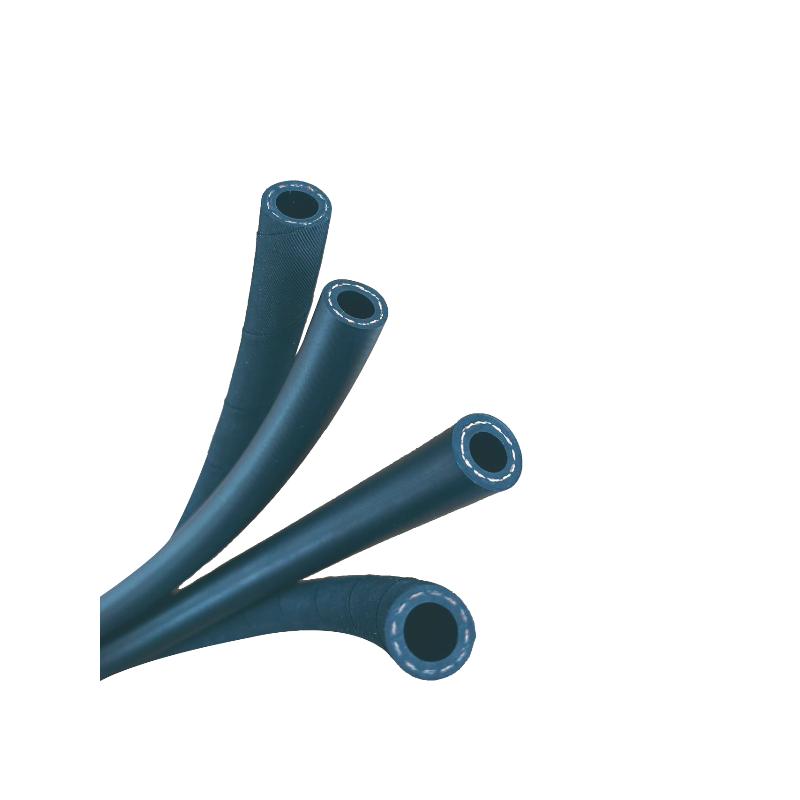
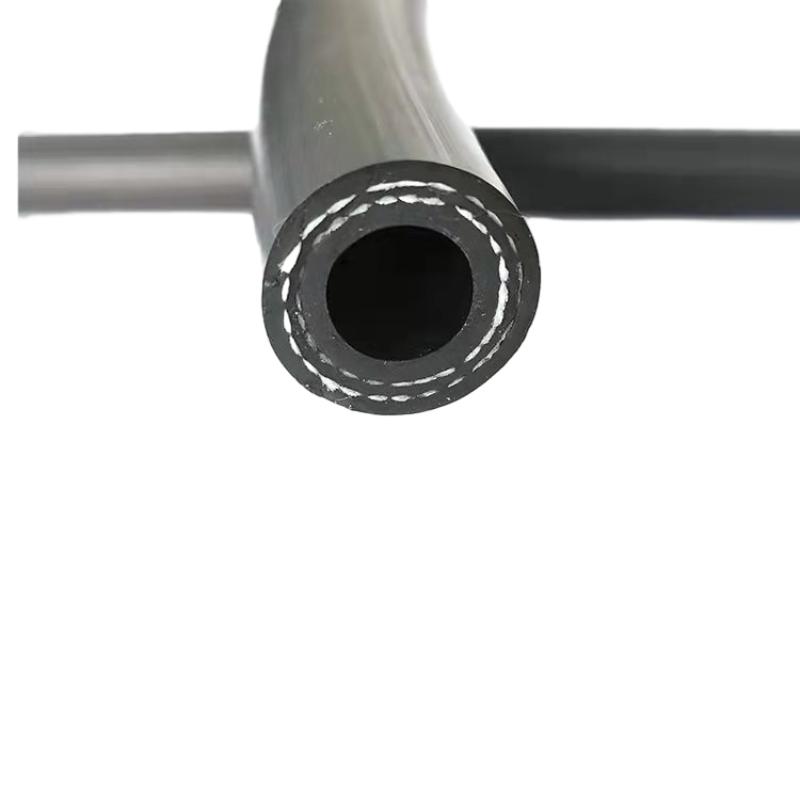
This air brake hose is manufactured in Niu Jiazhai Industrial Area, Changzhuang Town, Wei County, Hebei Province, China. The construction is classic but refined: NBR inner tube for oil resistance, PET textile reinforcement for tensile stability, and an EPDM cover to fight ozone, heat, and road splash. Temperature rating runs -40℃ to +150℃ (-40°F to +300°F), which—speaking from shop-floor reality—covers winter pre-dawn starts and summer asphalt bake.
| Tube | NBR synthetic rubber |
| Reinforcement | High-tensile PET textile |
| Cover | EPDM, smooth or cloth-wrapped |
| Working Temp | -40℃ to +150℃ (-40°F to +300°F) |
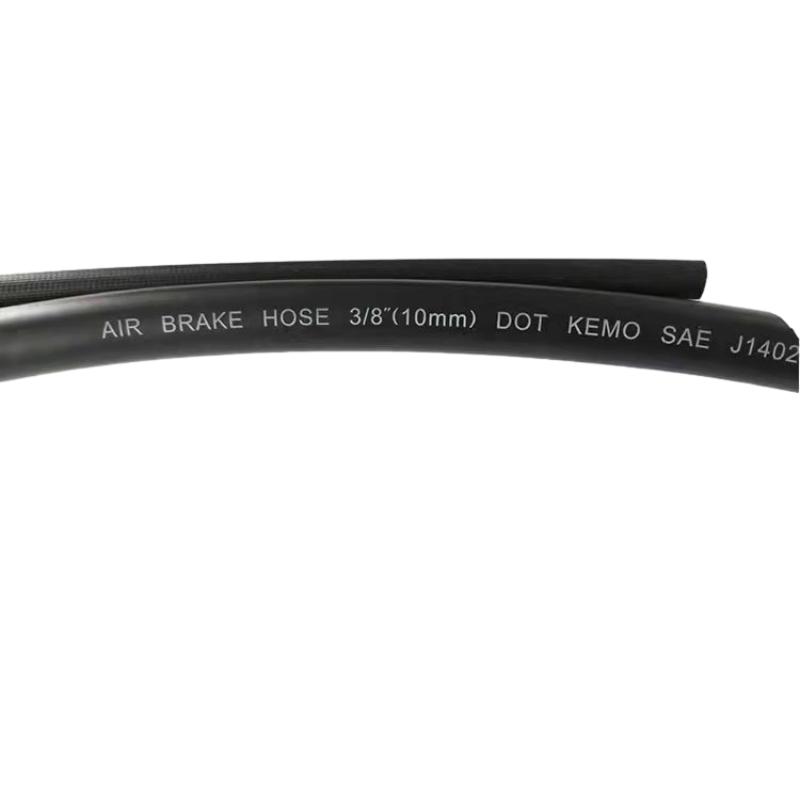
| Standard | SAE J1402 compliant |
| Certificates | DOT / 3C (CCC) |
| Application | Truck or car pneumatic brake lines |
Manufacturing flow and tests
Process, briefly: NBR compounding → tube extrusion → PET textile braiding → EPDM cover extrusion → continuous vulcanization → ink-jet marking → cutting and inspection. Each batch undergoes hydrostatic proof (≈400–500 psi), burst (typical ≥ 1,200 psi; spec-dependent), low-temp bend at -40℃, ozone exposure (ISO 1431), heat aging (ASTM D573), adhesion/peel between layers, and permeability checks. DOT FMVSS 106 labeling is available when hoses are assembled with approved fittings.
Where it’s used and why it’s winning
- On-highway tractors and trailers: service/emergency lines, frame-to-axle runs.
- Vocational trucks: refuse, mixer, dump—high abrasion zones benefit from EPDM cover.
- Light commercial vehicles: flexible jumpers where rigid tubing can’t be routed.
Advantages many customers mention: predictable bend radius, consistent crimp hold, stable performance after a rough winter. Fleet mechanics tell me the air brake hose resists cracking around suspension movement points, which is where bargain hoses usually flake out first.
Customization
Options include ID/OD ranges, color-coded covers (red/yellow for trailer service lines), smooth or cloth-wrap surface, cut-to-length, private labeling, and DOT/3C marked assemblies with matched fittings. Typical service life is ≈5–8 years depending on routing, UV, and contamination—housekeeping and proper clamps extend that, honestly.
Vendor comparison (quick take)
| Vendor | Strengths | Certs | Lead Time | Notes |
|---|---|---|---|---|
| KEMO Hose (Hebei, CN) | Balanced cost/performance; strong ozone/heat cover | DOT, 3C, SAE J1402 | ≈3–5 weeks | Good for volume + private label |
| North America Brand A | Broad distribution; fast aftermarket availability | DOT, SAE | Stock to 2 weeks | Higher price point |
| EU Brand B | Tight tolerances; robust traceability | ECE, SAE | ≈4–6 weeks | Excellent for OEM homologation |
Case notes from the field
Midwest fleet, 120 tractors: swapped legacy lines for this air brake hose and reported ≈28% fewer winter crack-related replacements after 14 months. Another customer—urban refuse routes—liked the cloth-wrapped cover; said it “grips clamps better and doesn’t shine up,” their words, not mine.
Trends to watch
While electrification grabs headlines, pneumatic systems remain dominant on heavy platforms. Expect more data-backed specs (ozone hours, heat-aging curves), and incremental weight reduction without compromising kink resistance. The steady winner? Hoses that cleanly meet SAE J1402 and DOT FMVSS 106 with transparent test reports.
References:
1. SAE J1402: Automotive Air Brake Hose and Hose Assemblies — SAE International
2. DOT FMVSS 106: Brake Hoses — NHTSA (49 CFR §571.106)
3. ISO 1431: Rubber, vulcanized or thermoplastic — Resistance to ozone cracking
4. ASTM D573: Rubber—Deterioration in an Air Oven
Latest news
-
Transmission Oil Cooler Pipe Maintenance and Selection Guide
NewsApr.16,2026
-
Ultimate Guide to Choosing Transmission Oil Cooler Line Hose
NewsApr.09,2026
-
Essential Guide to Transmission Oil Cooler Hose 5/16 for Vehicle Longevity
NewsApr.07,2026
-
Understanding the Critical Role of Transmission Oil Cooler Hose 1 2 for Vehicle Longevity
NewsApr.04,2026
-
Understanding Transmission Oil Coolant Lines For Optimal Vehicle Performance
NewsMar.31,2026
-
Comprehensive Guide to Oil Coolant Pipe Selection and Industrial Applications
NewsMar.28,2026
 Afrikaans
 Albanian
 Amharic
 Arabic
 Armenian
 Azerbaijani
 Basque
 Belarusian
 Bengali
 Bosnian
 Bulgarian
 Catalan
 Cebuano
 Corsican
 Croatian
 Czech
Czech
 Danish
 Dutch
Dutch
 Esperanto
 Estonian
 Finnish
 French
 Frisian
 Galician
 Georgian
 German
 Greek
Greek
 Gujarati
 Haitian Creole
 Hausa
Hausa
 Hawaiian
 Hebrew
 Hindi
Hindi
 Miao
Miao
 Hungarian
 Icelandic
 Igbo
Igbo
 Indonesian
 Irish
Irish
 Italian
 Japanese
 Javanese
 Kannada
 Kazakh
 Khmer
Khmer
 Rwandese
 Korean
 Kurdish
 Kyrgyz
 Lao
Lao
 Latin
Latin
 Latvian
 Lithuanian
 Luxembourgish
 Macedonian
 Malgashi
 Malay
Malay
 Malayalam
 Maltese
 Maori
Maori
 Marathi
 Mongolian
 Myanmar
 Nepali
 Norwegian
 Norwegian
 Occitan
 Pashto
 Persian
 Polish
 Portuguese
 Punjabi
 Romanian
 Russian
 Samoan
 Scottish Gaelic
 Serbian
 Sesotho
 Shona
Shona
 Sindhi
 Sinhala
 Slovak
 Slovenian
 Somali
 Spanish
 Sundanese
 Swahili
 Swedish
 Tagalog
 Tajik
Tajik
 Tamil
Tamil
 Tatar
Tatar
 Telugu
 Thai
Thai
 Turkish
 Turkmen
 Ukrainian
 Urdu
Urdu
 Uighur
 Uzbek
Uzbek
 Vietnamese
 Welsh
Welsh
 Bantu
Bantu
 Yiddish
 Yoruba
 Zulu
Zulu
 English