
Air Brake Hose - DOT/SAE J1402, Heavy-Duty, Leak-Proof
Oct . 16, 2025 11:55 Back to list
Air Brake Hose - DOT/SAE J1402, Heavy-Duty, Leak-Proof
If you work around trucks long enough, you learn to judge parts not by brochures but by winters survived and hills descended. That’s why I took a closer look at the air brake hose coming out of Niu Jiazhai Industrial Area, Changzhuang Town, Wei County, Hebei, China. It’s a busy hub—rubber, braiders, test rigs humming. And frankly, the market is changing fast: fleets want higher heat tolerance for disc brakes, better ozone resistance, and proof (not promises) of DOT compliance.
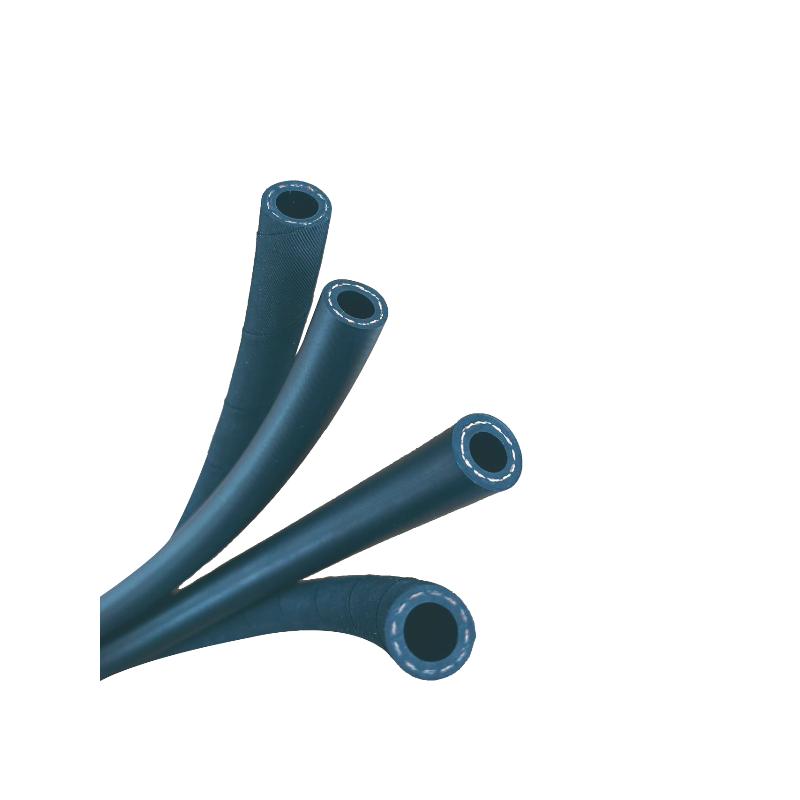
What it is (and why mechanics care)
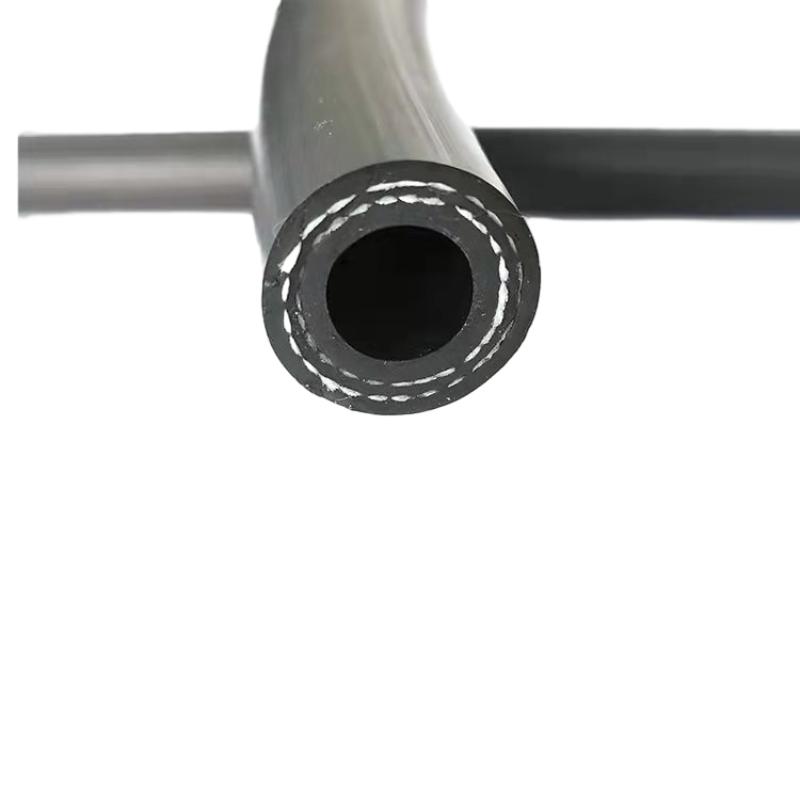
This air brake hose uses an NBR tube for fuel/oil resistance, PET textile reinforcement for strength, and an EPDM cover that shrugs off ozone. Temperature rating is -40℃ to +150℃ (-40°F to +300°F), which, in my experience, is generous enough for long grades and summer heat on disc-braked axles. Two cover options—smooth or cloth-wrapped—help with routing and abrasion hot spots.
Quick specification snapshot
| Parameter | Spec (≈ real-world use may vary) |
|---|---|
| Tube | NBR synthetic rubber |
| Reinforcement | High-tensile PET textile braid |
| Cover | EPDM, smooth or cloth-wrapped |
| Temperature Range | -40℃~+150℃ (-40°F~300°F) |
| Standards | SAE J1402 (often listed as SAE1402), FMVSS 106 compatibility |
| Certificates | 3C / DOT |
| Typical Working Pressure | ≈ 1.55 MPa (225 psi) per SAE J1402 class |
| Burst (min) | ≥ 4× WP typical for J1402 hoses |
| Conductivity | Electrical continuity per standard |
How it’s made (shop-floor view)
Materials arrive as NBR compounds (oil/fuel resistance), PET yarn, and EPDM cover stocks. The process: tube extrusion → textile braiding (controlled tension) → cover extrusion → vulcanization → cut/print → inspection. Tests hit all the usual checkpoints: hydrostatic proof and burst (ISO 1402 methods), cold flexibility at -40℃, ozone resistance, dimensional checks, electrical continuity, and FMVSS 106 labeling rules. Service life? Honestly, it depends—duty cycle, routing, and fittings matter—but fleets often see 3–7 years.
Applications and advantages
- Applications: tractors, trailers, buses, vocational trucks; under-chassis connections; cab-to-trailer jumper assemblies.
- Advantages: stable under heat, good oil/fuel resistance, robust ozone/weathering performance, 3C/DOT-compliant build.
- Origin matters: Hebei’s supply chain gives consistent PET yarn and quick turnaround, which, to be honest, many buyers underestimate.
Customization
Options include ID/OD ranges, color stripes, private logos, smooth vs cloth-wrapped cover, cut lengths or coils, matched fittings, and tailored conductivity. If you’re standardizing across plants, consistent date codes and cartons help traceability—ask for that. This air brake hose is flexible on MOQs for OEM projects.
Vendor snapshot (what buyers compare)
| Vendor | Compliance | Lead Time | Customization | Price Tier |
|---|---|---|---|---|
| KEMO (Hebei) | SAE J1402, 3C/DOT docs on file | ≈ 2–4 weeks | High (branding, colors, cut) | Value |
| Generic importer | Mixed; request test reports | Varies | Medium | Low–Mid |
| Premium brand | SAE/FMVSS plus internal specs | ≈ 4–8 weeks | High | Mid–High |
Real-world notes and mini case studies
One northern fleet reported fewer cold-morning micro-cracks after switching to this air brake hose, crediting the EPDM cover and tighter braid. Another city-bus operator (stop-and-go heat cycles) said clamp abrasion improved with cloth-wrapped cover in contact points. Not laboratory-perfect, but telling.
Testing and documentation checklist
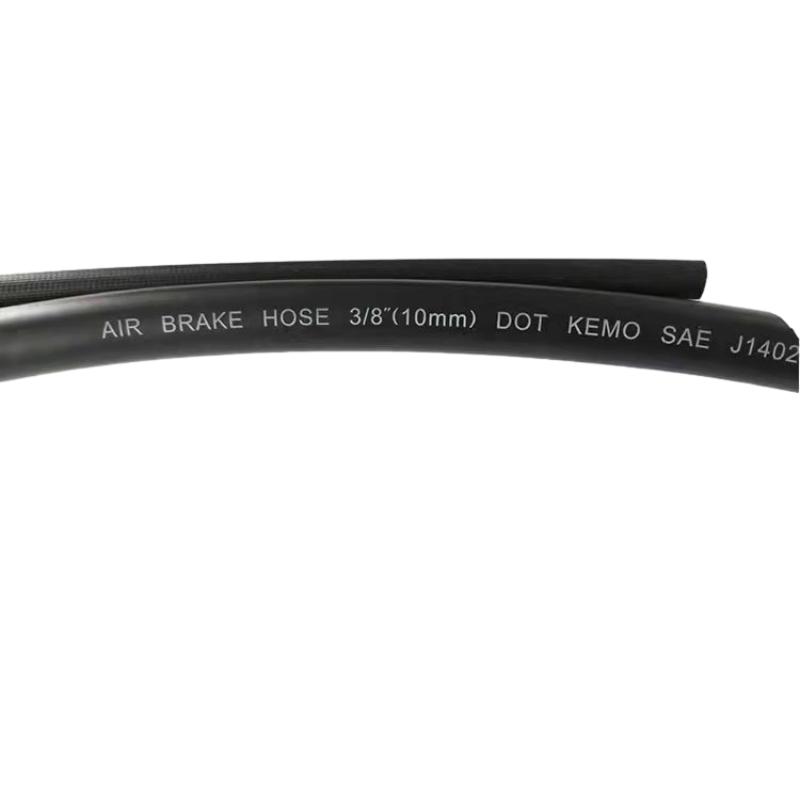
- Ask for SAE J1402 conformity report, FMVSS 106 labeling photos, and hydrostatic test curves (ISO 1402 method).
- Verify DOT traceability and 3C certificate numbers.
- Request a pre-shipment sample; cycle it through -40℃ bend and a 100-hour ozone exposure if you can.
Citations: [1] SAE J1402: Automotive Air Brake Hose and Hose Assemblies. [2] FMVSS No.106: Brake Hoses (NHTSA/49 CFR §571.106). [3] ISO 1402: Rubber and plastics hoses—Hydrostatic testing. [4] DOT compliance guidance for brake hoses.
- https://www.sae.org/standards/content/j1402/
- https://www.ecfr.gov/current/title-49/subtitle-B/chapter-V/part-571/section-571.106
- https://www.iso.org/standard/66564.html
- https://www.nhtsa.gov/vehicle-manufacturers/brake-hoses-fmvss-no-106
Latest news
-
Transmission Oil Cooler Pipe Maintenance and Selection Guide
NewsApr.16,2026
-
Ultimate Guide to Choosing Transmission Oil Cooler Line Hose
NewsApr.09,2026
-
Essential Guide to Transmission Oil Cooler Hose 5/16 for Vehicle Longevity
NewsApr.07,2026
-
Understanding the Critical Role of Transmission Oil Cooler Hose 1 2 for Vehicle Longevity
NewsApr.04,2026
-
Understanding Transmission Oil Coolant Lines For Optimal Vehicle Performance
NewsMar.31,2026
-
Comprehensive Guide to Oil Coolant Pipe Selection and Industrial Applications
NewsMar.28,2026
 Afrikaans
 Albanian
 Amharic
 Arabic
 Armenian
 Azerbaijani
 Basque
 Belarusian
 Bengali
 Bosnian
 Bulgarian
 Catalan
 Cebuano
 Corsican
 Croatian
 Czech
Czech
 Danish
 Dutch
Dutch
 Esperanto
 Estonian
 Finnish
 French
 Frisian
 Galician
 Georgian
 German
 Greek
Greek
 Gujarati
 Haitian Creole
 Hausa
Hausa
 Hawaiian
 Hebrew
 Hindi
Hindi
 Miao
Miao
 Hungarian
 Icelandic
 Igbo
Igbo
 Indonesian
 Irish
Irish
 Italian
 Japanese
 Javanese
 Kannada
 Kazakh
 Khmer
Khmer
 Rwandese
 Korean
 Kurdish
 Kyrgyz
 Lao
Lao
 Latin
Latin
 Latvian
 Lithuanian
 Luxembourgish
 Macedonian
 Malgashi
 Malay
Malay
 Malayalam
 Maltese
 Maori
Maori
 Marathi
 Mongolian
 Myanmar
 Nepali
 Norwegian
 Norwegian
 Occitan
 Pashto
 Persian
 Polish
 Portuguese
 Punjabi
 Romanian
 Russian
 Samoan
 Scottish Gaelic
 Serbian
 Sesotho
 Shona
Shona
 Sindhi
 Sinhala
 Slovak
 Slovenian
 Somali
 Spanish
 Sundanese
 Swahili
 Swedish
 Tagalog
 Tajik
Tajik
 Tamil
Tamil
 Tatar
Tatar
 Telugu
 Thai
Thai
 Turkish
 Turkmen
 Ukrainian
 Urdu
Urdu
 Uighur
 Uzbek
Uzbek
 Vietnamese
 Welsh
Welsh
 Bantu
Bantu
 Yiddish
 Yoruba
 Zulu
Zulu
 English