
4890 AC HOSE: Premium Automotive A/C Lines for Optimal Performance
Sep . 19, 2025 15:45 Back to list
4890 AC HOSE: Premium Automotive A/C Lines for Optimal Performance
Introduction to High-Performance AC Hosing
In critical industrial and automotive applications, the integrity and performance of air conditioning (AC) systems heavily rely on robust hosing solutions. The 4890 AC HOSE stands as a pinnacle of engineering excellence, designed to meet the rigorous demands of modern refrigerant systems. Engineered for superior durability, minimal permeability, and extreme environmental resilience, this hose ensures optimal system efficiency and longevity across diverse operating conditions.
This comprehensive overview delves into the technical intricacies, manufacturing precision, application versatility, and strategic advantages that position the 4890 AC HOSE as an indispensable component for B2B decision-makers seeking uncompromised performance and reliability.
Industry Trends and Technological Advancements in AC Hosing
The global AC hosing market is continually evolving, driven by stringent environmental regulations, demands for higher energy efficiency, and the adoption of new refrigerants with lower Global Warming Potential (GWP). Key trends include:
- Shift to Eco-friendly Refrigerants: The phase-down of HFCs (hydrofluorocarbons) like R-134a necessitates hosing compatible with newer refrigerants such as R-1234yf, R-452A, and CO2 (R-744), which often have different material compatibility and permeation characteristics. This demands enhanced barrier layers.
- Reduced Permeation Standards: Regulatory bodies globally are tightening standards on refrigerant leakage, pushing manufacturers to innovate multi-layer hose designs with superior barrier properties to minimize environmental impact and maintain system charge.
- Miniaturization and Space Constraints: Modern systems, particularly in automotive and compact industrial applications, require hoses with smaller bend radii and reduced external diameters without compromising performance or pressure ratings.
- Enhanced Durability and Service Life: End-users demand longer service intervals and reduced maintenance, leading to research into advanced rubber compounds and reinforcement materials that resist abrasion, ozone, vibration fatigue, and extreme temperatures more effectively.
- Integration of Sensor Technology: Emerging trends include the integration of smart sensors into hosing systems for real-time monitoring of pressure, temperature, and leakage, enabling predictive maintenance and optimizing system performance.
The 4890 AC HOSE is developed in alignment with these trends, offering a forward-compatible solution for next-generation AC systems.
Technical Specifications and Design Excellence
The design of the 4890 AC HOSE embodies advanced material science and meticulous engineering. It typically features a multi-layer construction, each layer optimized for a specific function:
- Inner Tube: Constructed from a specialized, low-permeation synthetic rubber (e.g., Chlorobutyl or IIR) to ensure excellent compatibility with various refrigerants (R134a, R1234yf) and minimize refrigerant loss. This layer is crucial for maintaining system efficiency and environmental compliance.
- Permeation Barrier: A co-extruded nylon (PA) or polyester barrier layer is integrated to dramatically reduce refrigerant diffusion, a critical factor for long-term system performance and compliance with SAE J2064 standards.
- Reinforcement Layers: High-tensile strength fibrous materials, such as polyester braid or spiral-wound aramid, are embedded to provide exceptional burst strength and resistance to impulse pressures, ensuring structural integrity under dynamic operating conditions.
- Outer Cover: Made from a durable EPDM (Ethylene Propylene Diene Monomer) or similar weather-resistant compound, the cover offers superior resistance to ozone, abrasion, UV radiation, and moisture, protecting the internal layers from environmental degradation.
Key Parameters of 4890 AC HOSE
| Parameter | Specification (Typical) | Relevant Standard |
|---|---|---|
| Inner Diameter Range | 6 mm to 32 mm (1/4" to 1-1/4") | SAE J2064, DIN |
| Working Pressure | Up to 3.5 MPa (500 psi) | SAE J2064, ISO 1307 |
| Burst Pressure | Minimum 17.5 MPa (2500 psi) | SAE J2064 |
| Temperature Range | -40°C to +135°C (-40°F to +275°F) | SAE J2064 |
| Refrigerant Compatibility | R134a, R1234yf, R404a, R407c, R507 | SAE J2064, OEM specific |
| Refrigerant Permeation Rate (R134a) | < 3.0 kg/m²/year | SAE J2064 |
| Minimum Bend Radius | Varies by ID, e.g., 65mm for 13mm ID | SAE J2064 |
Note: Specifications are typical and may vary based on specific product series and application requirements. Always refer to detailed product data sheets.
Manufacturing Process of the 4890 AC HOSE
The production of the 4890 AC HOSE involves a sophisticated sequence of processes, ensuring superior quality and performance. Our manufacturing adheres to ISO 9001 standards, with each stage meticulously controlled.
- Material Preparation & Sourcing: High-grade synthetic rubbers (e.g., IIR, EPDM), polyamide resins, and high-tensile polyester or aramid fibers are rigorously inspected upon arrival. Material specifications are verified against strict internal and industry standards (e.g., ASTM, DIN).
- Inner Tube Extrusion: The innermost layer, typically of Chlorobutyl or specially formulated IIR, is extruded using precision equipment to achieve uniform wall thickness and concentricity. This layer is critical for refrigerant compatibility and initial permeation resistance.
- Barrier Layer Application (Co-Extrusion): A specialized polyamide (Nylon) barrier layer, fundamental for ultra-low refrigerant permeation, is precisely co-extruded over the inner tube. This advanced process creates a seamless bond, vital for long-term performance and compliance with SAE J2064 low permeation requirements.
- Reinforcement Braiding/Spiraling: One or more layers of high-strength textile fibers (e.g., polyester or aramid yarn) are braided or spiral-wound over the barrier layer. This reinforcement provides the necessary pressure resistance and structural integrity, preventing expansion and bursting under high operating pressures.
- Outer Cover Extrusion: The final outer cover, typically a robust EPDM compound, is extruded to encase the entire assembly. This layer offers superior resistance to environmental factors such as ozone, UV radiation, abrasion, and harsh chemicals.
- Vulcanization (Curing): The assembled hose is subjected to precise temperature and pressure conditions in a vulcanization chamber. This chemical cross-linking process cures the rubber compounds, imparting their final mechanical properties, elasticity, and dimensional stability.
- Cutting, Fitting Assembly & Crimping: Hoses are cut to specified lengths with extreme accuracy. Specialized fittings, often custom-designed for specific applications, are then attached using automated, calibrated crimping machines, ensuring secure, leak-proof connections that withstand vibration and pressure cycles.
-
Comprehensive Testing & Quality Assurance: Every batch undergoes rigorous testing to ensure compliance with international standards like SAE J2064 and ISO 1307. Tests include:
- Burst Pressure Test: Verifies ultimate strength.
- Impulse Pressure Test: Simulates dynamic system pressures and vibrations over millions of cycles.
- Refrigerant Permeation Test: Measures refrigerant loss rate to ensure environmental compliance and system efficiency.
- Adhesion Test: Confirms robust bonding between layers.
- Temperature Cycling Test: Assesses performance under extreme thermal fluctuations.
- Flexibility & Bend Radius Test: Ensures integrity under bending stress.
Through this controlled process, the 4890 AC HOSE consistently delivers a service life exceeding typical industry expectations, offering a robust solution for demanding industrial environments such as automotive HVAC systems, agricultural equipment, and specialized industrial refrigeration units.
Application Scenarios and Target Industries
The versatility and robust performance characteristics of the 4890 AC HOSE make it an ideal choice across a spectrum of demanding industries and specific application scenarios.
Target Industries:
- Automotive HVAC: Essential for passenger vehicles, commercial trucks, buses, and off-highway equipment (e.g., construction machinery, agricultural vehicles) where robust AC systems are critical for operator comfort and equipment longevity. The hose's low permeation ensures efficient refrigerant management, reducing top-ups and environmental impact.
- Industrial Refrigeration: Used in cold storage facilities, pharmaceutical production, food processing plants, and other industrial settings requiring precise temperature control. Its high-pressure rating and wide temperature tolerance are crucial for maintaining stable conditions.
- Mobile Refrigeration Units: Critical for refrigerated transport (reefer trucks, container111s), ensuring perishable goods maintain optimal temperatures during transit. The hose's durability withstands the vibrations and dynamic movements inherent in mobile applications.
- Specialized HVAC Systems: Deployed in marine vessels, rail transport, and military vehicles where extreme operating conditions (saltwater exposure, vibration, extreme temperatures) necessitate highly reliable and corrosion-resistant components.
- Heavy Equipment: For AC systems in excavators, bulldozers, mining equipment, and cranes, where hoses must withstand severe abrasion, impact, and continuous exposure to dust and debris.
Advantages in Typical Application Scenarios:
- Energy Saving: The ultra-low permeation barrier minimizes refrigerant leakage, ensuring the AC system maintains its optimal charge. This reduces compressor workload, leading to lower energy consumption and extended compressor life.
- Corrosion Resistance: The EPDM outer cover and specialized inner tube materials provide exceptional resistance to common automotive and industrial fluids, road salts, ozone, and atmospheric corrosion, enhancing service life in harsh environments.
- Reduced Downtime: With its superior durability and resistance to wear and tear, the 4890 AC HOSE significantly reduces the likelihood of leaks or failures, thereby minimizing costly system downtime and maintenance intervals.
- Operational Stability: Designed to withstand extreme pressure and temperature fluctuations, it ensures consistent AC system performance, providing reliable cooling or heating regardless of external conditions.
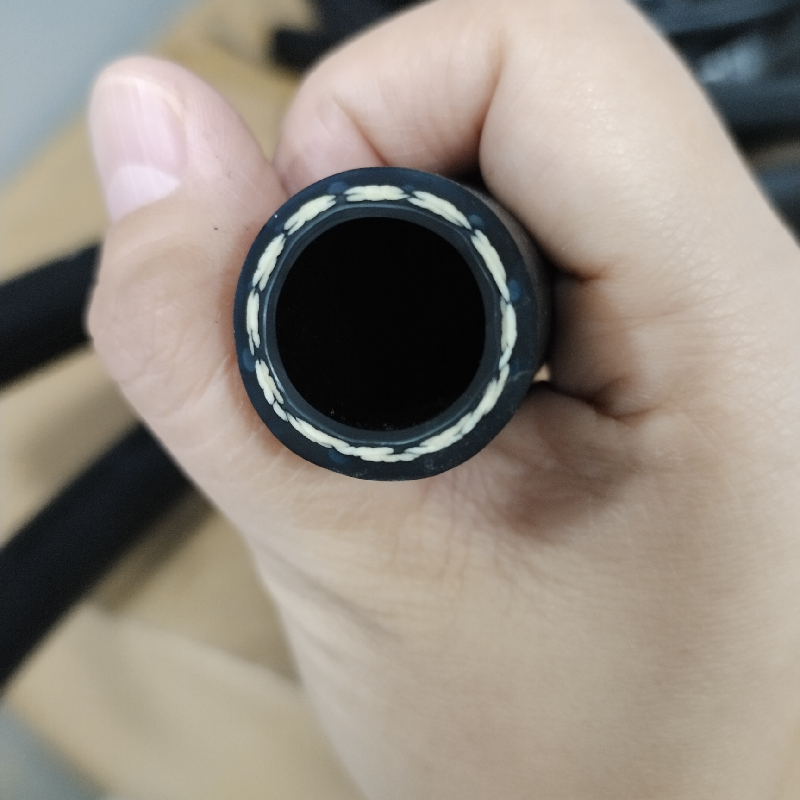
Image: Demonstrating the robust construction of a typical AC hose assembly.
Technical Advantages and Performance Differentiation
The intrinsic technical advantages of the 4890 AC HOSE provide a compelling value proposition for industrial and automotive OEMs and MRO operations.
- Superior Permeation Resistance: Exceeding SAE J2064 Class I requirements for refrigerant permeation, the advanced multi-layer barrier design significantly reduces refrigerant loss. This directly translates to fewer system recharges, lower operating costs, and reduced environmental impact, especially critical with new, higher-cost refrigerants like R-1234yf.
- Exceptional Pressure & Temperature Tolerance: Engineered to perform flawlessly under high pressures (up to 3.5 MPa working pressure and 17.5 MPa burst pressure) and extreme temperatures (-40°C to +135°C), ensuring reliability in diverse and challenging operational environments from arctic cold to desert heat.
- Enhanced Durability & Abrasion Resistance: The robust EPDM outer cover is formulated to provide excellent resistance to external abrasions, nicks, and environmental attack (ozone, UV, chemical splashes), extending the hose's operational life in rough applications.
- Optimized Flexibility & Bend Radius: Despite its strength, the hose maintains excellent flexibility, allowing for easier routing in confined spaces and minimizing the risk of kinking. This reduces installation time and potential stress points, contributing to a longer service life.
- Vibration Dampening: The composite construction inherently provides a degree of vibration dampening, reducing noise and stress on connected components within the AC system, thereby enhancing overall system longevity and operational comfort.
- Wide Refrigerant Compatibility: Designed to be compatible with a broad range of refrigerants, including R134a, R1234yf, and other blends, ensuring versatility and future-proofing for evolving industry standards.
Vendor Comparison and Competitive Edge
When evaluating AC hose suppliers, critical factors beyond initial cost must be considered, including material science expertise, manufacturing consistency, testing rigor, and comprehensive support. The 4890 AC HOSE consistently stands out due to its adherence to global standards and a commitment to innovation.
Key Differentiators:
- Certifications and Compliance: Our manufacturing facilities are ISO 9001 certified, and the 4890 AC HOSE is rigorously tested to meet or exceed international standards such as SAE J2064 and relevant DIN and ISO specifications. This ensures global acceptability and interchangeability.
- R&D Investment: Continuous investment in R&D allows for the development of advanced barrier materials and rubber compounds, offering superior permeation resistance and extended life cycles compared to generic alternatives.
- Quality Control: Our multi-stage quality control process, from raw material inspection to final product testing (including burst, impulse, and permeation tests), ensures minimal defect rates and consistent performance.
- Technical Support & Customization: We provide expert technical assistance and engineering support for custom applications, a service often lacking from generalist suppliers.
Comparative Analysis: 4890 AC HOSE vs. Standard AC Hose
| Feature/Parameter | 4890 AC HOSE (Premium) | Standard AC Hose (Generic) |
|---|---|---|
| Refrigerant Permeation | Ultra-low (<3.0 kg/m²/year R134a) | Moderate (often >5.0 kg/m²/year R134a) |
| Pressure Rating (Working) | High (up to 3.5 MPa) | Standard (typically 2.5 MPa) |
| Temperature Range | Wide (-40°C to +135°C) | Limited (-30°C to +120°C) |
| Outer Cover Durability | Excellent (Ozone, abrasion, UV, chemical) | Good (Basic ozone, abrasion) |
| Reinforcement Material | High-tensile polyester/aramid | Standard polyester |
| Estimated Service Life | Extended (Designed for long-term use) | Standard (More frequent replacement) |
| Certifications | SAE J2064, ISO 9001, OEM specific | Basic industry standards |
This table highlights the significant performance gaps between premium solutions like the 4890 AC HOSE and more common, lower-spec alternatives, justifying the investment for critical applications.
Customized Solutions and Engineering Support
Recognizing that off-the-shelf solutions may not always perfectly align with unique industrial requirements, we offer extensive customization capabilities for the 4890 AC HOSE.
- Material Optimization: Custom blends of inner tube and outer cover materials can be developed to enhance compatibility with specific aggressive fluids or to meet unique environmental exposure challenges.
- Size and Length Specifications: Hoses can be manufactured to precise internal and external diameters, along with custom lengths, reducing waste and simplifying installation processes for OEM assembly lines.
- Fitting and End Connections: We can integrate a wide array of specialized fittings, including custom-designed crimp fittings, quick-connect couplings, and adaptors, manufactured from various materials (e.g., steel, aluminum, brass) to ensure seamless integration with existing systems.
- Color Coding and Branding: Hoses can be produced in custom colors for system identification or branded with client logos and part numbers for enhanced supply chain management.
- Engineering Consultation: Our team of experienced engineers provides collaborative design and technical support, from initial concept and prototyping to full-scale production, ensuring the customized solution precisely meets performance and longevity requirements.
This bespoke approach ensures that clients receive a high-performance solution perfectly tailored to their specific operational context, maximizing efficiency and minimizing potential integration issues.
Application Case Studies
Case Study 1: Heavy-Duty Agricultural Equipment
Client: A leading manufacturer of large agricultural tractors and harvesters.
Challenge: The client faced persistent AC system failures due to high vibration, extreme temperature cycling, and exposure to corrosive agricultural chemicals and debris. Standard AC hoses had an average lifespan of 18-24 months, leading to significant warranty claims and farmer dissatisfaction during critical operational seasons.
Solution: We collaborated with their engineering team to integrate customized assemblies of the 4890 AC HOSE. This included a specially formulated outer cover for enhanced abrasion and chemical resistance, and high-tensile aramid reinforcement for superior vibration dampening and burst strength.
Results: Post-implementation, the hose's lifespan extended beyond 60 months, reducing AC system warranty claims by over 70%. Farmers reported fewer breakdowns during peak seasons, significantly improving operational uptime and overall product satisfaction. The improved permeation resistance also contributed to a 15% reduction in refrigerant top-up frequency.
Case Study 2: Marine Refrigeration Systems
Client: A shipyard specializing in commercial fishing vessels and offshore support craft.
Challenge: Marine environments expose AC and refrigeration hoses to saltwater corrosion, continuous humidity, and mechanical stress from engine vibration. Previous hoses suffered from premature outer cover degradation and fitting corrosion, leading to refrigerant leaks and costly repairs at sea.
Solution: We provided the 4890 AC HOSE assemblies featuring specialized, marine-grade EPDM covers for enhanced salt spray and ozone resistance, coupled with stainless steel fittings for superior corrosion protection. Each assembly underwent additional hydrostatic testing to ensure leak-proof performance in demanding conditions.
Results: The vessels equipped with our 4890 AC HOSE experienced a dramatic reduction in refrigeration system failures. Service life increased by more than double, leading to significant cost savings in maintenance and ensuring uninterrupted cold chain integrity for valuable catches. The client lauded the reliability, stating it significantly enhanced fleet operational efficiency.
Trust and Support: FAQ, Lead Time, Warranty, and After-Sales
Frequently Asked Questions (FAQ)
- Q: What refrigerants are compatible with the 4890 AC HOSE?
- A: The 4890 AC HOSE is designed for broad compatibility with most common refrigerants, including R134a, R1234yf, R404a, R407c, and R507. Specific material compatibility can be verified for other less common refrigerants upon request.
- Q: How does the permeation rate of the 4890 AC HOSE compare to industry standards?
- A: Our hose significantly exceeds SAE J2064 Class I requirements, demonstrating an ultra-low permeation rate of typically less than 3.0 kg/m²/year for R134a, which is critical for minimizing environmental impact and maintaining system charge over extended periods.
- Q: Can the 4890 AC HOSE be used in high-vibration environments?
- A: Absolutely. Its multi-layer construction with high-tensile reinforcement is engineered to absorb and dissipate vibrations, making it exceptionally well-suited for heavy equipment, automotive, and marine applications where vibration is a significant factor.
- Q: What is the typical service life?
- A: While actual service life depends heavily on specific application conditions, the 4890 AC HOSE is designed for an extended lifespan, often exceeding 5 years in demanding industrial environments under recommended operating conditions, significantly outperforming conventional AC hoses.
Lead Time and Fulfillment
Our streamlined manufacturing process and robust supply chain enable competitive lead times. For standard configurations, typical lead times range from 3-4 weeks. Customized orders may require 6-8 weeks, depending on complexity and material sourcing. We maintain strategic inventory levels of core components to facilitate rapid production and ensure reliable delivery schedules for our B2B partners.
Warranty Commitments
We stand behind the quality and performance of the 4890 AC HOSE with a comprehensive warranty against manufacturing defects and material failures under normal operating conditions. Our standard warranty period is 24 months from the date of purchase. Specific project warranties or extended warranty options can be discussed for large-volume OEM partnerships.
Customer Support and Technical Assistance
Our commitment extends beyond product delivery. We offer dedicated after-sales support, including technical assistance for installation, troubleshooting, and maintenance. Our team of product specialists and engineers is available to provide expert guidance and ensure the optimal performance of your 4890 AC HOSE systems throughout their operational life. For immediate support, please contact our technical service department via email or phone, details available on our website.
Conclusion
The 4890 AC HOSE represents a paradigm of advanced engineering and manufacturing excellence, specifically designed to meet and exceed the evolving demands of modern industrial and automotive AC systems. Its superior technical specifications, rigorous manufacturing processes, and proven performance in diverse application scenarios underscore its value as a critical component for B2B enterprises. By offering unparalleled durability, minimal refrigerant permeation, and robust environmental resistance, this hose not only ensures optimal system efficiency and longevity but also contributes to reduced operational costs and enhanced environmental compliance. Choosing the 4890 AC HOSE is an investment in reliability, performance, and long-term value for any demanding AC application.
References
- SAE International. (2020). J2064: R134a and R1234yf (Automotive AC) Refrigerant Hoses and Hose Assemblies. SAE Standards.
- International Organization for Standardization. (2014). ISO 1307: Rubber and plastics hoses and hose assemblies — Rubber-covered hydraulic hoses — Dimensions of hoses and type of hose fitting. ISO Standards.
- International Organization for Standardization. (2015). ISO 9001: Quality management systems — Requirements. ISO Standards.
- European Commission. (2014). Regulation (EU) No 517/2014 on fluorinated greenhouse gases (F-gas Regulation). Official Journal of the European Union.
Latest news
-
Transmission Oil Cooler Pipe Maintenance and Selection Guide
NewsApr.16,2026
-
Ultimate Guide to Choosing Transmission Oil Cooler Line Hose
NewsApr.09,2026
-
Essential Guide to Transmission Oil Cooler Hose 5/16 for Vehicle Longevity
NewsApr.07,2026
-
Understanding the Critical Role of Transmission Oil Cooler Hose 1 2 for Vehicle Longevity
NewsApr.04,2026
-
Understanding Transmission Oil Coolant Lines For Optimal Vehicle Performance
NewsMar.31,2026
-
Comprehensive Guide to Oil Coolant Pipe Selection and Industrial Applications
NewsMar.28,2026
 Afrikaans
 Albanian
 Amharic
 Arabic
 Armenian
 Azerbaijani
 Basque
 Belarusian
 Bengali
 Bosnian
 Bulgarian
 Catalan
 Cebuano
 Corsican
 Croatian
 Czech
Czech
 Danish
 Dutch
Dutch
 Esperanto
 Estonian
 Finnish
 French
 Frisian
 Galician
 Georgian
 German
 Greek
Greek
 Gujarati
 Haitian Creole
 Hausa
Hausa
 Hawaiian
 Hebrew
 Hindi
Hindi
 Miao
Miao
 Hungarian
 Icelandic
 Igbo
Igbo
 Indonesian
 Irish
Irish
 Italian
 Japanese
 Javanese
 Kannada
 Kazakh
 Khmer
Khmer
 Rwandese
 Korean
 Kurdish
 Kyrgyz
 Lao
Lao
 Latin
Latin
 Latvian
 Lithuanian
 Luxembourgish
 Macedonian
 Malgashi
 Malay
Malay
 Malayalam
 Maltese
 Maori
Maori
 Marathi
 Mongolian
 Myanmar
 Nepali
 Norwegian
 Norwegian
 Occitan
 Pashto
 Persian
 Polish
 Portuguese
 Punjabi
 Romanian
 Russian
 Samoan
 Scottish Gaelic
 Serbian
 Sesotho
 Shona
Shona
 Sindhi
 Sinhala
 Slovak
 Slovenian
 Somali
 Spanish
 Sundanese
 Swahili
 Swedish
 Tagalog
 Tajik
Tajik
 Tamil
Tamil
 Tatar
Tatar
 Telugu
 Thai
Thai
 Turkish
 Turkmen
 Ukrainian
 Urdu
Urdu
 Uighur
 Uzbek
Uzbek
 Vietnamese
 Welsh
Welsh
 Bantu
Bantu
 Yiddish
 Yoruba
 Zulu
Zulu
 English