
Need a durable high-pressure air conditioning charging hose?
Oct . 03, 2025 13:00 Back to list
Need a durable high-pressure air conditioning charging hose?
Type E Six-Layer A/C Hose: What Matters When You’re Charging and Keeping Cool
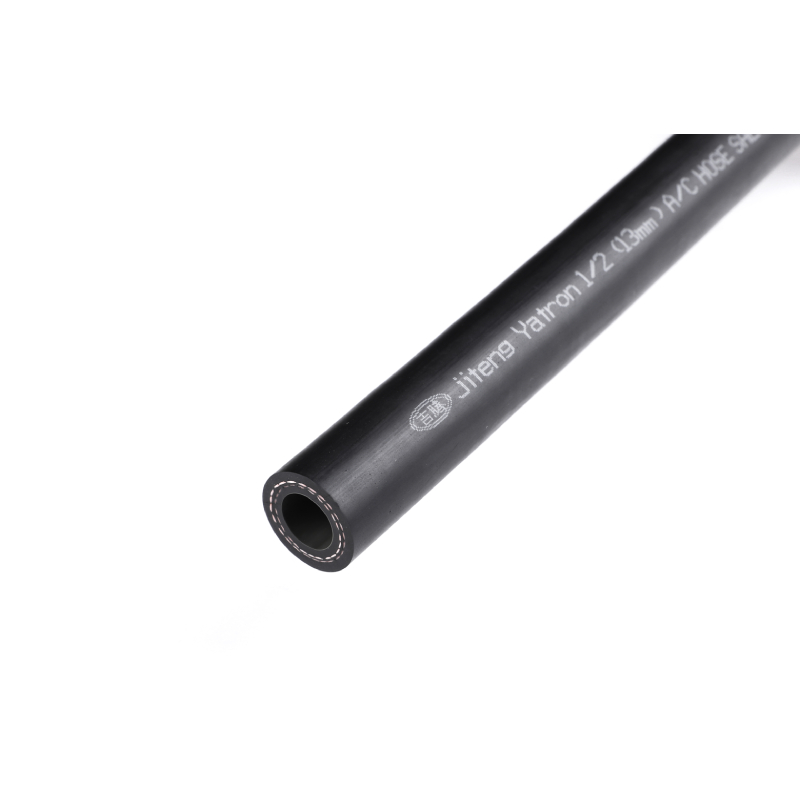
If you’ve ever fought with a leaky service line on a muggy afternoon, you know the unsung hero in the A/C loop is the air conditioning charging hose. The one I’ve been hands-on with lately is the Type E six-layer A/C hose coming out of Niu Jiazhai Industrial Area, Changzhuang Town, Wei County, Hebei Province, China. It’s a bit of a sleeper hit—seriously durable, nice bend behavior, and, surprisingly, easy to crimp cleanly.
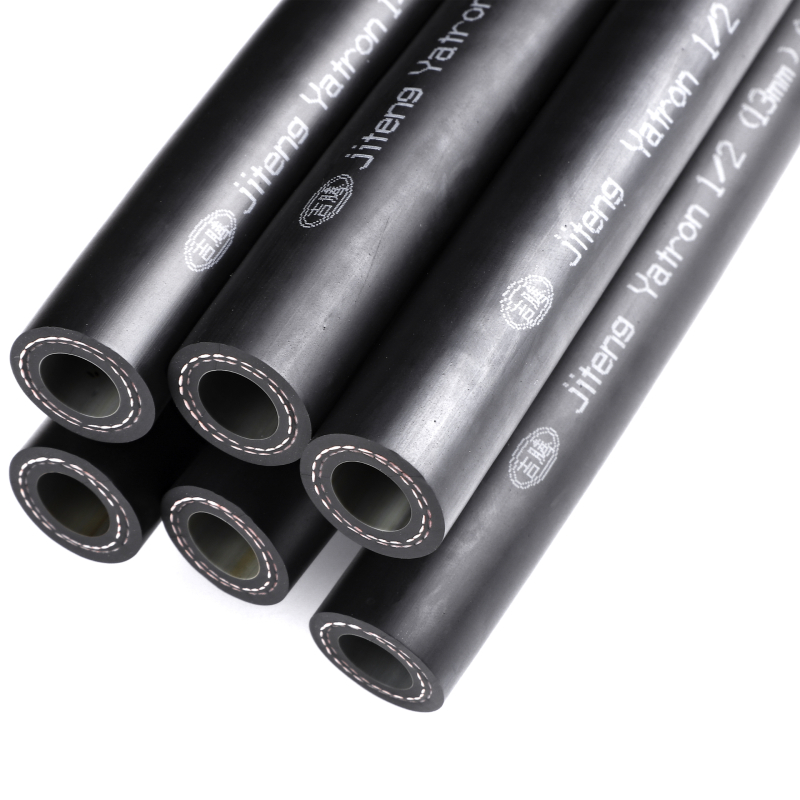
Why six layers (and why now)?
EV heat pumps and low-GWP refrigerants (R-1234yf especially) are pushing a quiet revolution. Lower permeation, higher thermal stability, and cleaner inner walls matter more than ever. This Type E stack uses a PA/NYLON barrier with EPDM/CSM/IIR friction layers, PET/PVA reinforcement, and a cloth-sheath EPDM cover. In plain English: low leakage, abrasion resistance, and consistent clamp holding. Many technicians say it “just seats better” under real-world vibration.
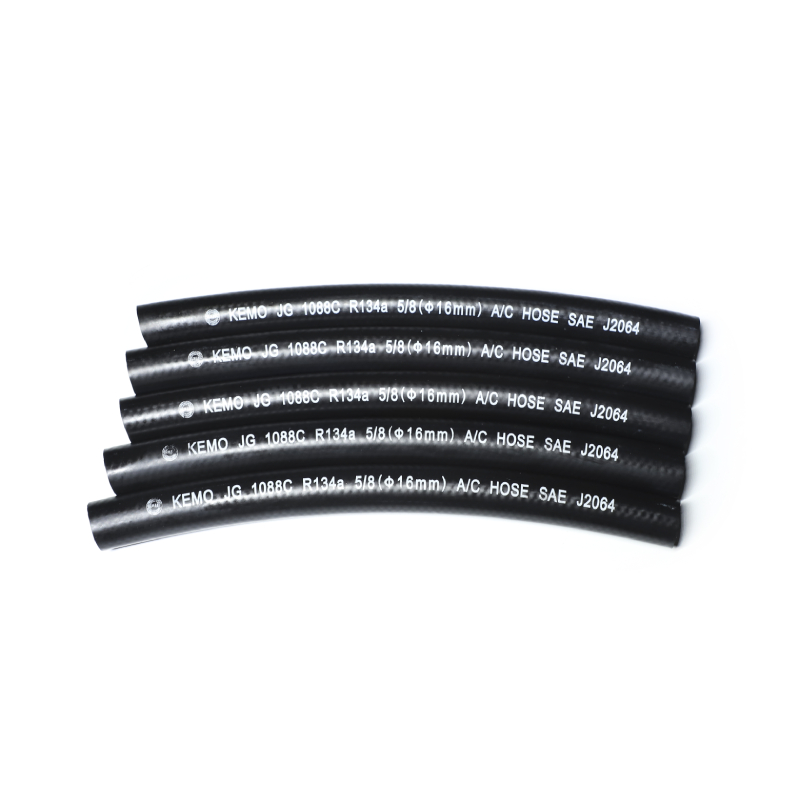
Process and testing (nuts and bolts)
- Materials: PA/NYLON barrier; EPDM/CSM/IIR inner/friction; PET/PVA braid; EPDM cloth sheath.
- Methods: multi-head extrusion → high-tenacity braiding → adhesion layering → vulcanization → sheath weaving → 100% pressure/leak check.
- Standards: SAE J2064, SAE J3062, QC/T 664; certified to ISO/TS 16949:2009.
- Service life: around 8–10 years in automotive duty (real-world use may vary).
- Industries: passenger cars, buses, off-road machinery, service carts, mobile HVAC.
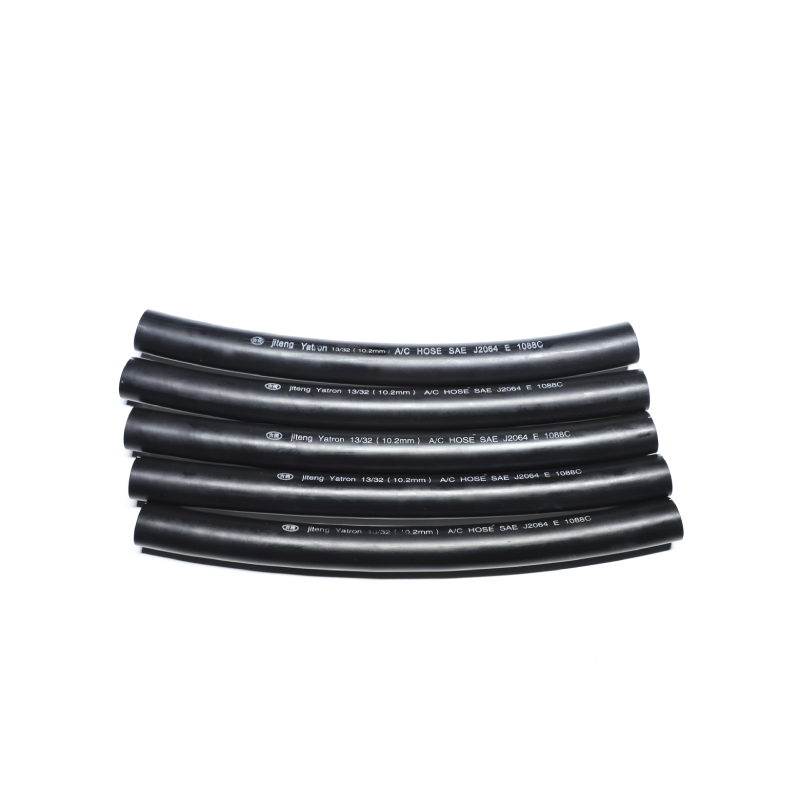
Key specs at a glance
| Parameter | Typical Value |
|---|---|
| Temperature range | -40°C to +135°C (-40°F to +275°F) |
| Working pressure | ≈ 3.1 MPa (450 psi) |
| Burst pressure | ≥ 12 MPa (≈ 4x WP), lab-tested |
| Permeation (R-134a, 40°C) | ≤ 2.0 g/m²/day (typical) |
| Bend radius | ≈ 60–90 mm depending on ID |
| Standards | SAE J2064 / J3062, QC/T 664, ISO/TS 16949:2009 |
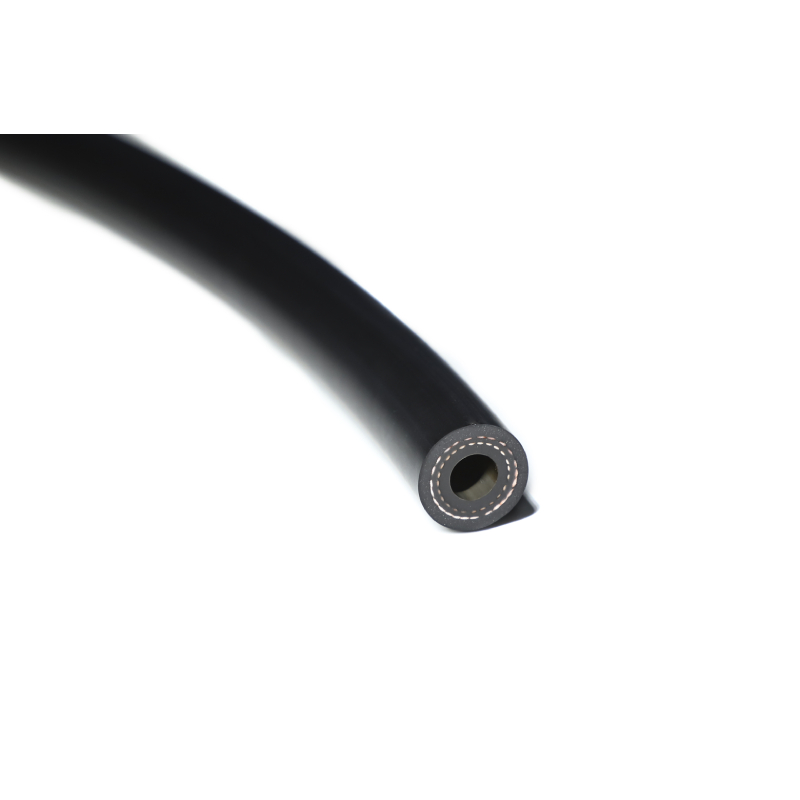
Real-world scenarios
- Mobile service: quick-connect manifolds and recovery machines. Techs like the cloth sheath; it resists scuffing on asphalt. To be honest, I do too.
- OEM/retrofit: R-1234yf systems need low-leak barriers. The nylon layer here pulls its weight.
- Heavy-duty: buses and excavators where vibration is nonstop.
Vendor comparison (quick take)
| Vendor | Certs | Permeation | Lead Time | Notes |
|---|---|---|---|---|
| Type E (this model) | ISO/TS 16949 | ≤ 2.0 g/m²/day | ≈ 3–5 weeks | Six-layer, cloth sheath |
| Generic A | — | 3–4 g/m²/day | 2–6 weeks | Basic 3-layer |
| Brand B (premium) | IATF 16949 | ≤ 1.5 g/m²/day | 4–8 weeks | Higher price, similar barrier |
Customization
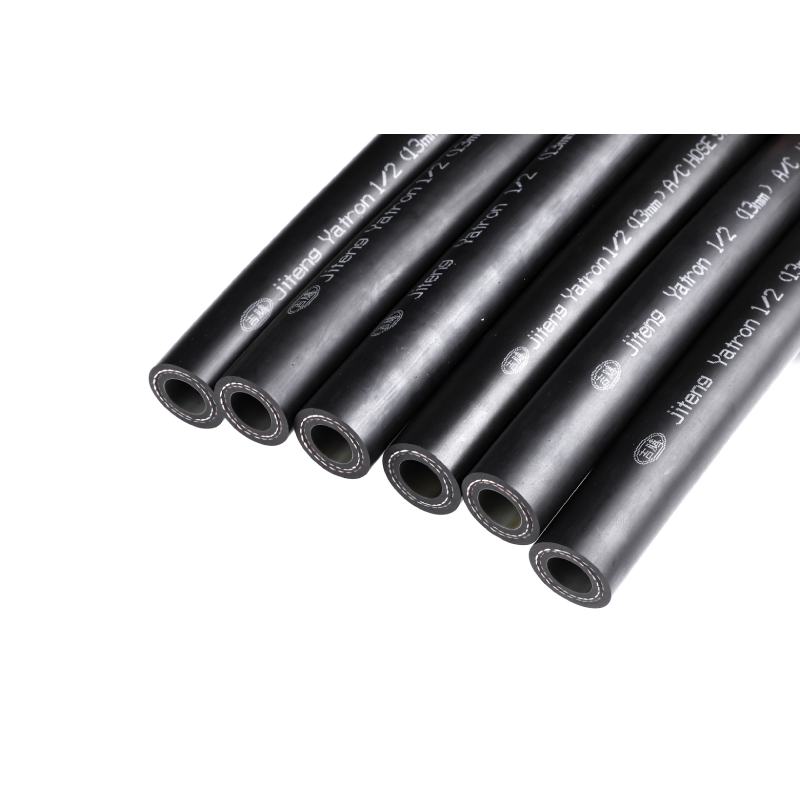
Options include color-striped sheaths, private-label printing, matched fittings, pre-crimp assemblies, cut-to-length kits, and low-temperature compound tweaks for Arctic fleets. I guess most buyers start with standard IDs (5/16”, 13/32”, 1/2”) and scale from there.
Field notes and feedback
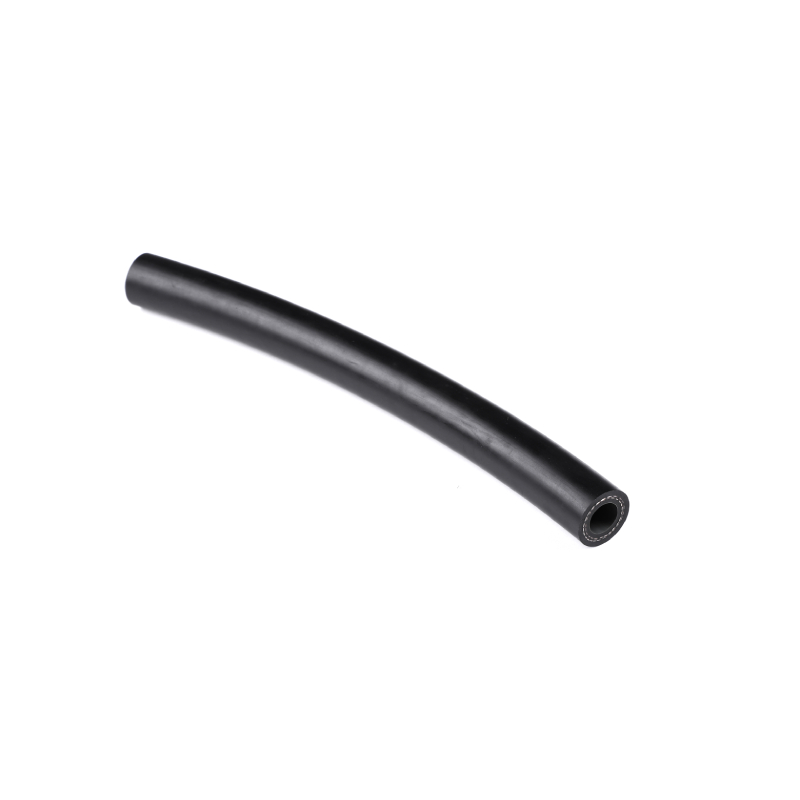
Case: a Gulf-region bus operator reported fewer top-ups across a peak season—ambient 45°C—after switching. Another European retrofit shop told me vacuum hold improved by “minutes, not seconds.” That tracks with the barrier design. Also, the air conditioning charging hose sheath shrugs off shop grime better than smooth rubber, oddly enough.

How to spec it right
- Match refrigerant: R-134a, R-1234yf compatible—confirm oil type (PAG/POE).
- Check bend radius near service ports; don’t force tight U-bends.
- Crimp with calibrated dies; pull-test to spec; leak-check under vacuum and at 2.0 MPa nitrogen.
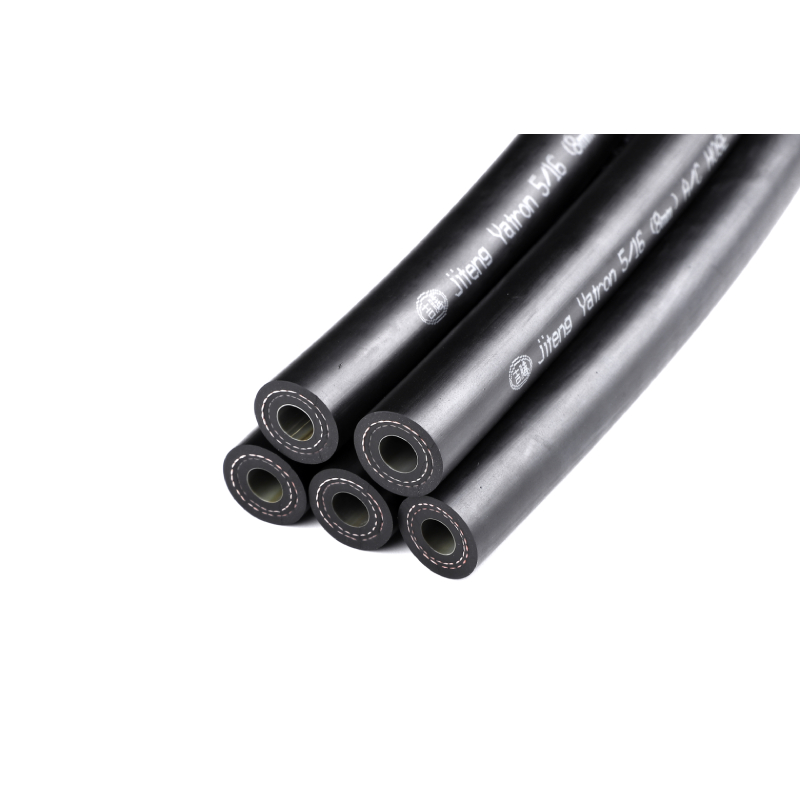
Bottom line: if you want fewer callbacks and cleaner gauges, a six-layer, standards-compliant air conditioning charging hose is the quiet upgrade that pays back in saved refrigerant and technician time.

Citations
Latest news
-
Transmission Oil Cooler Pipe Maintenance and Selection Guide
NewsApr.16,2026
-
Ultimate Guide to Choosing Transmission Oil Cooler Line Hose
NewsApr.09,2026
-
Essential Guide to Transmission Oil Cooler Hose 5/16 for Vehicle Longevity
NewsApr.07,2026
-
Understanding the Critical Role of Transmission Oil Cooler Hose 1 2 for Vehicle Longevity
NewsApr.04,2026
-
Understanding Transmission Oil Coolant Lines For Optimal Vehicle Performance
NewsMar.31,2026
-
Comprehensive Guide to Oil Coolant Pipe Selection and Industrial Applications
NewsMar.28,2026
 Afrikaans
 Albanian
 Amharic
 Arabic
 Armenian
 Azerbaijani
 Basque
 Belarusian
 Bengali
 Bosnian
 Bulgarian
 Catalan
 Cebuano
 Corsican
 Croatian
 Czech
Czech
 Danish
 Dutch
Dutch
 Esperanto
 Estonian
 Finnish
 French
 Frisian
 Galician
 Georgian
 German
 Greek
Greek
 Gujarati
 Haitian Creole
 Hausa
Hausa
 Hawaiian
 Hebrew
 Hindi
Hindi
 Miao
Miao
 Hungarian
 Icelandic
 Igbo
Igbo
 Indonesian
 Irish
Irish
 Italian
 Japanese
 Javanese
 Kannada
 Kazakh
 Khmer
Khmer
 Rwandese
 Korean
 Kurdish
 Kyrgyz
 Lao
Lao
 Latin
Latin
 Latvian
 Lithuanian
 Luxembourgish
 Macedonian
 Malgashi
 Malay
Malay
 Malayalam
 Maltese
 Maori
Maori
 Marathi
 Mongolian
 Myanmar
 Nepali
 Norwegian
 Norwegian
 Occitan
 Pashto
 Persian
 Polish
 Portuguese
 Punjabi
 Romanian
 Russian
 Samoan
 Scottish Gaelic
 Serbian
 Sesotho
 Shona
Shona
 Sindhi
 Sinhala
 Slovak
 Slovenian
 Somali
 Spanish
 Sundanese
 Swahili
 Swedish
 Tagalog
 Tajik
Tajik
 Tamil
Tamil
 Tatar
Tatar
 Telugu
 Thai
Thai
 Turkish
 Turkmen
 Ukrainian
 Urdu
Urdu
 Uighur
 Uzbek
Uzbek
 Vietnamese
 Welsh
Welsh
 Bantu
Bantu
 Yiddish
 Yoruba
 Zulu
Zulu
 English