
Air Conditioning Charging Hose: Leak-Proof, Durable—Why Buy?
Oct . 01, 2025 11:55 Back to list
Air Conditioning Charging Hose: Leak-Proof, Durable—Why Buy?
What an air conditioning charging hose really endures, and why Type E six-layer builds matter
If you’ve ever wondered why a simple-looking hose can make or break an A/C service call, you’re not alone. I get asked about the air conditioning charging hose all the time—usually after someone’s recovery machine stalls on a humid July afternoon. To be honest, the difference between a bargain line and a proper Type E six-layer construction is night and day.
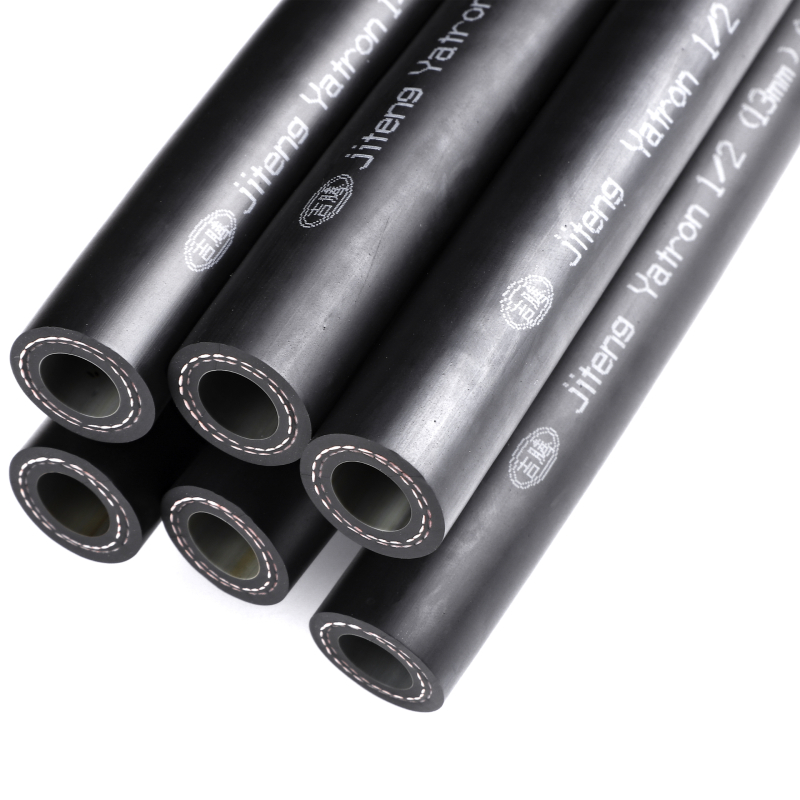
Quick product snapshot
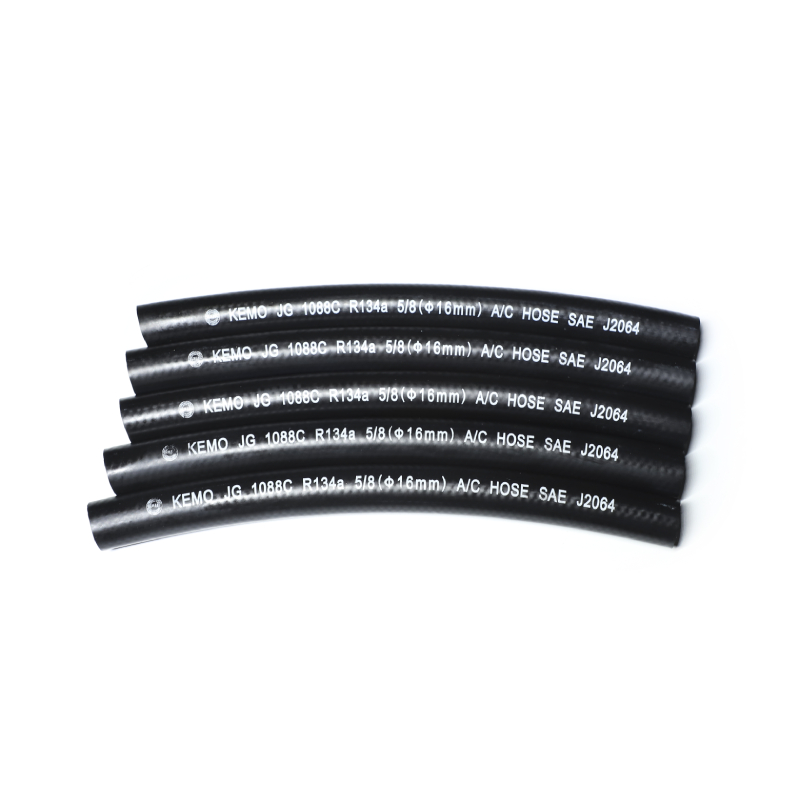
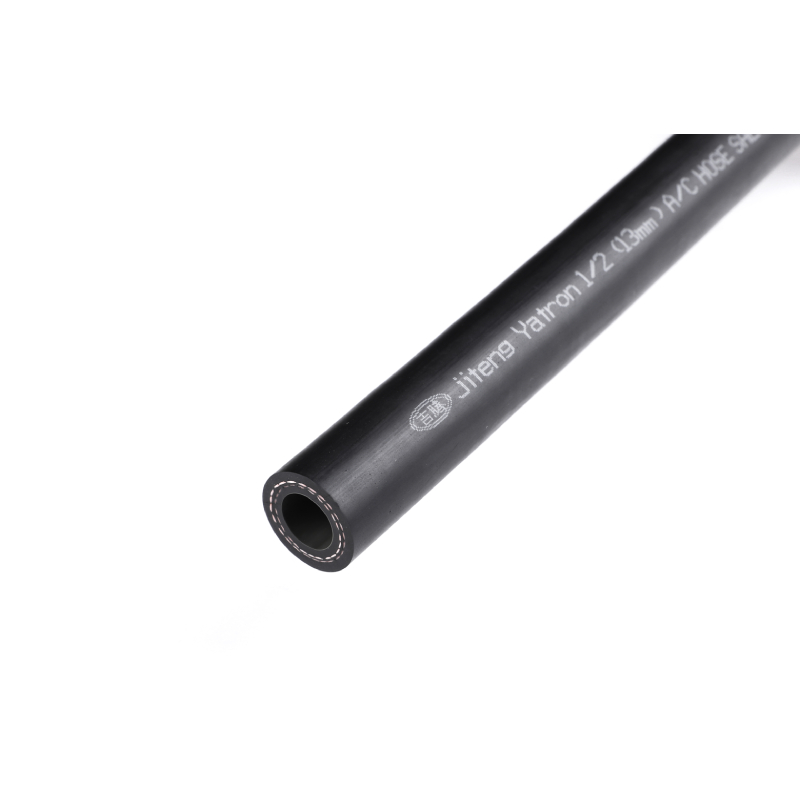
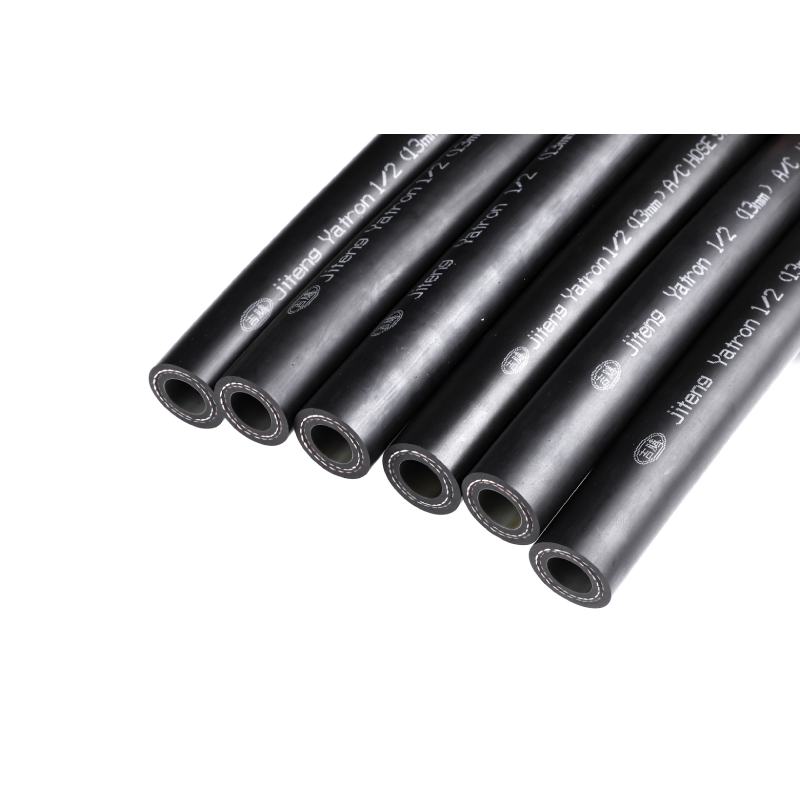
Product: Type E six layers A/C HOSE (origin: Niu Jiazhai Industrial Area, Changzhuang Town, Wei County, Hebei Province, China). Temperature window: -40℃ to +135℃ (-40℉ to +275℉). Barrier: PA/Nylon. Friction layer: EPDM/CSM/IIR. Reinforcement: PET/PVA. Cover: EPDM with cloth sheath. Standards: SAE J2064, SAE J3062, QC/T 664. Certificate: ISO/TS 16949:2009.
| Spec | Type E six layers A/C HOSE (≈ real-world) |
|---|---|
| Temperature rating | -40℃ to +135℃ (-40℉ to +275℉) |
| Barrier | PA/NYLON low-permeation |
| Friction/Tube | EPDM / CSM / IIR blend for oil compatibility |
| Reinforcement | PET / PVA high-tenacity fiber |
| Cover | EPDM cloth-sheath, ozone/UV resistant |
| Compliance | SAE J2064, SAE J3062, QC/T 664 |
| Typical refrigerants | R134a, R1234yf (check oil pairing) |
| Service life | Around 6–10 years, duty-cycle dependent |
Industry trend check
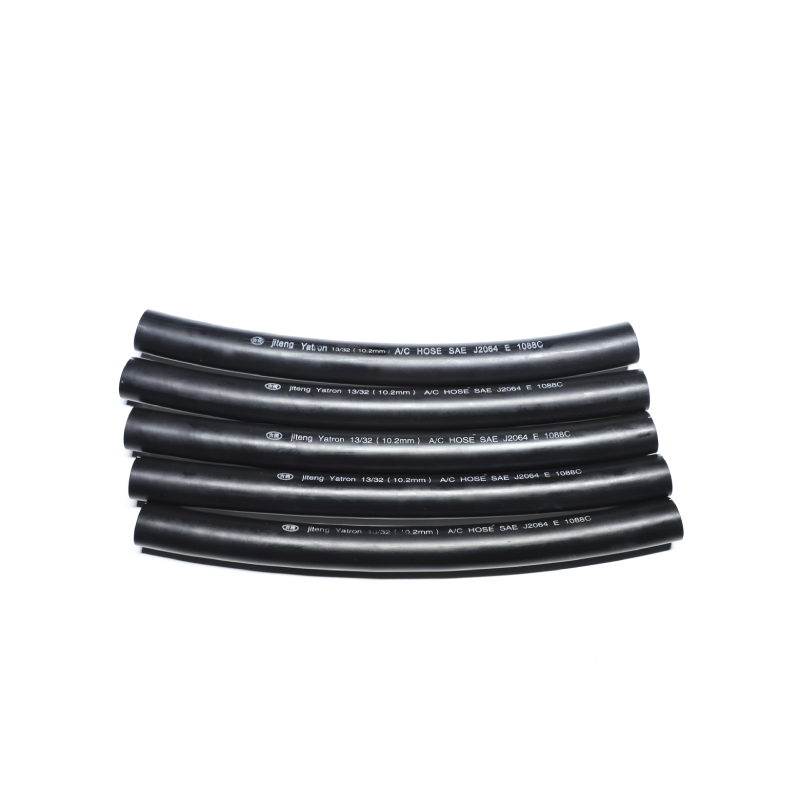
Automotive aftersales is shifting toward R1234yf, tighter permeation limits, and higher under-hood temps. That’s where air conditioning charging hose designs with nylon barriers and EPDM/CSM blends quietly shine. Many customers say failures drop off once they switch to a true J3062-compliant line.
Manufacturing and testing (how it’s actually made)
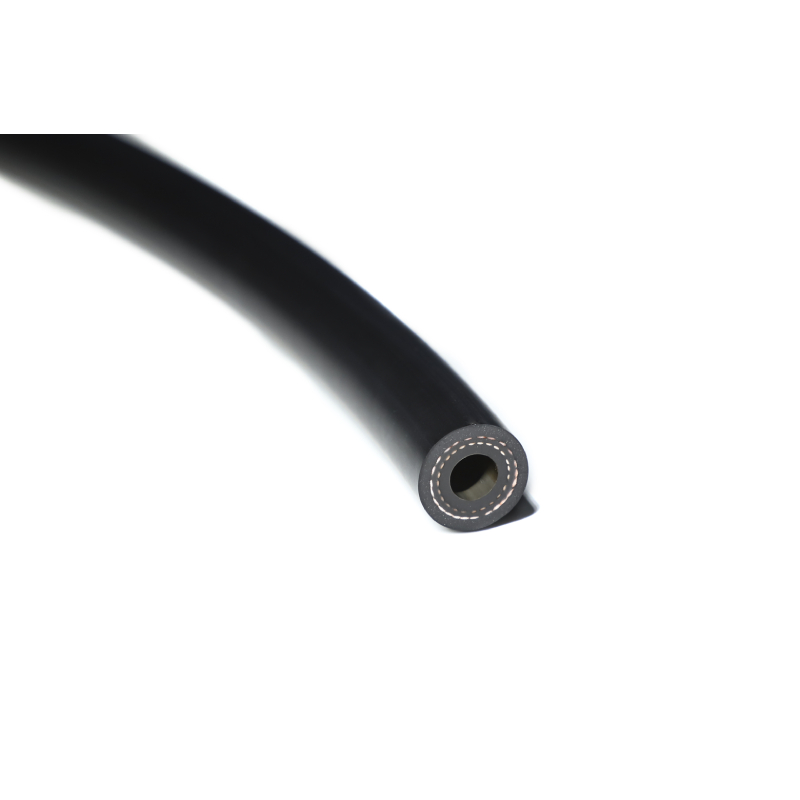
Materials are co-extruded (inner tube + PA barrier), then spiral/braid reinforced with PET/PVA, and jacketed with EPDM cloth-sheath. Methods include controlled vulcanization and precise concentricity checks. Tests: ozone aging (≥72h), burst/impulse, vacuum retention, permeation per SAE J2064, and crimp integrity audits. Batch COA is pretty standard these days.
Where you’d use it
- Vehicle A/C charge and recovery stations; mobile service vans. - Vehicle OE and retrofit lines for passenger cars, buses, off-highway. - HVAC test benches and lab rigs. In fact, air conditioning charging hose setups in hot climates benefit most from cloth-sheath covers.
Why technicians prefer this build
Low permeation, flexible handling, better oil compatibility, and solid ozone resistance. Actually, the cloth sheath is underrated—it stands up to workshop abrasion. A small thing, but it saves hoses.
Vendor comparison (real-world factors)
| Vendor | Standards & Certs | Customization | Lead Time | Notes |
|---|---|---|---|---|
| KEMO (Type E six layers) | SAE J2064/J3062, QC/T 664, ISO/TS 16949 | Lengths, sheath color, fittings | ≈ 3–5 weeks | Factory origin in Hebei; consistent QC |
| Vendor A | SAE J2064 (select items) | Limited | ≈ 6–8 weeks | Good price, mixed availability |
| Vendor B | SAE J3062 | Fittings only | ≈ 4–7 weeks | Solid for R1234yf, higher cost |

Customization and fittings
Options include pre-crimped ends (¼", ⅜", ½"), protective sleeves, and private-label printing. I guess the sleeper win is color-coded sheaths for quick line ID in busy bays. For air conditioning charging hose assemblies, request matched ferrules to prevent cold-flow leaks.
Case study (short and sweet)
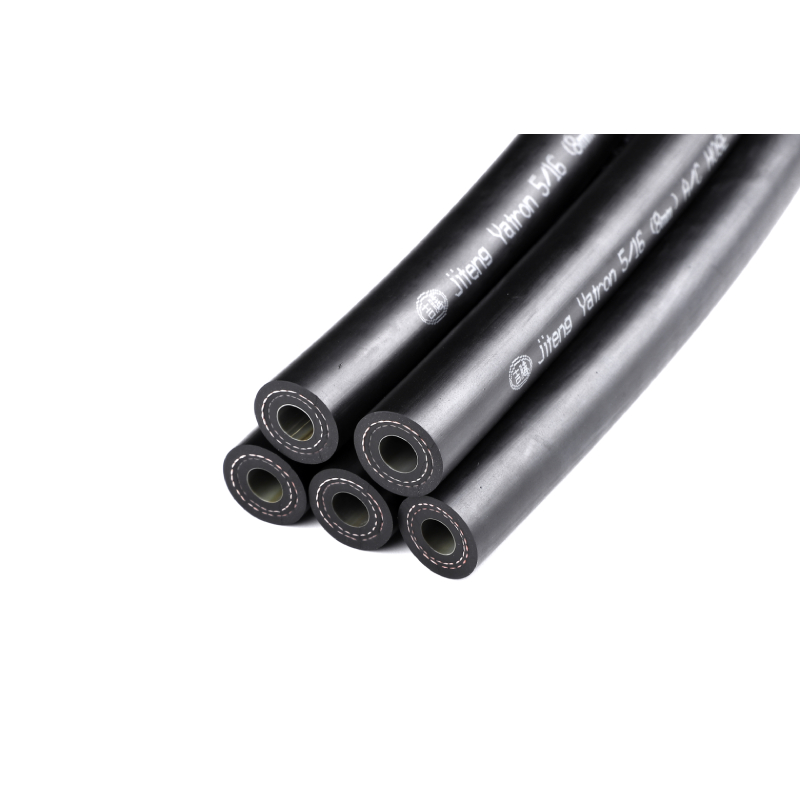
A regional bus fleet in Southeast Asia swapped legacy lines for Type E six-layer hoses before monsoon season. Result: lower reclaim loss, fewer service callbacks, and—surprisingly—techs reported “cooler-to-touch” covers near compressors after long idles. Not lab-grade data, but it tracks with EPDM/nylon builds under radiant heat.

Certs and documentation
Request DVP, PPAP (if automotive), and permeation test summaries per SAE J2064. A decent supplier will share oil compatibility matrices for R134a and R1234yf, plus ozone/UV aging results. That’s the paperwork that keeps warranty teams calm.
Citations
- SAE J2064: Refrigerant Automotive Air-Conditioning Hose Specifications [1]
- SAE J3062: Refrigerant Automotive Air-Conditioning Hose and Hose Assemblies [2]
- QC/T 664: Chinese automotive A/C hose standard (overview) [3]
- ISO/TS 16949:2009 Automotive Quality Management System [4]
References: [1] https://www.sae.org/; [2] https://www.sae.org/; [3] http://www.miit.gov.cn/ (CN standards portal); [4] https://www.iso.org/
Latest news
-
Transmission Oil Cooler Pipe Maintenance and Selection Guide
NewsApr.16,2026
-
Ultimate Guide to Choosing Transmission Oil Cooler Line Hose
NewsApr.09,2026
-
Essential Guide to Transmission Oil Cooler Hose 5/16 for Vehicle Longevity
NewsApr.07,2026
-
Understanding the Critical Role of Transmission Oil Cooler Hose 1 2 for Vehicle Longevity
NewsApr.04,2026
-
Understanding Transmission Oil Coolant Lines For Optimal Vehicle Performance
NewsMar.31,2026
-
Comprehensive Guide to Oil Coolant Pipe Selection and Industrial Applications
NewsMar.28,2026
 Afrikaans
 Albanian
 Amharic
 Arabic
 Armenian
 Azerbaijani
 Basque
 Belarusian
 Bengali
 Bosnian
 Bulgarian
 Catalan
 Cebuano
 Corsican
 Croatian
 Czech
Czech
 Danish
 Dutch
Dutch
 Esperanto
 Estonian
 Finnish
 French
 Frisian
 Galician
 Georgian
 German
 Greek
Greek
 Gujarati
 Haitian Creole
 Hausa
Hausa
 Hawaiian
 Hebrew
 Hindi
Hindi
 Miao
Miao
 Hungarian
 Icelandic
 Igbo
Igbo
 Indonesian
 Irish
Irish
 Italian
 Japanese
 Javanese
 Kannada
 Kazakh
 Khmer
Khmer
 Rwandese
 Korean
 Kurdish
 Kyrgyz
 Lao
Lao
 Latin
Latin
 Latvian
 Lithuanian
 Luxembourgish
 Macedonian
 Malgashi
 Malay
Malay
 Malayalam
 Maltese
 Maori
Maori
 Marathi
 Mongolian
 Myanmar
 Nepali
 Norwegian
 Norwegian
 Occitan
 Pashto
 Persian
 Polish
 Portuguese
 Punjabi
 Romanian
 Russian
 Samoan
 Scottish Gaelic
 Serbian
 Sesotho
 Shona
Shona
 Sindhi
 Sinhala
 Slovak
 Slovenian
 Somali
 Spanish
 Sundanese
 Swahili
 Swedish
 Tagalog
 Tajik
Tajik
 Tamil
Tamil
 Tatar
Tatar
 Telugu
 Thai
Thai
 Turkish
 Turkmen
 Ukrainian
 Urdu
Urdu
 Uighur
 Uzbek
Uzbek
 Vietnamese
 Welsh
Welsh
 Bantu
Bantu
 Yiddish
 Yoruba
 Zulu
Zulu
 English