
Air Conditioner Hose Car - Durable, Leak-Proof, OEM Fit
Oct . 18, 2025 12:40 Back to list
Air Conditioner Hose Car - Durable, Leak-Proof, OEM Fit
Type E Four-Layer A/C Hose: A field guide from the shop floor to the test bench
If you’re speccing an air conditioner hose car solution for demanding under-hood duty, the conversation almost always lands on multilayer barrier hose. I’ve toured factories from Hebei to the Midwest, and—honestly—the best products get the boring things right: permeation, heat aging, and consistent crimp performance. KEMO’s Type E four-layer A/C hose is made in Wei County, Hebei, and, in real-world installs, it’s been quietly dependable. That’s what fleets and OEMs actually need.

Industry trend check
Three big shifts: tighter permeation limits (especially on R1234yf), hotter engine bays on turbo models, and EV heat-pump loops that need flexible, low-leak assemblies. Standards like SAE J3062 nudged suppliers toward better nylon barrier control and cleaner inner surfaces. It seems mundane, but the right hose can save hours of callbacks for A/C shops—many customers say the difference shows up mid-summer when compressors don’t short-cycle from tiny leaks.
Key specs at a glance
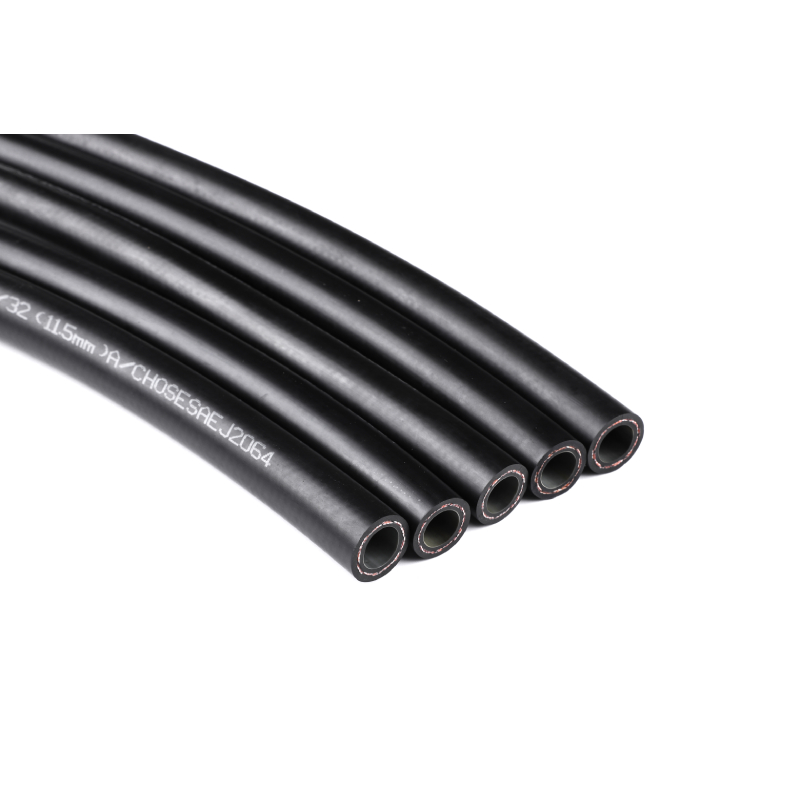
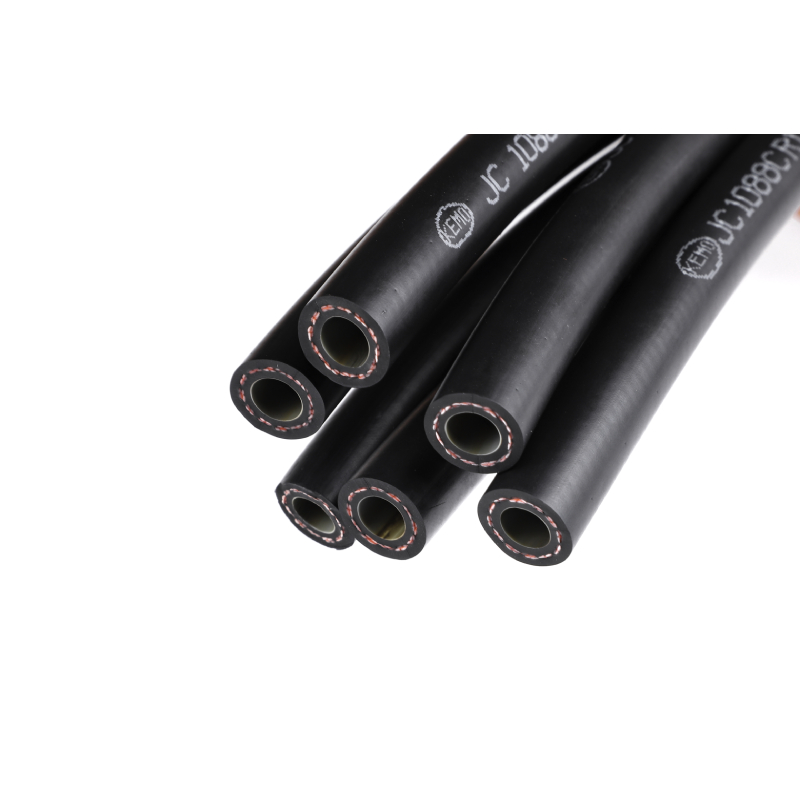
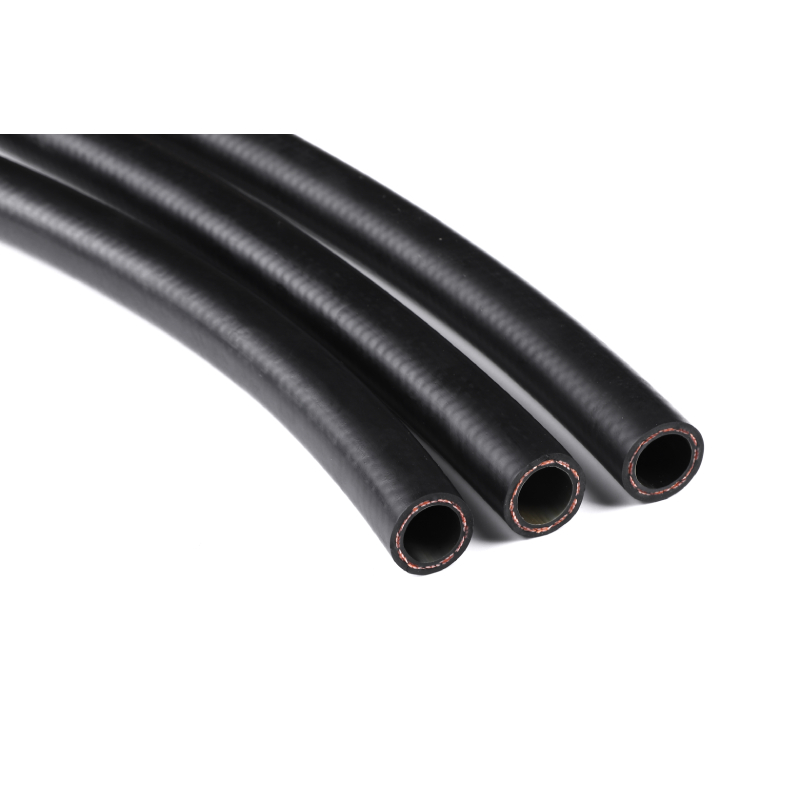
Type E four layers A/C HOSE — barrier PA/nylon, friction EPDM/CSM/IIR, PET/PVA reinforcement, EPDM cloth-sheath cover; temp −40℃ to +135℃ (−40°F to +275°F). Built to SAE J2064, SAE J3062, QC/T 664; produced under ISO/TS 16949:2009. Below is a condensed spec snapshot (real-world use may vary):
| Attribute | Typical value ≈ |
|---|---|
| Temperature range | −40℃ to +135℃ (−40°F to +275°F) |
| Permeation (R134a, 40℃) | ≤2.0 g/m²·day (SAE J2064 method) |
| Working / Burst pressure | Up to 3.5 MPa / ≥13 MPa (≈500 / ≥1900 psi) |
| Minimum bend radius | size-dependent, ≈50–90 mm |
| Sizes | 5/16", 3/8", 1/2", 13–16 mm, others by request |

How it’s made (quick process flow)
- Materials: PA/nylon barrier; EPDM/CSM/IIR friction layers; PET/PVA reinforcement; EPDM cloth-sheath cover.
- Methods: inner extrusion → barrier co-extrusion → braid/wrap reinforcement → vulcanization → cover with cloth impression → marking.
- Assembly: cut-to-length, fitting prep, crimp with calibrated dies, 100% bubble/helium leak check.
- Testing: SAE J3062 refrigerant permeability; impulse ≥150k cycles at 120℃; ozone 50 pphm, 40℃, 72 h, no cracks; vacuum collapse; salt-spray on fittings.
- Service life: ≈8–12 years in typical passenger-car duty; heavy-duty cycles vary.
- Industries: passenger cars, buses, agricultural machinery, construction, EV heat pumps.


Where it’s used and why it matters
Retrofit shops like the flexible bend radius for tight engine bays; OEM lines appreciate consistent crimp OD and cover durability. EV platforms? They use it in heat-pump loops that run longer duty cycles. Advantages: low permeation, stable grip under clamp load, abrasion-resistant cloth cover, and reliable cold-flex performance.

Vendor snapshot (what buyers compare)
| Vendor | Standards | Permeation | Burst | MOQ | Lead time | Notes |
|---|---|---|---|---|---|---|
| KEMO Type E | SAE J2064/J3062, QC/T 664 | ≤2.0 g/m²·day | ≥13 MPa | Around 500 m | 2–4 weeks | ISO/TS 16949 plant |
| Supplier A | SAE J2064 | ≈3.0 g/m²·day | ≈11 MPa | 800 m | 4–6 weeks | Basic labeling |
| Economy B | In-house only | n/a | ≈9 MPa | 200 m | 1–2 weeks | Higher variability |
Customization
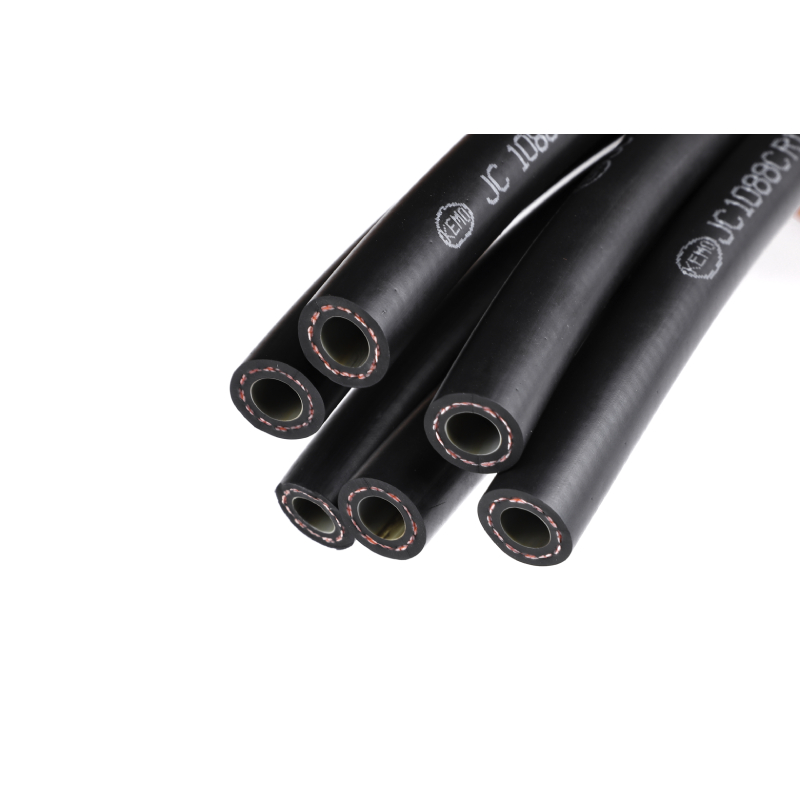
Custom IDs/ODs, pre-crimped assemblies, OEM markings, color stripes, and coil lengths are available. Fittings in aluminum or steel, with surface treatments to meet salt-spray targets. To be honest, specify bend radius and routing early—it saves headaches later.


Quick case study
A Middle East taxi fleet (≈400 cars) swapped legacy hoses for Type E during compressor replacements. Ambient hits 45℃. After one cooling season, leak-related callbacks dropped ~32%, and average top-up per car was under 80 g—comfortably within SAE expectations. Feedback from the lead tech: “Crimps were consistent; hoses didn’t fight us on tight bends.”
From my notes, a Guangzhou workshop said similar: better cold-start flexibility in winter and less odor on first run—likely due to cleaner inner surfaces post-processing.

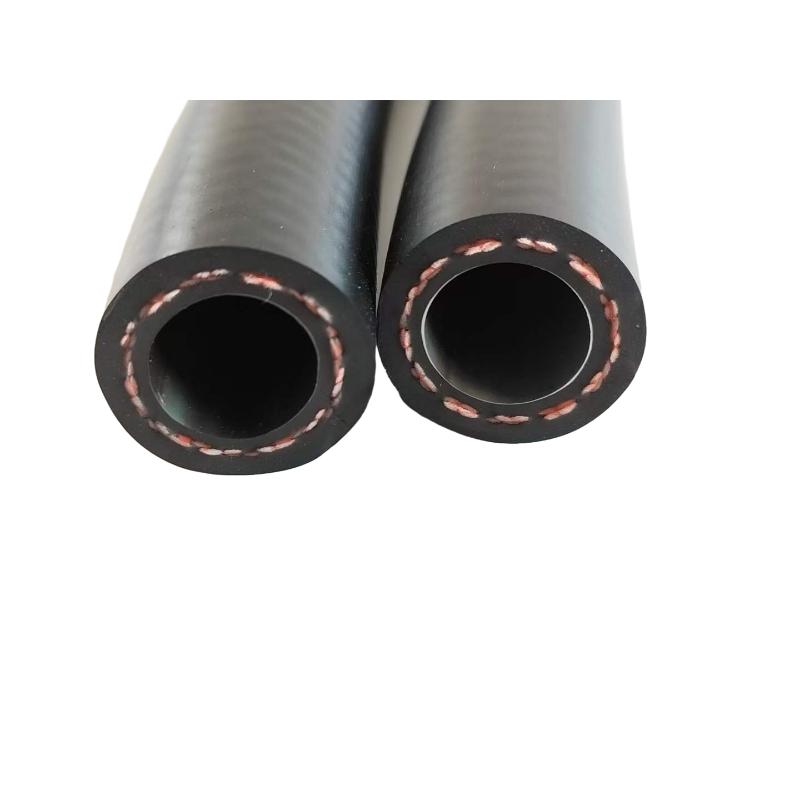
If you’re sourcing an air conditioner hose car assembly for OEM or retrofit, this four-layer build checks the right boxes: standards-compliant, low permeation, and predictable to install. Origin: Niu Jiazhai Industrial Area, Changzhuang Town, Wei County, Hebei, China. Feel free to request test sheets alongside your RFQ.
References
- SAE J2064 – R134a, R1234yf Refrigerant Automotive Air-Conditioning Hose and Hose Assemblies. https://www.sae.org/
- SAE J3062 – Automotive Refrigerant System Hoses, Hose Assemblies, and Fittings. https://www.sae.org/
- QC/T 664 – Automotive Air-Conditioning Hose (China MIIT). http://www.miit.gov.cn/
- ISO/TS 16949:2009 – Quality management systems for automotive production. https://www.iso.org/
Latest news
-
Transmission Oil Cooler Pipe Maintenance and Selection Guide
NewsApr.16,2026
-
Ultimate Guide to Choosing Transmission Oil Cooler Line Hose
NewsApr.09,2026
-
Essential Guide to Transmission Oil Cooler Hose 5/16 for Vehicle Longevity
NewsApr.07,2026
-
Understanding the Critical Role of Transmission Oil Cooler Hose 1 2 for Vehicle Longevity
NewsApr.04,2026
-
Understanding Transmission Oil Coolant Lines For Optimal Vehicle Performance
NewsMar.31,2026
-
Comprehensive Guide to Oil Coolant Pipe Selection and Industrial Applications
NewsMar.28,2026
 Afrikaans
 Albanian
 Amharic
 Arabic
 Armenian
 Azerbaijani
 Basque
 Belarusian
 Bengali
 Bosnian
 Bulgarian
 Catalan
 Cebuano
 Corsican
 Croatian
 Czech
Czech
 Danish
 Dutch
Dutch
 Esperanto
 Estonian
 Finnish
 French
 Frisian
 Galician
 Georgian
 German
 Greek
Greek
 Gujarati
 Haitian Creole
 Hausa
Hausa
 Hawaiian
 Hebrew
 Hindi
Hindi
 Miao
Miao
 Hungarian
 Icelandic
 Igbo
Igbo
 Indonesian
 Irish
Irish
 Italian
 Japanese
 Javanese
 Kannada
 Kazakh
 Khmer
Khmer
 Rwandese
 Korean
 Kurdish
 Kyrgyz
 Lao
Lao
 Latin
Latin
 Latvian
 Lithuanian
 Luxembourgish
 Macedonian
 Malgashi
 Malay
Malay
 Malayalam
 Maltese
 Maori
Maori
 Marathi
 Mongolian
 Myanmar
 Nepali
 Norwegian
 Norwegian
 Occitan
 Pashto
 Persian
 Polish
 Portuguese
 Punjabi
 Romanian
 Russian
 Samoan
 Scottish Gaelic
 Serbian
 Sesotho
 Shona
Shona
 Sindhi
 Sinhala
 Slovak
 Slovenian
 Somali
 Spanish
 Sundanese
 Swahili
 Swedish
 Tagalog
 Tajik
Tajik
 Tamil
Tamil
 Tatar
Tatar
 Telugu
 Thai
Thai
 Turkish
 Turkmen
 Ukrainian
 Urdu
Urdu
 Uighur
 Uzbek
Uzbek
 Vietnamese
 Welsh
Welsh
 Bantu
Bantu
 Yiddish
 Yoruba
 Zulu
Zulu
 English