
AC Hose from Compressor to Evaporator – Leak-Proof, OEM Fit
Nov . 06, 2025 12:25 Back to list
AC Hose from Compressor to Evaporator – Leak-Proof, OEM Fit
A20 A/C HOSE (Type C): the workhorse line from compressor to evaporator
If you wrench for a living—or you’ve simply sweated through a summer diagnosis—you know the humble Ac Hose From Compressor To Evaporator can make or break an A/C system. I’ve toured plants and test labs where hoses get tortured with pressure pulses and ozone baths. The A20 Type C from KEMO (origin: Niu Jiazhai Industrial Area, Changzhuang Town, Wei County, Hebei, China) is one of those quietly competent parts that technicians tend to remember—mostly because it installs cleanly and just… works.
Why this hose matters in 2025
Trends keep shifting. More OEMs are standardizing on R1234yf, EVs are using heat-pump circuits, and fleets are pushing for longer maintenance intervals. That puts the spotlight on low-permeation barrier hoses with predictable crimp behavior. The A20 Type C leans on a PA/nylon barrier and EPDM cover to stay compatible with R134a and R1234yf (plus the usual PAG/POE oils). In fact, shops tell me failure rates often drop when they move from “mystery rubber” to a documented, SAE-compliant hose.
Core construction and specs
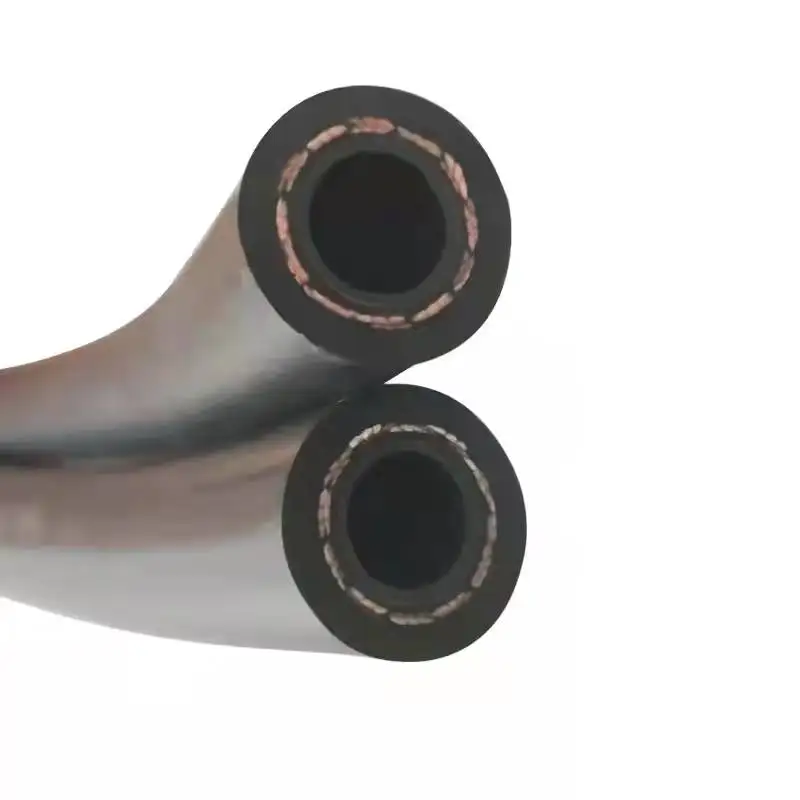
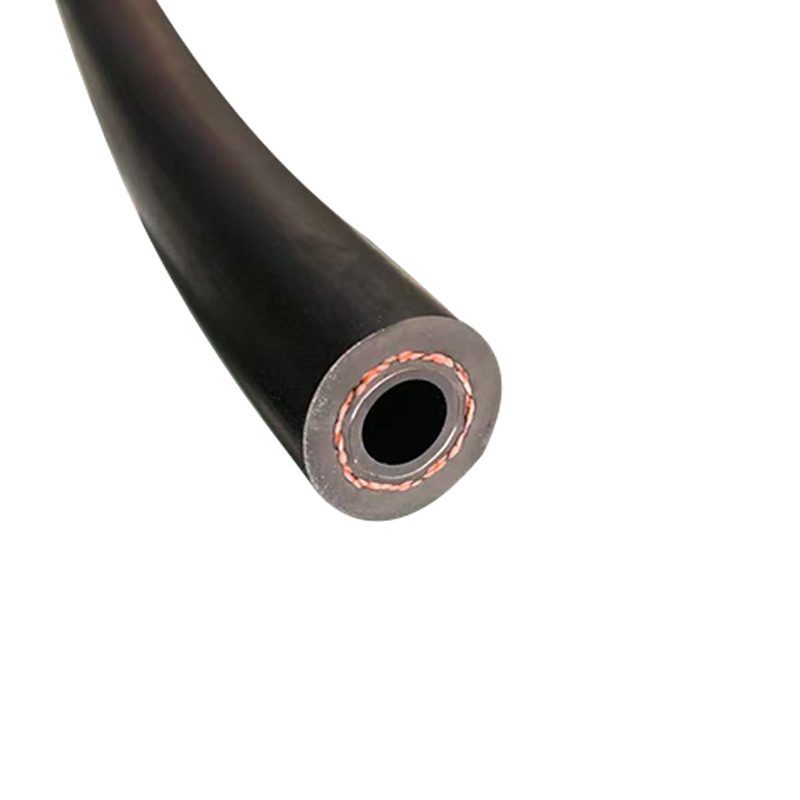
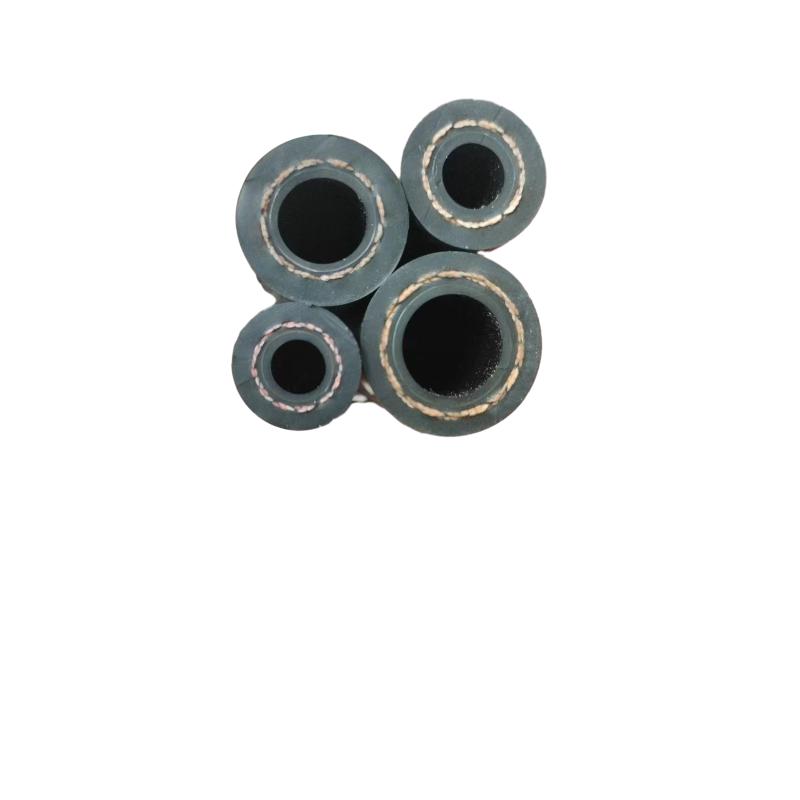
The A20 Type C stacks materials in a classic, field-proven order: EPDM tube, PA/NYLON barrier, PET/PVA reinforcement, EPDM friction and cover. Temperature range is -40℃ to +135℃ (-40°F to +275°F). And yes, it’s built to SAE J2064 and J3062, then backed by ISO/TS 16949:2009 quality disciplines.
| Parameter | A20 A/C HOSE (Type C) |
|---|---|
| Standards | SAE J2064, SAE J3062; 0C/T664; ISO/TS 16949:2009 |
| Temp Range | -40℃ to +135℃ (real-world use may vary) |
| Working/Burst Pressure | WP ≈ 3.0 MPa (435 psi); Burst ≥ 15 MPa (≈2175 psi) |
| Refrigerants | R134a, R1234yf; compatible with PAG/POE oils |
| Permeation (SAE J2064) | Low-permeation class; CO₂ loss rate kept within spec limits |
Process flow, testing, and service life
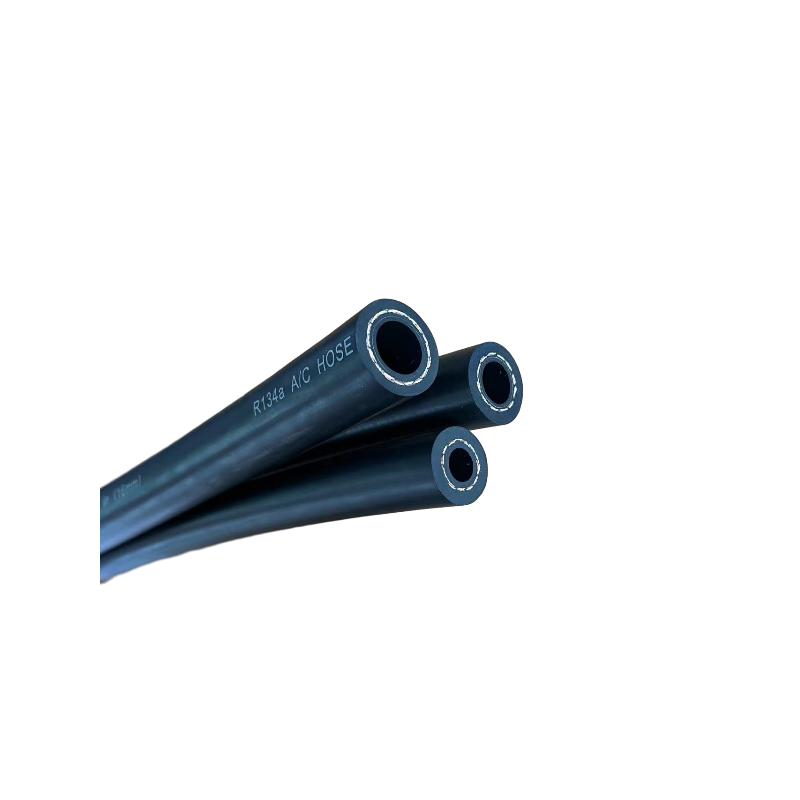
Materials are batch-tracked EPDM and PA/nylon pellets, extruded and bonded with adhesion promoters. Reinforcement uses PET/PVA braid for dimensional stability. Continuous vulcanization locks the stack, after which lengths are cut and ends are prepped for crimp ferrules.
Tests (per SAE J2064/J3062) typically include: hydrostatic pressure, permeation bench, vacuum collapse, impulse cycling (up to hundreds of thousands of pulses), ozone and salt spray, and dimensional checks. Field feedback suggests a service window around 8–12 years or 160–250k km depending on routing, ambient heat, and clamp strategy. To be honest, routing and bend radius kill more hoses than chemistry does.
Where shops use it
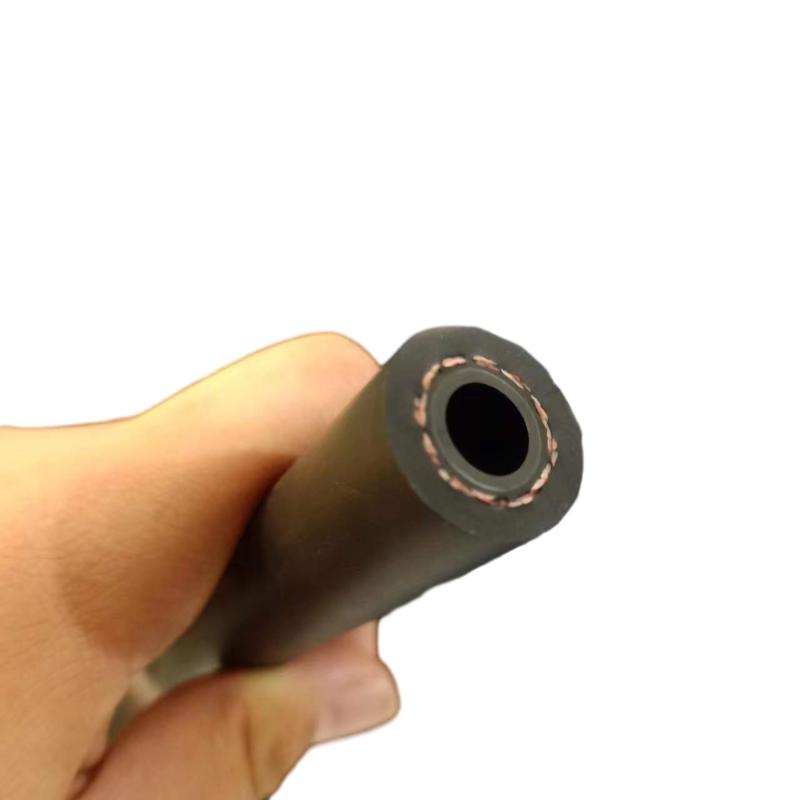
- Passenger cars and light trucks: the classic Ac Hose From Compressor To Evaporator swap during compressor replacements.
- Buses and coaches: long-run barrier lines to rooftop evaporators.
- Ag and construction: high-vibration environments where braid integrity matters.
- EV/HEV thermal loops: heat-pump circuits needing low permeation and tidy crimps.
Advantages technicians mention
Many customers say the cover resists scuffing in tight bays, and crimp repeatability is forgiving. Surprisingly, I’ve seen fewer callback leaks when clamps are placed per spec and the bend radius stays conservative.
Vendor snapshot and customization
| Vendor | Standards | Lead Time | Customization | Notes |
|---|---|---|---|---|
| KEMO A20 (Type C) | SAE J2064/J3062; ISO/TS 16949 | ≈2–4 weeks | ID/OD, lengths, pre-crimped ends, branding | Factory origin; consistent batches |
| Vendor B (generic) | Claims SAE; limited reports | 1–2 weeks | Basic cut-to-length | Price-led; mixed feedback |
| Vendor C (aftermarket) | SAE J2064 | Stock-dependent | Limited | Convenient for small shops |
Customization usually covers bore sizes, cover colors, laser marking, and pre-crimped fittings. I guess the best ROI is getting assemblies cut and crimped to fit your routing map—less fiddling, fewer leaks.
Quick case notes
- Regional bus fleet: switched to Ac Hose From Compressor To Evaporator assemblies with tighter bend radius specs; refrigerant top-ups dropped ≈30% over 18 months. - Ag dealer: dust abrasion was chewing covers; moving to EPDM cover with extra clamp sleeves ended that story.
Takeaway
For the line between compressor and evaporator, the A20 Type C ticks the boxes—materials, standards, and that practical “install and forget” feel. Route it cleanly, mind the bend radius, and torque your fittings. The rest tends to fall in place.
Authoritative references
- SAE J2064: Refrigerant Automotive Air-Conditioning Hose Requirements and Inspection Procedures.
- SAE J3062: Automotive Refrigerant Air-Conditioning Hose and Hose Assemblies.
- ISO/TS 16949:2009 Quality management systems—Particular requirements for the application of ISO 9001 for automotive production and relevant service part organizations.
- ASTM D380: Standard Test Methods for Rubber Hose.
Latest news
-
Ultimate Guide to Choosing Transmission Oil Cooler Line Hose
NewsApr.09,2026
-
Essential Guide to Transmission Oil Cooler Hose 5/16 for Vehicle Longevity
NewsApr.07,2026
-
Understanding the Critical Role of Transmission Oil Cooler Hose 1 2 for Vehicle Longevity
NewsApr.04,2026
-
Understanding Transmission Oil Coolant Lines For Optimal Vehicle Performance
NewsMar.31,2026
-
Comprehensive Guide to Oil Coolant Pipe Selection and Industrial Applications
NewsMar.28,2026
-
Comprehensive Guide to Oil Coolant Lines for Industrial Applications
NewsMar.26,2026
 Afrikaans
 Albanian
 Amharic
 Arabic
 Armenian
 Azerbaijani
 Basque
 Belarusian
 Bengali
 Bosnian
 Bulgarian
 Catalan
 Cebuano
 Corsican
 Croatian
 Czech
Czech
 Danish
 Dutch
Dutch
 Esperanto
 Estonian
 Finnish
 French
 Frisian
 Galician
 Georgian
 German
 Greek
Greek
 Gujarati
 Haitian Creole
 Hausa
Hausa
 Hawaiian
 Hebrew
 Hindi
Hindi
 Miao
Miao
 Hungarian
 Icelandic
 Igbo
Igbo
 Indonesian
 Irish
Irish
 Italian
 Japanese
 Javanese
 Kannada
 Kazakh
 Khmer
Khmer
 Rwandese
 Korean
 Kurdish
 Kyrgyz
 Lao
Lao
 Latin
Latin
 Latvian
 Lithuanian
 Luxembourgish
 Macedonian
 Malgashi
 Malay
Malay
 Malayalam
 Maltese
 Maori
Maori
 Marathi
 Mongolian
 Myanmar
 Nepali
 Norwegian
 Norwegian
 Occitan
 Pashto
 Persian
 Polish
 Portuguese
 Punjabi
 Romanian
 Russian
 Samoan
 Scottish Gaelic
 Serbian
 Sesotho
 Shona
Shona
 Sindhi
 Sinhala
 Slovak
 Slovenian
 Somali
 Spanish
 Sundanese
 Swahili
 Swedish
 Tagalog
 Tajik
Tajik
 Tamil
Tamil
 Tatar
Tatar
 Telugu
 Thai
Thai
 Turkish
 Turkmen
 Ukrainian
 Urdu
Urdu
 Uighur
 Uzbek
Uzbek
 Vietnamese
 Welsh
Welsh
 Bantu
Bantu
 Yiddish
 Yoruba
 Zulu
Zulu
 English